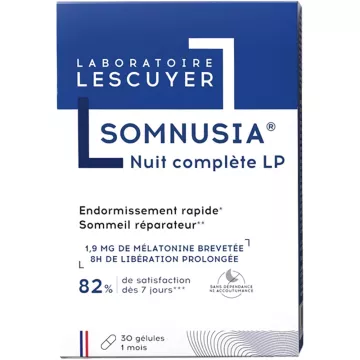
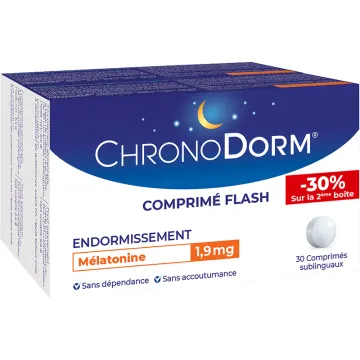
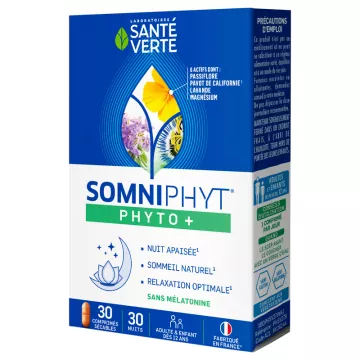
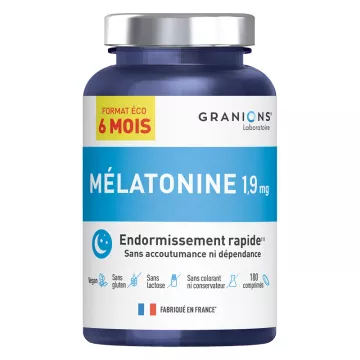
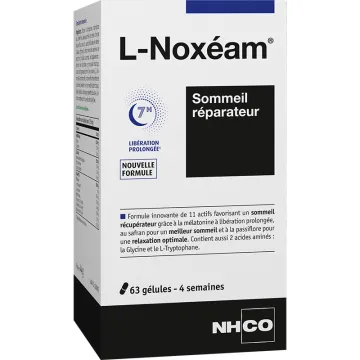
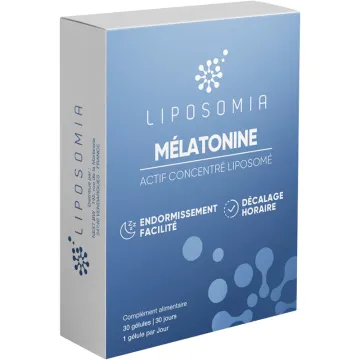
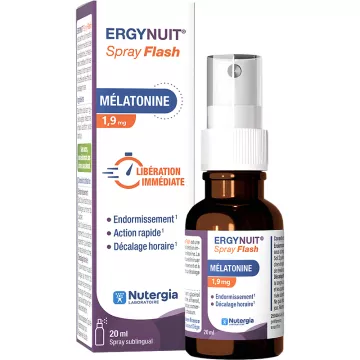
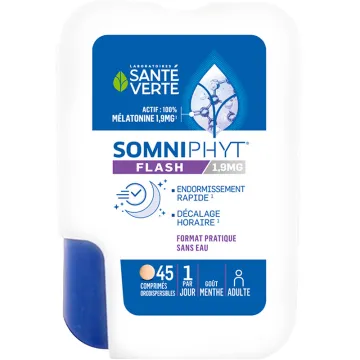
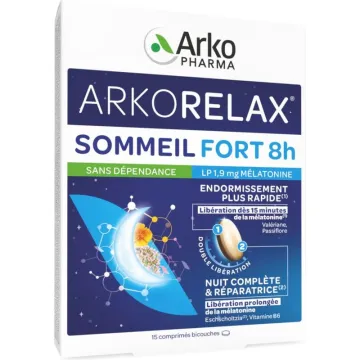
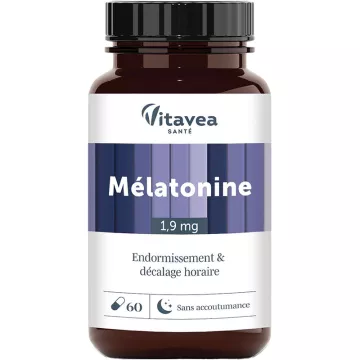
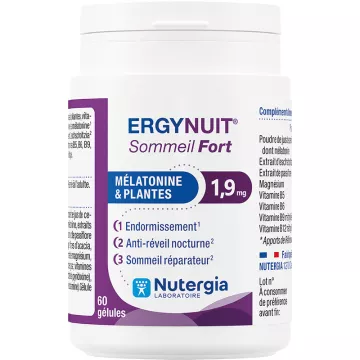
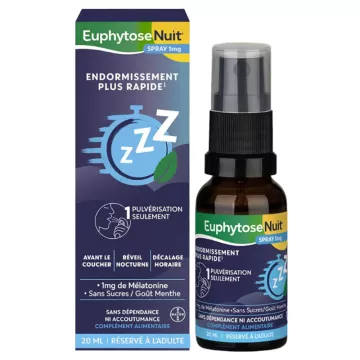
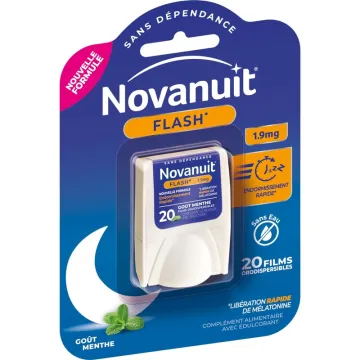
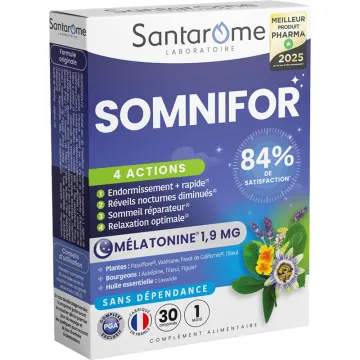
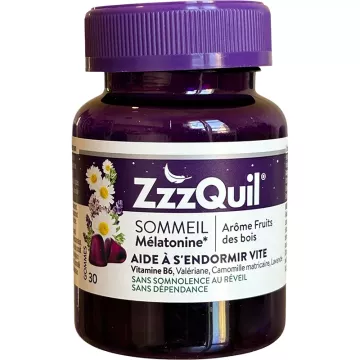
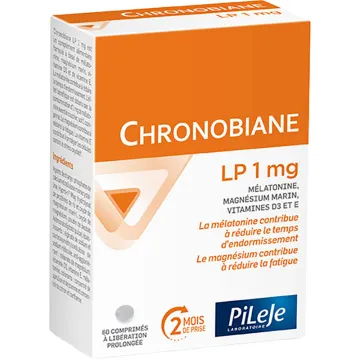
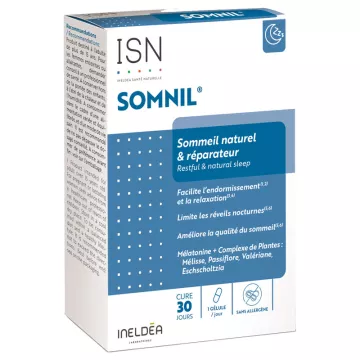
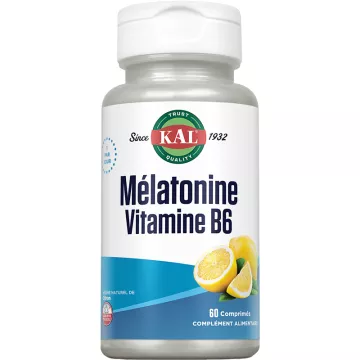
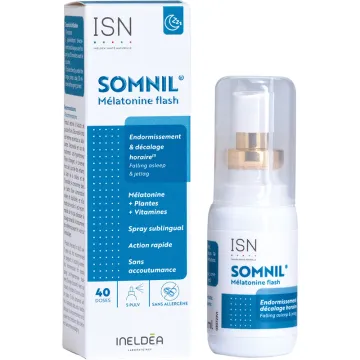
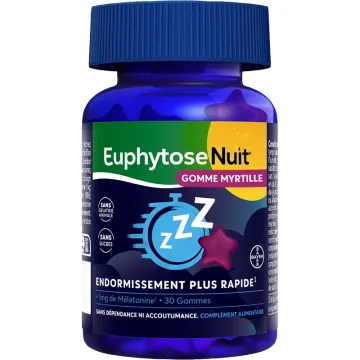
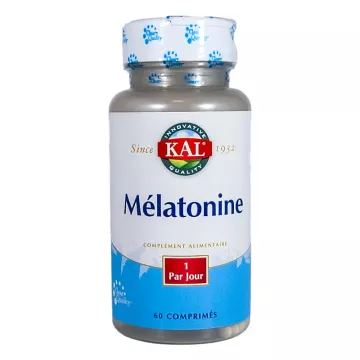
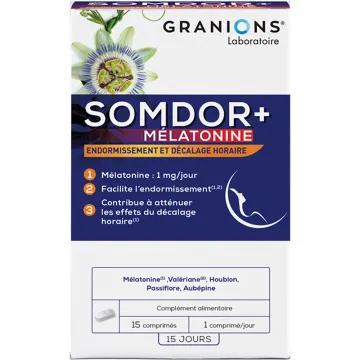
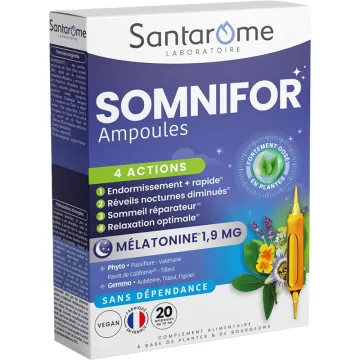
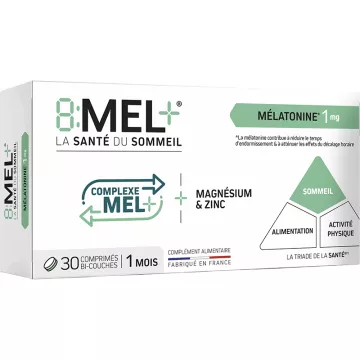
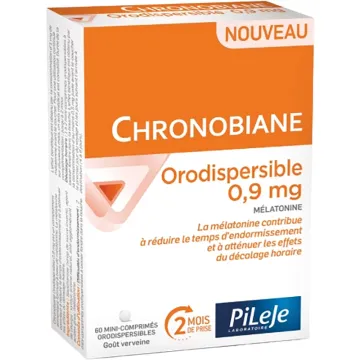
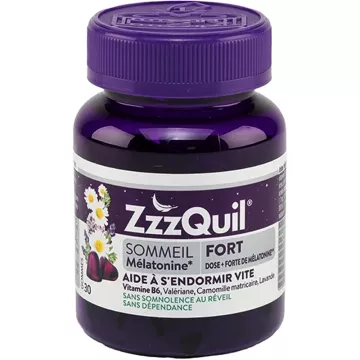
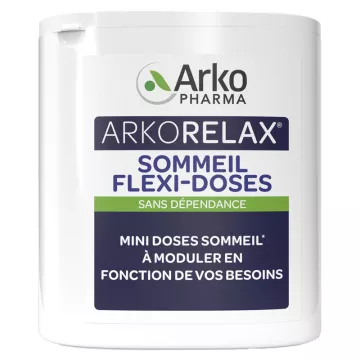
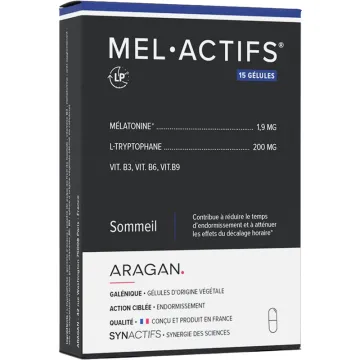
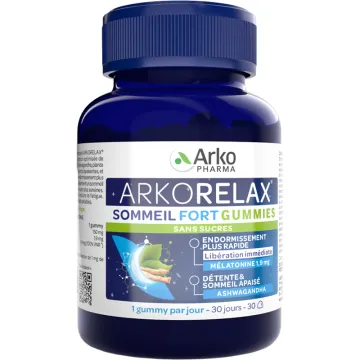
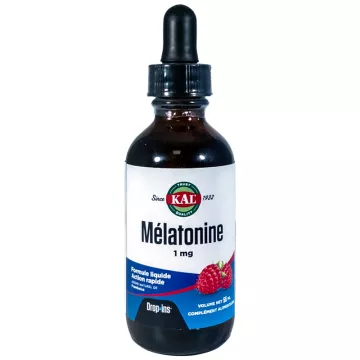
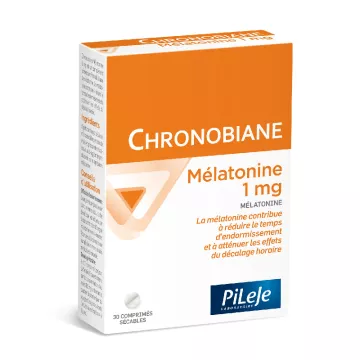
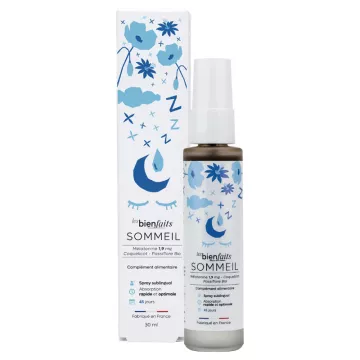
Melatonin is a hormone naturally produced by the pineal gland that synchronizes the body's internal clock with light-dark cycles. Known as the “sleep hormone,” its secretion begins at dusk, peaks around 2–3 a.m., and tapers off before waking. It is available in health stores as a dietary supplement to promote sleep. Check out our melatonin selection at the pharmacy.
What is melatonin?
Melatonin (N-acetyl-5-methoxytryptamine) is a hormone derived from serotonin —which itself is derived from tryptophan. Its synthesis in the pineal gland is triggered by darkness and inhibited by blue light (a mechanism implicated in screen-related sleep disorders). Production decreases with age—the decline accelerates after age 50, which explains the prevalence of sleep disorders among seniors. In France, melatonin is classified as a dietary supplement up to 1.9 mg/day—above that dose, it is considered a drug (ANSM).
Melatonin and falling asleep: how does it work?
Melatonin acts on the MT1 and MT2 receptors in the hypothalamus, triggering a decrease in alertness and preparing the body for sleep.
- Approved EFSA claim: Melatonin helps reduce the time it takes to fall asleep —0.5 mg taken just before bedtime
- EFSA claim: Melatonin helps alleviate the subjective effects of jet lag
- It does not cause residual drowsiness upon waking, unlike pharmaceutical sleep aids (benzodiazepines, Z-drugs)
- No tolerance or dependence at recommended doses
- Take 30 to 60 minutes before bedtime—sublingual form (spray): faster-acting
Melatonin and jet lag: Is it effective?
Jet lag is the condition for which melatonin is best documented—an EFSA-approved claim.
- Eastbound flights (Paris → Tokyo): more difficult to manage — melatonin as first-line treatment
- Protocol: Take in the evening at the local time of the destination, starting on the day of arrival, for 2 to 5 days
- Jet lag dosage: 0.5 to 3 mg according to recommendations
- Night shift workers: Melatonin can help induce sleep when experiencing jet lag; take it after work
- See our relaxation and sleep product line
Melatonin and serotonin: What’s the connection?
Melatonin and serotonin form a complementary biological axis that regulates daytime well-being and nighttime sleep.
- Serotonin is the immediate precursor to melatonin—a healthy daytime serotonin level promotes nighttime melatonin production
- Dietary tryptophan is the common source of both molecules
- Daylight stimulates serotonin and inhibits melatonin—darkness reverses this relationship
- To support the tryptophan → serotonin → melatonin axis: tryptophan in the evening + magnesium + vitamin B6
How to choose and use melatonin?
The dosage form and strength determine effectiveness and speed of action.
- Tablets or capsules: take effect in 30–45 minutes—take 30 to 60 minutes before bedtime
- Sublingual spray: absorbed through the mucous membranes, takes effect in 15–20 minutes — for severe difficulty falling asleep
- Extended-release: for nighttime awakenings and difficulty staying asleep
- Recommended dosage in France: 0.5 to 1.9 mg/day (ANSM dietary supplement threshold)
- Combine with valerian, passionflower, and L-theanine in complex sleep formulas
Precautions and contraindications?
Melatonin is well tolerated at recommended doses—a few important precautions apply.
- Pregnant and breastfeeding women: avoid as a precaution (insufficient data)
- Children and adolescents: Use only under specialized medical supervision (pediatrics)
- Antidepressants (SSRIs, MAOIs): possible interaction—inform your doctor
- Anticoagulants and immunosuppressants: Check with your doctor to ensure there are no interactions
- Daytime drowsiness if taken in excessive doses or too early in the evening—start with 0.5 mg
- Never take before driving—sedative effect even at low doses
- Known hormonal disorders: prior medical consultation recommended