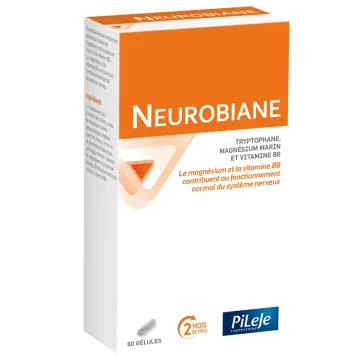
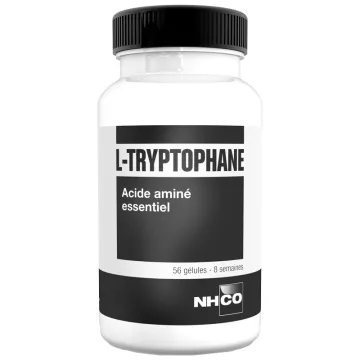
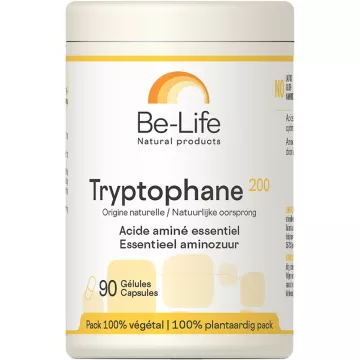
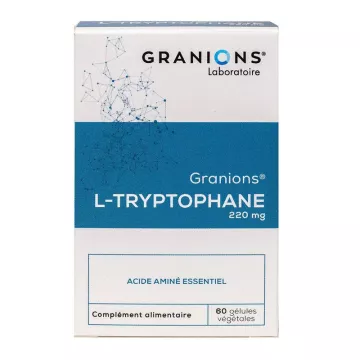
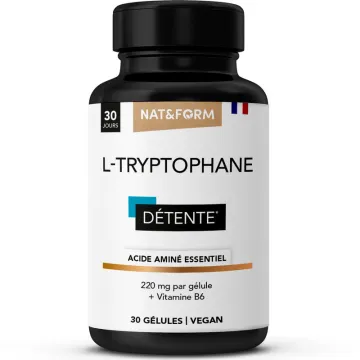
Tryptophan is the only essential amino acid that serves as a precursor to two key molecules involved in well-being: serotonin (a mood-regulating neurotransmitter) and melatonin (a hormone that regulates the sleep-wake cycle). Since the body cannot synthesize it, obtaining it through diet or supplementation is essential. Learn about all the amino acids.
What is tryptophan?
Tryptophan is one of the 9 essential amino acids. Its primary metabolic pathway is: tryptophan → 5-HTP (5-hydroxytryptophan) → serotonin → melatonin. This cascade, which depends on vitamin B6, magnesium, and iron as cofactors, takes place in intestinal cells (which produce 90% of the body’s serotonin) and in serotonergic neurons in the brain. Dietary tryptophan competes with other neutral amino acids (BCAAs) to cross the blood-brain barrier—consuming carbohydrates after a meal enhances its passage into the brain.
Tryptophan, Serotonin, and Mood?
Through serotonin, tryptophan helps regulate mood and mental well-being.
- It promotes a sense of calm and serenity in the face of everyday stress
- It helps regulate mood and promote emotional stability
- L-theanine complements tryptophan to provide calming support without sedation during the day
- Combine with magnesium in formulas designed to support mental well-being
- See our serenity and well-being range
Tryptophan and Sleep: What Role Does It Play?
Tryptophan is the natural precursor to melatonin—taking it in the evening directly supports this conversion.
- It contributes to sleep quality and duration by supporting melatonin synthesis
- Recommended dosage for sleep: 250 to 500 mg, 30 to 60 minutes before bedtime
- Combined with valerian and magnesium in relaxation and sleep formulas
- May cause drowsiness—do not take before driving
Tryptophan vs. 5-HTP: What’s the difference?
5-HTP is the intermediate form between tryptophan and serotonin—two complementary approaches with distinct profiles.
- Tryptophan: a dietary amino acid, well-tolerated over the long term, broad range of effects (mood + sleep + cognitive support)
- 5-HTP: pre-converted form, faster-acting and more specifically targeted at serotonin—potentially greater short-term effectiveness for mood and sleep
- Neither should be combined with SSRIs or MAOIs—risk of serotonin syndrome
- Tryptophan is better tolerated over the long term and less likely to saturate the serotonergic pathway
How should tryptophan be used as a supplement?
Timing and combinations determine the effectiveness of supplementation.
- Sleep: 250 to 500 mg 30 to 60 minutes before bedtime
- Support for mental well-being: 500 to 1,000 mg in the evening as a 4- to 6-week course
- Take with carbohydrates (a small sweet snack): reduces competition with BCAAs for absorption into the brain
- Essential cofactors: vitamin B6, magnesium, and vitamin C to optimize the conversion of serotonin to melatonin
- Available forms: L-tryptophan capsules, powder, combined sleep formulas
Contraindications and precautions?
Tryptophan is well tolerated at recommended doses but has significant drug interactions.
- SSRIs (serotonergic antidepressants): risk of serotonin syndrome—contraindicated without medical advice
- MAOIs: absolute contraindication — potentially serious serotonin accumulation
- Possible drowsiness—do not drive or operate heavy machinery after taking this supplement
- Pregnant and breastfeeding women: avoid as a precaution; insufficient data
- Mild gastrointestinal disturbances possible at high doses