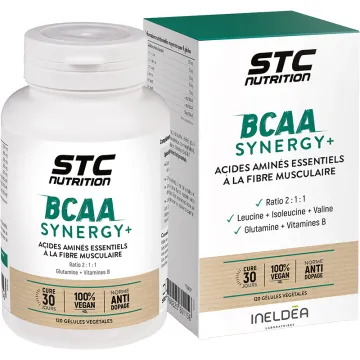
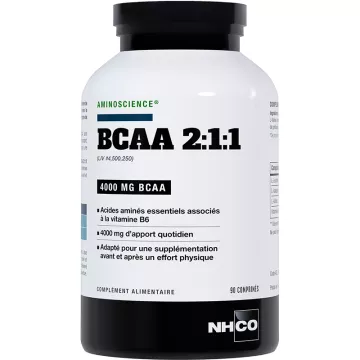
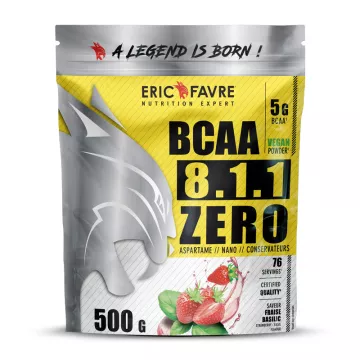
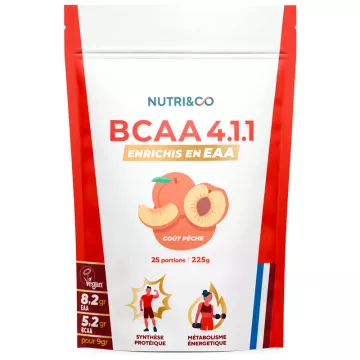
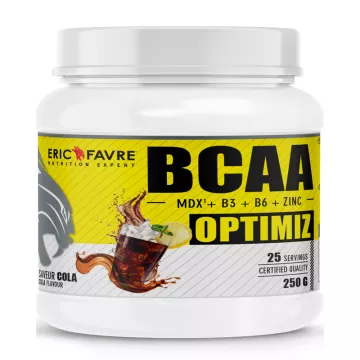
BCAAs (Branched-Chain Amino Acids) are a group of three branched-chain amino acids: leucine, isoleucine, and valine. Essential—meaning the body cannot produce them on its own—they are used directly by the muscles without first passing through the liver. They are a cornerstone of sports supplements, particularly in bodybuilding and endurance sports.
What are BCAAs and what are they used for?
BCAAs account for approximately 35% of the essential amino acids in muscle proteins. Leucine is the key amino acid that activates the mTOR pathway, an anabolic signal for muscle protein synthesis.Isoleucine helps muscles utilize glucose during exercise, and valine supports endurance by limiting the entry of tryptophan into the brain (which causes central fatigue). Discover the full range of amino acids.
When and how should you take BCAAs?
The timing of intake determines the effectiveness of BCAAs depending on your goal.
- Before a workout: reduces muscle catabolism during exercise
- During training: maintains amino acid supply during long sessions (>60 min)
- After your workout: promotes athletic recovery and muscle fiber regeneration
- Forms: powder to be mixed (better bioavailability and rapid absorption) or capsules (convenience)
- Typical dosage: 5 to 10 g per serving, depending on body weight and exercise intensity
What are the benefits of BCAAs for athletes?
The documented benefits of BCAAs primarily relate to the maintenance of muscle mass and recovery.
- Proteins (including BCAAs) contribute to the growth and maintenance of muscle mass — EFSA-approved claim
- Reduction in muscle fatigue felt after intense training sessions
- Support for muscle mass during a caloric deficit (cutting or low-calorie diet)
- Improved muscle comfort during recovery—studies show a reduction in perceived muscle soreness
How to Choose Your BCAAs?
There are a few criteria that help identify a high-quality product.
- 2:1:1 ratio (leucine : isoleucine : valine): the most extensively studied and best-balanced
- Fermented source: vegan BCAAs obtained through plant fermentation, free of animal keratin
- No unnecessary additives: no artificial colors, artificial sweeteners, or excessive preservatives
- Check the manufacturers’ quality certifications (ISO, GMP)
Which supplements should BCAAs be combined with?
BCAAs can be incorporated into supplement stacks for documented synergistic effects.
- + Creatine: improved performance during explosive and repeated exertion (EFSA-approved claim for creatine)
- + Glutamine: supports immunity and intestinal health during periods of intense training
- + Arginine: supports muscle blood flow and recovery
- + Complete proteins: a complete amino acid profile to maximize muscle protein synthesis
Side Effects and Precautions for BCAAs?
BCAAs are well tolerated at recommended dosages. A few points to keep in mind.
- Mild digestive issues at high doses: bloating, nausea—split doses
- Excessive BCAA intake without a balanced protein-rich diet may create an imbalance in essential amino acids
- People with diabetes: be aware of the potential effect on muscle glucose utilization—inform your doctor
- Follow the recommended dosages and maintain a varied diet at the same time