What is Vitall+ L-Tryptophan 400 mg used for?
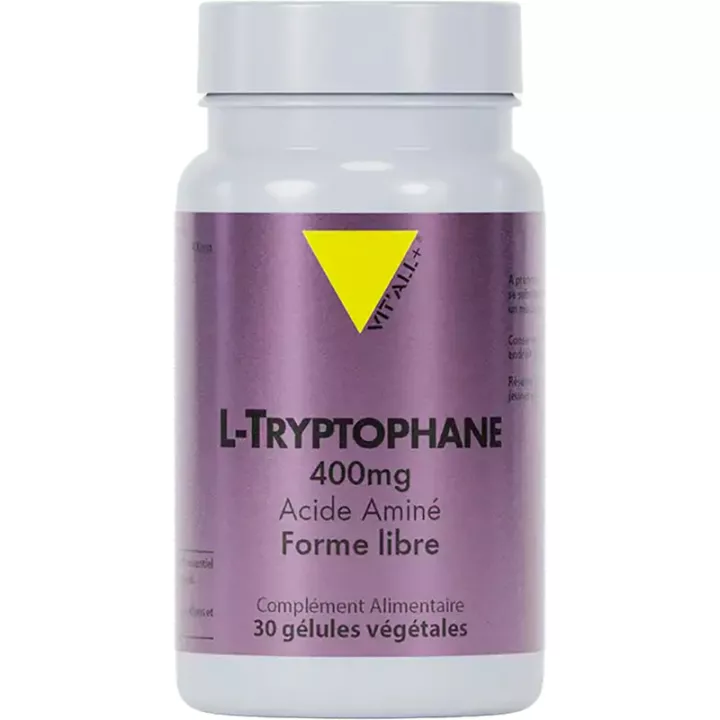
L-Tryptophan 400 mg - 30 Capsules Vit'All+ is a dietary supplement containing this essential amino acid in its free form. L-Tryptophan is therefore essential for the body’s proper functioning and accounts for about 1% of amino acids. It is not synthesized by the body; it is found in microorganisms and plants. That is why we must obtain it from external sources.
L-Tryptophan 400 mg - 30 Capsules Vit'All+aids in the synthesis of serotonin and melatonin across the blood-brain barrier. Serotonin helps regulate appetite and food intake, particularly with regard to carbohydrates.This neurotransmitter helps regulate stress levels while promoting relaxation and improving sleep quality.
Supplements containing tryptophan and its metabolite, 5-HTP, promote serotonin secretion. They may be helpful in combating depressive disorders and in facilitating sleep onset. L-Tryptophan can also be helpful when quitting smoking. A tryptophan deficiency accelerates and worsens depressive relapses and increases aggression. Taking oneTryptophan tablet in the evening will help limit these depressive relapses and, if necessary, reduce aggression.
Vitall+ L-Tryptophan 400 mg is a dietary supplement based onan essential amino acid, L-tryptophan. L-tryptophan is crucial for the synthesis of serotonin, a neurotransmitter often called the “happiness hormone.” By increasing serotonin levels, the product aims to improve mood, sleep, and overall well-being.
Each capsule is plant-based, ensuring high bioavailability and rapid absorption. This formulation is also ideal for vegetarians and people with specific dietary restrictions. With a concentration of 400 mg of L-tryptophan per capsule, this product offers a balanced dosage that allows for effective supplementation without overloading the body. It is recommended that you consult a healthcare professional for a supplementation plan tailored to your needs.
We also offer Vitall+ Psychobiotics Complex (30 capsules) at the best price in our online pharmacy.
How should L-Tryptophan be taken?
1/2 capsule per day on an empty stomach, preferably half an hour before bedtime; avoid prolonged use beyond three months.
Share your feedback on the usage instructions and dosage of Vitall+ L-Tryptophan 400 mg 30 Vegetarian Capsules with our partner Verified Reviews after your purchase.
What are the side effects and contraindications?
- For internal use only.
- Follow the recommended dosage.
- Store in a clean, dry place away from heat and moisture.
- Always keep out of reach of children.
- Do not combine with 5-hydroxytryptophan.
What are the ingredients in this dietary supplement for stress?
L-Tryptophan, Hypromellose (100% plant-based) (100% plant-based coating agent).
Nutritional Information for Vitall+ L-Tryptophan 400 mg, 30 Vegetarian Capsules
Per 1 capsule:
L-Tryptophan – 400 mg
Packaging
Box of 30 vegetarian capsules – 1-month supply.
Advice and Expert Opinions from Pharmacists
Sleep Quality: Influencing Factors, Neurobiological Mechanisms, and Clinical Implications
Sleep quality is a multidimensional variable that has a profound impact on overall health and well-being. It is influenced by various factors, ranging from neurobiological mechanisms to environmental factors.
Factors Influencing Sleep Quality
- Circadian Rhythm: The circadian system regulates the sleep-wake cycle and is significantly influenced by factors such as light exposure and ambient temperature.
- Sleep Hygiene: Pre-sleep behaviors, such as caffeine consumption or screen time, can affect sleep quality.
- Psychological State: Stress, anxiety, and other emotional disturbances are often associated with reduced sleep quality.
- Environmental Factors: Noise levels, air quality, and bed comfort have a direct impact on sleep quality.
Neurobiological Mechanisms
- Neurotransmitters: Molecules such as melatonin and serotonin play a crucial role in regulating sleep.
- Autonomic Nervous System: The balance between the sympathetic and parasympathetic systems influences sleep cycles.
- Brain Structures: Regions such as the suprachiasmatic nucleus are involved in regulating circadian rhythms.
Clinical Implications
- Sleep Disorders: Poor sleep quality is often a symptom of more serious disorders, such as insomnia or sleep apnea.
- Impact on Health: Poor sleep quality is linked to an increased risk of cardiovascular disease, metabolic disorders, and cognitive decline.
- Therapeutic Interventions: Approaches such as cognitive-behavioral therapy for insomnia (CBT-I) have been shown to be effective in improving sleep quality.
Sleep quality is a complex phenomenon influenced by various factors and mechanisms. A comprehensive understanding of these elements is essential for the diagnosis and treatment of sleep disorders. Further research is needed to refine methods for assessing sleep quality and to develop more effective interventions.