What is a parasitic treatment available at pharmacies, and who is it for?
Antiparasitic treatments available at pharmacies address two distinct areas: human parasites (intestinal, skin, and scalp) and animal parasites (fleas, ticks, and worms in pets). Our range of antiparasitic products and comprehensive antiparasitic solutions cover all of these needs. For intestinal parasites specifically, see our pages on intestinal parasites and intestinal worms.
- Human intestinal antiparasitic treatments: flubendazole (Fluvermal®) and albendazole (Zentel®) for pinworms, roundworms, and tapeworms—treatment for the entire family simultaneously on Day 0 and Day 14—natural supplements: garlic, pumpkin seeds, probiotics
- Skin antiparasitic treatments (scabies): benzyl benzoate or permethrin—simultaneous treatment of the patient and close contacts, plus disinfection of laundry and bedding at 60°C—persistent itching for 3–4 weeks after recovery (normal)
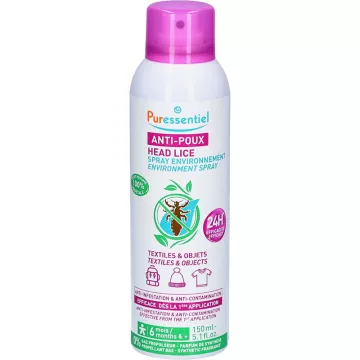
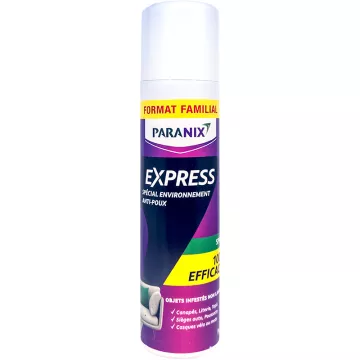
- Head lice treatments: dimethicone (physical, insecticide-free) or malathion (insecticide) — apply strictly according to the instructions — treat all contacts simultaneously — do not use unapproved products
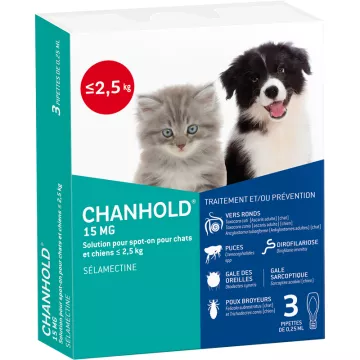
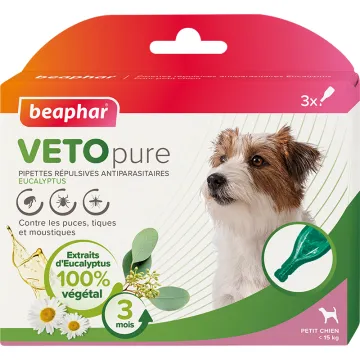
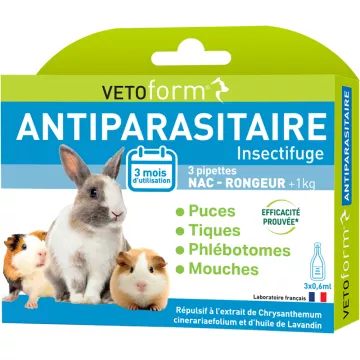
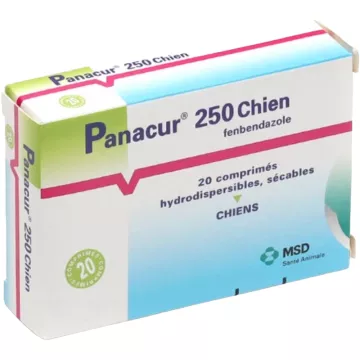
- Veterinary parasite treatments: puppy dewormers, kitten dewormers, cat dewormers — recommended frequency: every 3 months for cats, every 3–6 months for dogs
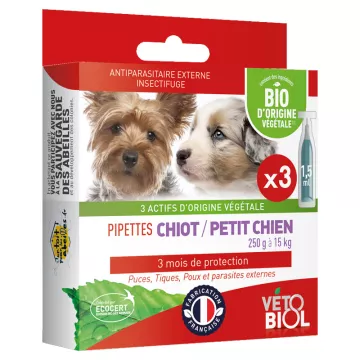
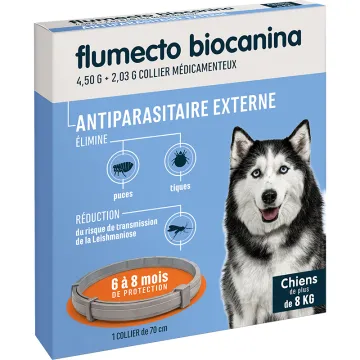
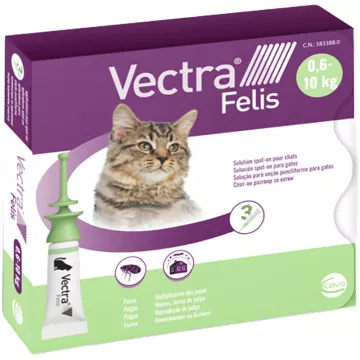
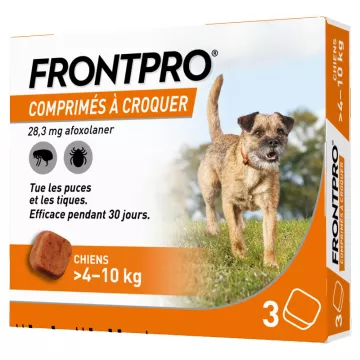
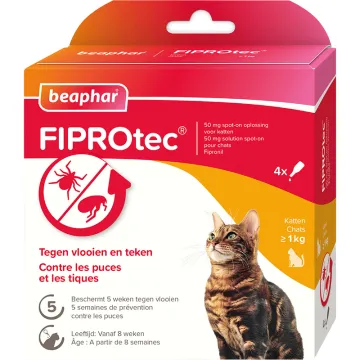
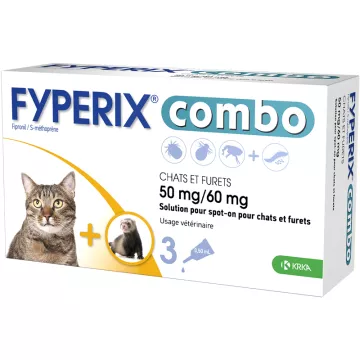
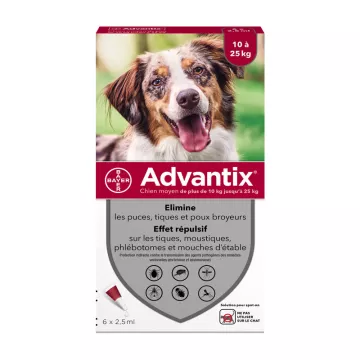
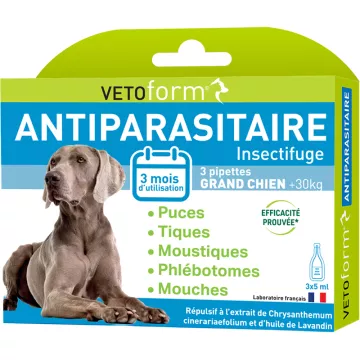
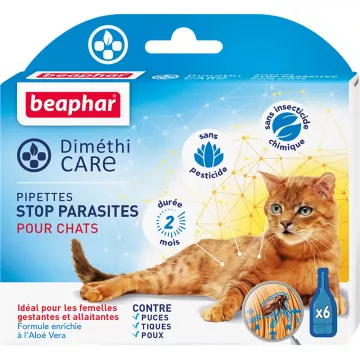
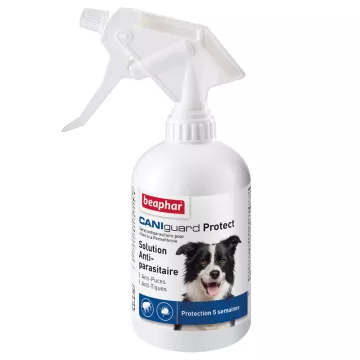
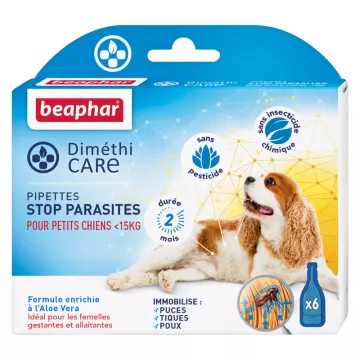
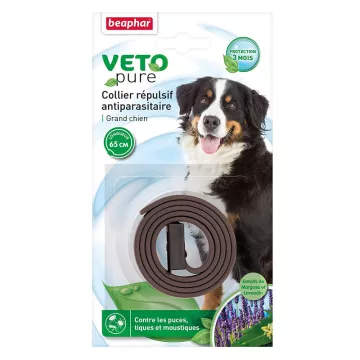
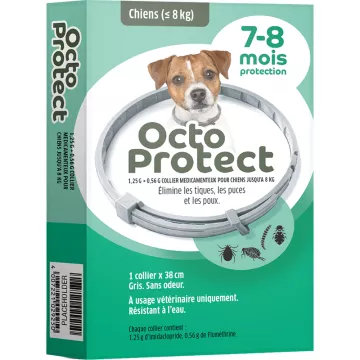
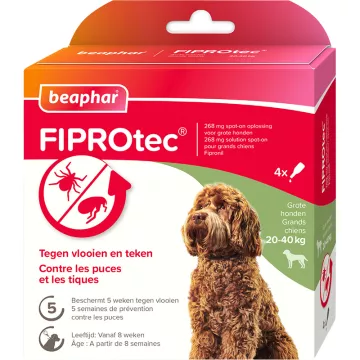
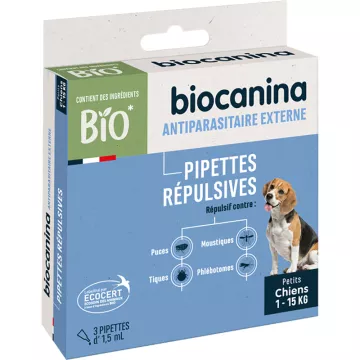
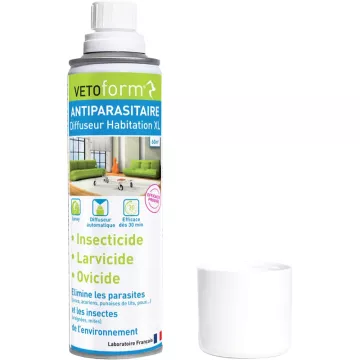
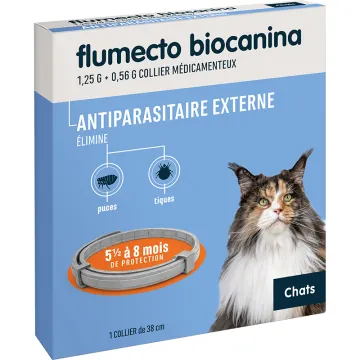
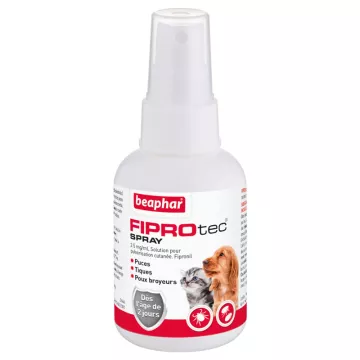
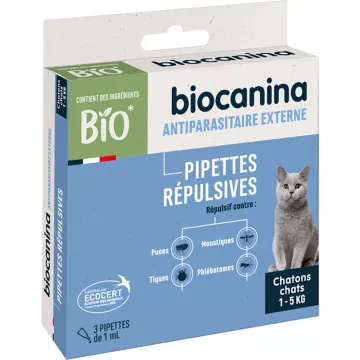
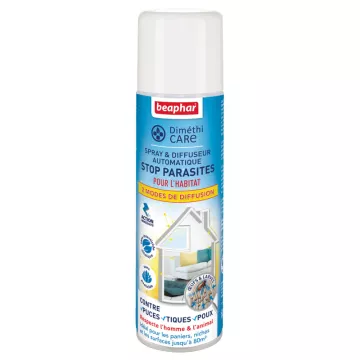
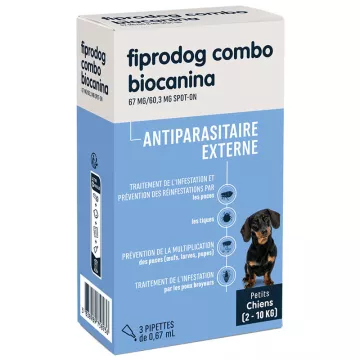
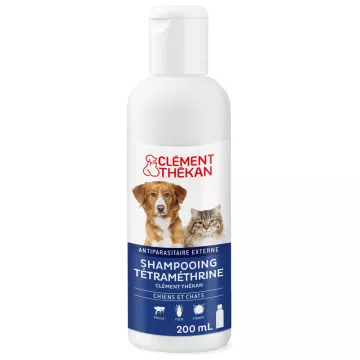
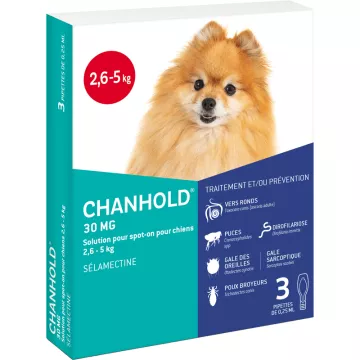
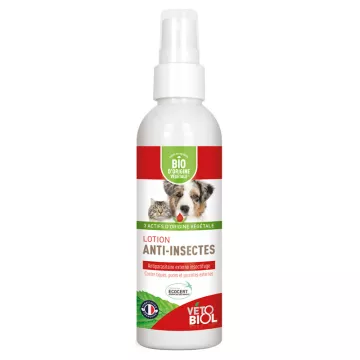
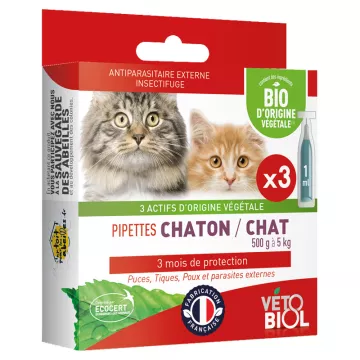
- Veterinary external parasite treatments: spot-on pipettes (imidacloprid, fipronil) + flea and tick collars — protection against fleas AND ticks — reapply according to the product’s duration of effectiveness — see our page on external parasites
Organic and natural parasite treatments
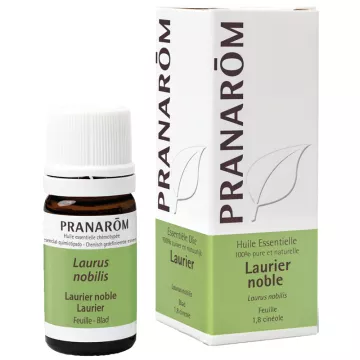
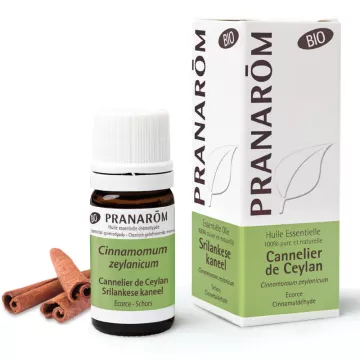
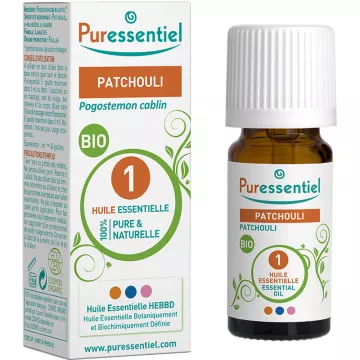
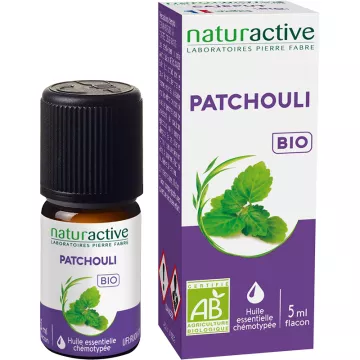
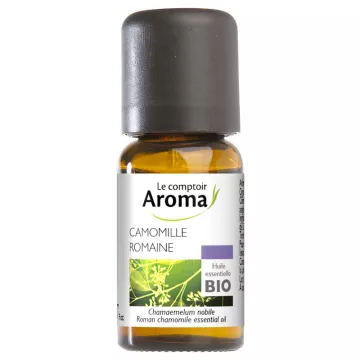
- Essential oils that act as repellents: lavandin essential oil (lice, fleas), tea tree essential oil (ectoparasites), lemon eucalyptus essential oil (mosquitoes, ticks) — dilute to 2–5% in a vegetable oil before application — never apply undiluted to the skin — use with caution in children under 6 years of age and pregnant women
- Natural mosquito repellents: lemon eucalyptus-based repellents (PMD) — DEET or IR3535 for areas at risk for malaria/dengue — range of mosquito repellents available, including mosquito repellent bracelets
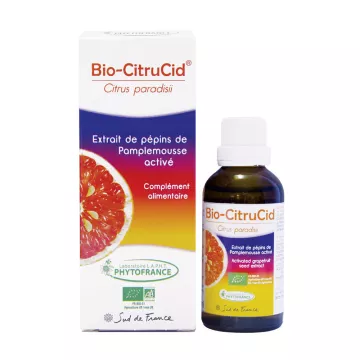
- Garlic and pumpkin seeds (cucurbitacin): documented natural dewormers against intestinal worms — raw garlic (2–3 cloves per day) or pumpkin seeds (50–80 g) on an empty stomach — used as a supplement to medical treatment, never as a substitute
- Dimethicone (Pouxit, Itax): physical lice treatment — silicone that suffocates lice and nits without insecticide — no risk of resistance (physical mechanism) — suitable for children as young as 6 months — leave on for 8 hours or overnight
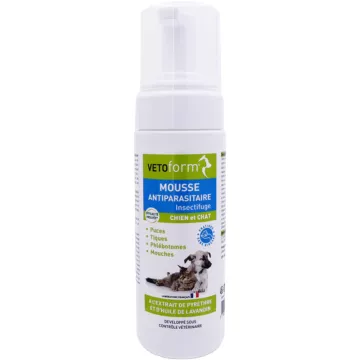
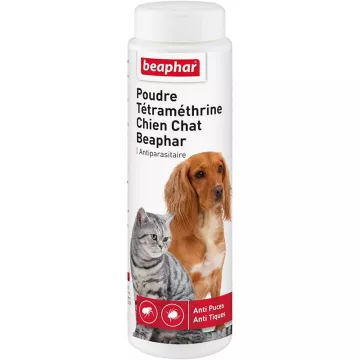
- Natural pyrethrum (pyrethrins): a natural insecticide extracted from chrysanthemum flowers—used in some treatments for head lice and animal fleas—biodegradable but toxic to cats and fish
Prevention, Hygiene, and Parasite Control Protocols
- Pinworm protocol (household infestation): treat the entire family on Day 0 and Day 14 — wash nightwear and bedding at 60°C — clean under fingernails every morning — do not shake the bedding (this spreads the eggs) — see our page on deworming
- Head lice protocol: apply antiparasitic treatment according to instructions — comb through hair section by section with a fine-toothed comb — repeat treatment 7–10 days later — disinfect brushes and shower caps at 60°C — notify the school
- Scabies protocol: treat the patient and all close contacts simultaneously — wash linens and bedding at 60°C or seal in an airtight bag for 72 hours if not washable — vacuum chairs and mattresses — repeat antiparasitic treatment on day 8 depending on the product
- Prevention of Mosquitoes and Ticks in the Outdoors: wear long, light-colored clothing — use DEET or IR3535 skin repellent — perform a full-body check after a hike (remove the tick completely with a tick remover without crushing it) — shower immediately upon returning
- Preventive deworming for pets: follow a regular schedule (cats 4 times/year, dogs 2–4 times/year depending on lifestyle) — use a product appropriate for the pet’s weight and species — consult your veterinarian about combination treatments (worms + fleas + ticks)
Safety, interactions, and when to seek advice
- Pest control and pregnancy: flubendazole is contraindicated in the first trimester (insufficient data) — opt for piperazine or postpone treatment — head lice: physical dimethicone without insecticide = safest option — scabies: medical consultation required
- Pest control and children: never use adult pest control products on a child under 2 years of age without medical advice—adjust dosages according to weight—lice in infants under 6 months: manual removal with a fine-toothed comb only
- Resistance to antiparasitic drugs: Malathion-resistant head lice in certain regions → prefer physical dimethicone — resistant intestinal parasites are rare in France — always follow the dosage and complete the full course of treatment
- Drug interactions: albendazole + corticosteroids (neurocysticercosis) — ivermectin + anticoagulants — always check for interactions before combining medications
- Consult a doctor if: persistent infestation despite 2 properly administered treatment cycles — severe parasitic infection in an immunocompromised patient — fever + rash + recent travel → suspicion of systemic parasitic infection → specialist physician