What are pinworms, and how can you recognize them?
Pinworms (Enterobius vermicularis) are the most common intestinal parasites in France—they affect 1 in 3 school-aged children. These small white worms, measuring 5–10 mm, live in the colon and rectum. What sets them apart is that the female migrates to the anal area at night to lay her eggs, causing the characteristic nighttime anal itching. Explore our line of antiparasitic products for appropriate human treatments.
- Key symptom: intense nighttime anal itching—leading to sleep disturbances, irritability, and difficulty concentrating in children
- Visible worms: white, wriggling filaments around the anus or in the stool in the morning—visual confirmation is sufficient to initiate treatment
- In girls and women: worms may migrate to the vulva → parasitic vulvovaginitis — vaginal discharge + nocturnal vulvar itching — antiparasitic treatment resolves symptoms
- Rare complications: appendicitis (worms in the appendix), peritoneal granuloma — rare but worth noting
- Pinworms are specific to humans: pets have their own distinct intestinal parasites — no cross-transmission between humans and animals for pinworms
How are pinworms diagnosed?
- Direct observation: examine the anal margin at night (1–2 hours after falling asleep) with a flashlight—visible, mobile, thread-like white worms—the fastest method of diagnosis
- Graham test (adhesive cellophane): apply a transparent adhesive strip to the anal margin in the morning upon waking, before washing or defecating—stick it onto a microscope slide—microscopic examination of pinworm eggs, which are elliptical in shape and flattened on one side
- Repeat on 3 consecutive mornings: egg laying does not occur daily—sensitivity increases to 90% with 3 samples
- No standard stool examination (parasitological stool test): pinworm eggs are not found in the stool but on the anal margin—this method is not suitable
- Probabilistic treatment without a diagnosis: acceptable if the child has typical nocturnal itching—treat the entire family without waiting for microscopic confirmation
Treatment of pinworms: complete protocol
Treatment for pinworms is simple but must be thorough—see our page on deworming for a complete guide to antiparasitic medications.
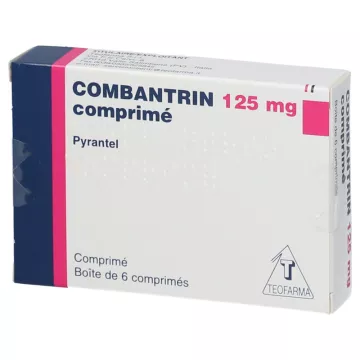
- Flubendazole (Fluvermal®): the standard treatment in France, available without a prescription — 1 tablet or measuring spoonful of suspension — must be repeated on Day 14 (kills adult worms but not the eggs—the second dose eliminates worms hatched from eggs after Day 0)
- Simultaneous treatment of the entire household is mandatory: all household members must be treated on the same day—asymptomatic carriers perpetuate the cycle of reinfection
- Mebendazole (Vermox): same protocol on Day 0 and Day 14 — available by prescription in France
- Pregnancy: Flubendazole not recommended during the first trimester—hygiene measures alone if pinworms are present in the first trimester—medical consultation required
- Infants < 1 year: flubendazole not recommended—pediatric consultation essential
Hygiene measures are essential to prevent reinfection
- On the morning of treatment: take a shower or wash thoroughly upon waking (remove eggs laid during the night)—change underwear, pajamas, and sheets, and wash them at 60°C
- Keepnails short and clean: Eggs can get under the nails during involuntary nighttime scratching—carrying eggs on the fingers is the main cause of reinfection
- Hand washing: with soap, as soon as you wake up and before every meal—this is particularly critical because eggs are infectious immediately after being laid
- Contaminated surfaces: Eggs can survive up to 3 weeks at room temperature on toys, doorknobs, and bedding—vacuum and clean frequently touched surfaces
- School or daycare setting: Notify the facility—coordinated treatment of affected families to break the cycle of the outbreak—see also our page on intestinal parasites