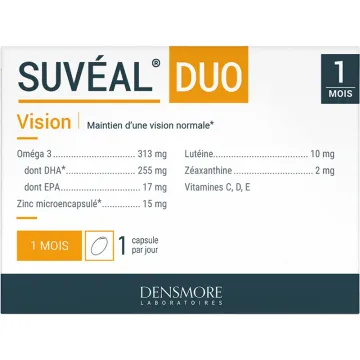
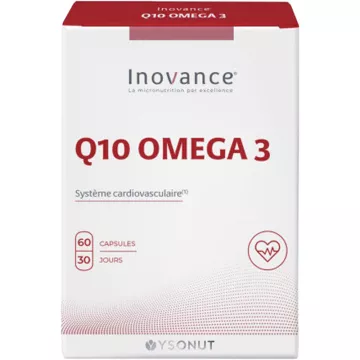
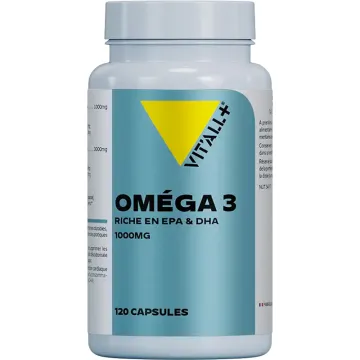
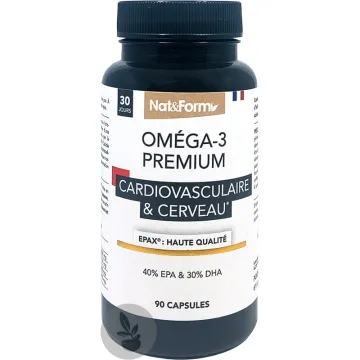
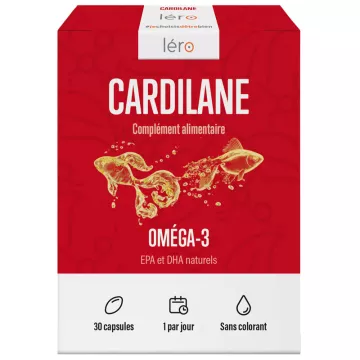
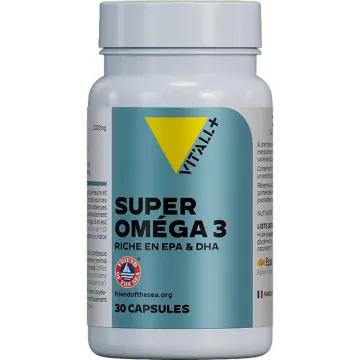
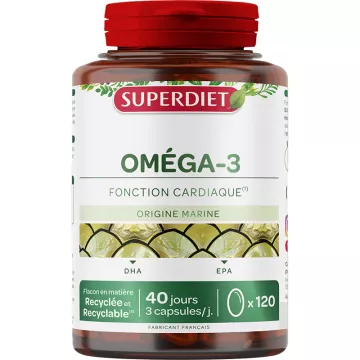
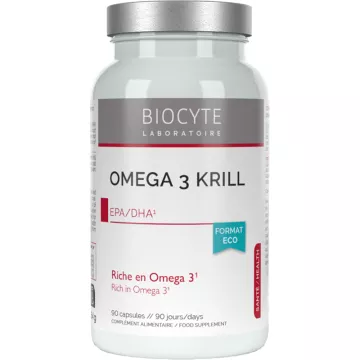
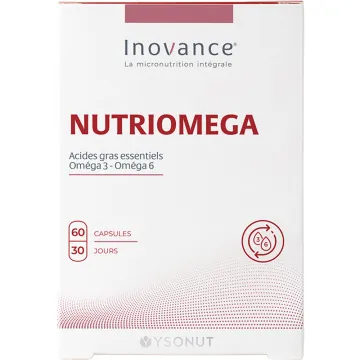
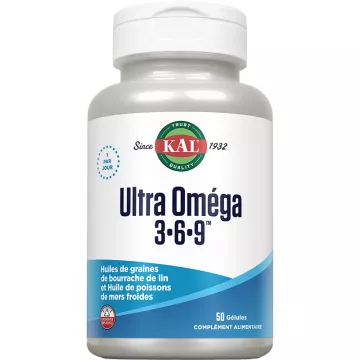
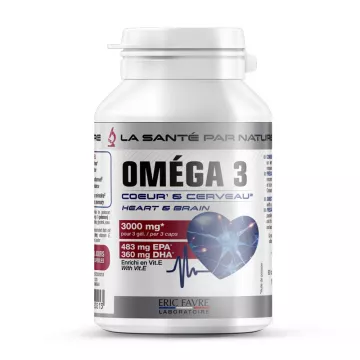
Omega-3s are essential polyunsaturated fatty acids that the body cannot produce on its own. They must be obtained through diet or supplementation. They are recognized for their role in the normal functioning of the heart, brain, and vision—claims approved by the EFSA. Check out our selection of omega-3 products at the pharmacy.
What are omega-3s?
Omega-3s refer to a family of polyunsaturated fatty acids characterized by their first double bond at position 3. There are three main forms, each with distinct properties and sources.
- ALA (alpha-linolenic acid): plant-based form, precursor—flaxseeds, walnuts, canola oil
- EPA (eicosapentaenoic acid): marine form, active—contributes to normal heart function (EFSA, 250 mg/day)
- DHA (docosahexaenoic acid): marine form most abundant in the brain and retina—contributes to normal brain function and normal vision (EFSA, 250 mg/day)
- The body’s conversion of ALA to EPA/DHA is inefficient (<10%) — marine or algae sources are preferable for direct intake
What are the health benefits of omega-3s?
Omega-3s have several EFSA-approved health claims covering three main areas.
- Heart: EPA and DHA contribute to normal heart function — 250 mg EPA+DHA per day
- Triglycerides: EPA and DHA contribute to the maintenance of normal triglyceride levels — 2 g EPA+DHA per day
- Brain: DHA contributes to normal brain function — 250 mg DHA per day
- Vision: DHA contributes to the maintenance of normal vision — 250 mg DHA per day, in synergy with lutein
- Blood pressure: EPA and DHA help maintain normal blood pressure — 3 g EPA+DHA per day
Animal vs. plant-based omega-3s: which should you choose?
The choice depends on your dietary profile and your goals.
- Fish oil (salmon, sardines, mackerel, herring): a direct source of EPA and DHA, the most concentrated and best-studied
- Krill oil: EPA and DHA bound to phospholipids—potentially better absorption, high bioavailability
- Algae oil: a vegan source of DHA (and sometimes EPA)—a vegan alternative to marine oils, with equivalent efficacy
- Flaxseeds, walnuts, chia oil: ALA only, limited conversion to EPA/DHA—insufficient on their own to meet EFSA thresholds
- For vegetarians and vegans: prioritize algae oil for a direct source of DHA/EPA
Omega-3s during pregnancy?
DHA is particularly important during pregnancy and breastfeeding.
- Maternal DHA contributes to the normal brain development of the fetus and breastfed infants — EFSA-approved claim
- Maternal DHA contributes to the normal development of vision in the fetus and breastfed infants (EFSA, 200 mg DHA/day in addition to the usual intake of 250 mg)
- Choose formulas without vitamin A (retinoids) from fish liver oils—which are teratogenic at high doses
- Algae oils are a safe alternative during pregnancy
How to choose an omega-3 supplement?
Several factors determine the quality and effectiveness of a supplement.
- Check the EPA + DHA content per capsule (not just total “fish oil”)
- Purity: certified free of heavy metals (mercury, lead, PCBs)—IFOS or TOTOX labels recommended
- Form: re-esterified triglycerides or phospholipids (krill) offer better bioavailability than ethyl esters
- Storage: Store in the refrigerator after opening—omega-3s are sensitive to oxidation
- Combine with vitamin C, vitamin E, and coenzyme Q10 for comprehensive antioxidant protection
Precautions and interactions with omega-3s?
Omega-3s are well tolerated but require some precautions.
- Common side effects: fishy-tasting belching (take with meals or choose enteric-coated formulations), mild nausea
- Anticoagulants (warfarin, high-dose aspirin): possible interaction at high doses (> 3 g/day)—inform your doctor
- At high doses (> 5 g/day): increased bleeding time—follow the recommended dosages
- Scheduled surgery: Reduce or stop supplementation 1 to 2 weeks beforehand