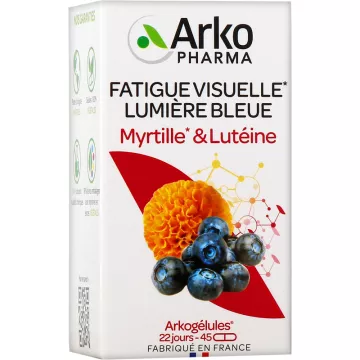
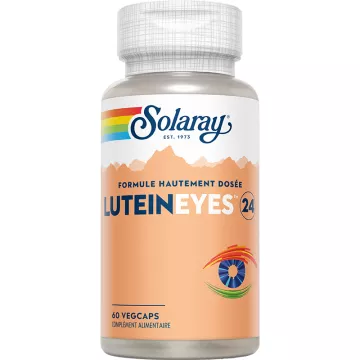
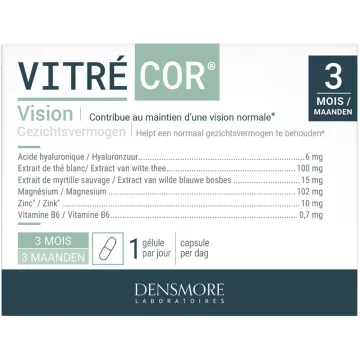
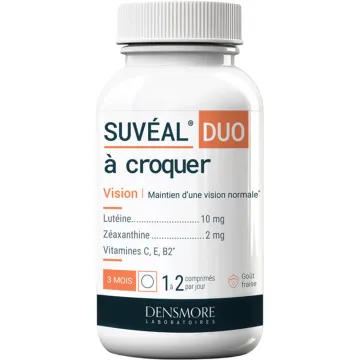
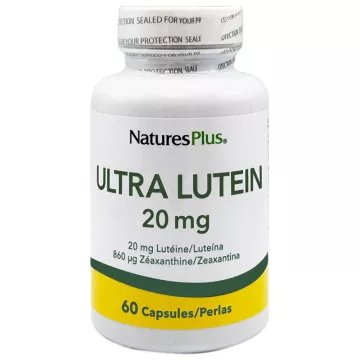
Lutein is a xanthophyll carotenoid that is naturally concentrated in the human retina, particularly in the macula. Together with zeaxanthin, it forms the macular pigment, which acts as a natural optical filter against blue light and UV rays. It is one of the most important carotenoids for eye health. Check out our selection of vision supplements.
What is lutein?
Lutein is a yellow-orange pigment classified as a xanthophyll (oxygenated carotenoid). The human body cannot synthesize it—so a regular dietary intake is essential. It is selectively concentrated in two key anatomical sites: the macula of the retina (at concentrations 100 times higher than in plasma) and the lens. Its structure gives it a unique ability to absorb blue wavelengths (400–500 nm)—the most harmful to photoreceptors—and to neutralize free radicals generated by light.
Lutein and Vision: What Role Does It Play in the Retina?
Lutein plays a direct structural and functional role in retinal tissues.
- Together with zeaxanthin, it forms the macular pigment —its density correlates with the quality of central vision
- It filters blue light before it reaches the photoreceptors in the fovea
- It protects retinal cells from photo-induced oxidative stress
- Its levels in the macula reflect long-term dietary intake and can be increased through supplementation
- Combined with zeaxanthin and DHA in comprehensive eye health formulas
Lutein and blue light from screens?
Prolonged exposure to screens (smartphones, computers, tablets) emits high-energy blue wavelengths that place intense strain on macular photoreceptors.
- Lutein absorbs these blue wavelengths (430–460 nm) before they reach the retina
- Low macular pigment density is associated with greater sensitivity to glare and visual fatigue
- Supplementation may help improve macular pigment density—an effect documented by retinal imaging studies
- Combine with zinc and vitamin C in formulas for eye protection and visual fatigue
- For individuals at risk of macular degeneration: see our AMD page and consult an ophthalmologist
Lutein and the skin: what are the benefits?
As a fat-soluble carotenoid, lutein integrates into skin membranes, where it provides antioxidant protection.
- It helps protect the skin against UV-induced oxidative stress (internal photoprotection)
- It supports skin elasticity and hydration by protecting membrane lipids from oxidation
- Working in synergy with other antioxidants (vitamins C and E, omega-3), it helps slow down oxidative skin aging
- Found in certain cosmetic formulas for internal sun protection
How should lutein be used as a supplement?
Supplementation follows well-defined protocols depending on the goal.
- Usual dose: 6 to 20 mg of lutein per day, as recommended
- Take with a meal containing fats (lutein is fat-soluble)—a drizzle of olive oil improves absorption
- Formulas containing zeaxanthin: recommended lutein-to-zeaxanthin ratio of 5:1 (reflecting the composition of the macular pigment)
- A minimum 3-month course is required to observe a measurable increase in macular pigment
- Can be combined with DHA capsules for comprehensive retinal protection
How to Choose High-Quality Lutein?
The source and dosage form determine the supplement’s effectiveness.
- Choose lutein extracted from marigold (Tagetes erecta)—the most concentrated and bioavailable source, standardized to free lutein
- Check that the formula contains zeaxanthin —essential for replicating the macular pigment profile
- Softgels containing vegetable oil: better bioavailability than dry tablets
- Certified GMO-free and free of synthetic solvents—choose the FloraGlo® or OptiSharp® labels as a benchmark for quality
- Carotenodermia may occur in case of overdose (yellowish discoloration of the skin)—harmless and reversible upon discontinuation