What is zeaxanthin, and what role does it play in the eye?
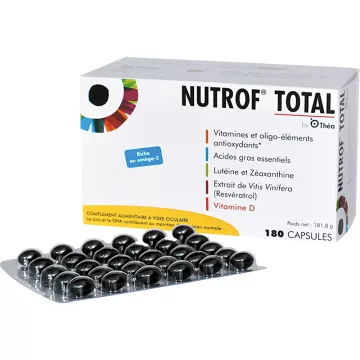
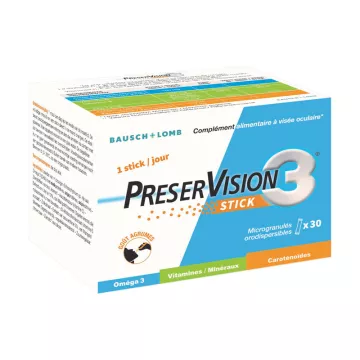
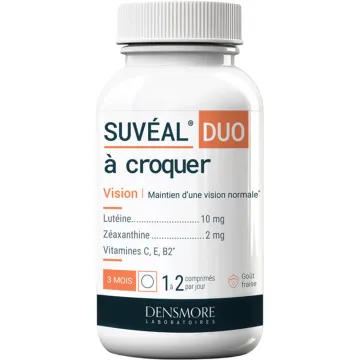
Zeaxanthin is a xanthophyll carotenoid that the body cannot synthesize—it must be obtained through diet or supplementation. It accumulates primarily in the macula of the retina (the part responsible for sharp central vision), where, together with lutein, it forms the macular pigment—a natural filter against blue light (400–500 nm) and UV rays. Vision supplements are available in the store’s vision supplement line.
- Location in the eye: zeaxanthin is concentrated in the fovea (the center of the macula—the area of sharpest vision) — lutein predominates in the macular periphery — the two work together as natural optical filters to protect the photoreceptors (cones and rods) from oxidative stress
- Protective mechanism: zeaxanthin absorbs high-energy blue light wavelengths — neutralizes free radicals generated by light exposure — reduces photooxidation of photoreceptor membrane lipids
- AMD (age-related macular degeneration): Zeaxanthin and lutein are the only carotenoids present in the macula—high macular pigment levels are correlated with a reduced risk of AMD in epidemiological studies—the AREDS2 (Age-Related Eye Disease Study) documented the benefits of lutein/zeaxanthin supplementation in preventing the progression of intermediate AMD
- Blue light and screens: Prolonged exposure to digital screens (phones, computers, tablets) increases blue light exposure—zeaxanthin and lutein supplementation is recommended for heavy users of all ages—for children, prioritize dietary sources as the first line of treatment
In which foods is zeaxanthin found, and how is it absorbed?
Zeaxanthin is a fat-soluble pigment—its intestinal absorption is significantly improved by simultaneous consumption of fats (olive oil, avocado, egg yolk). Low-fat diets or lipid absorption disorders (steatorrhea, bariatric surgery) reduce its absorption.
- Richest sources: eggs (egg yolk—high bioavailability because it is naturally bound to fats) — yellow corn — orange and yellow bell peppers — spinach and kale — broccoli — peaches and tangerines — saffron (a concentrated source in studies on vision)
- Zeaxanthin vs. lutein: although structurally similar (isomers), they play complementary roles—lutein predominates in the macular periphery, zeaxanthin in the central fovea — the most effective supplements combine them in a zeaxanthin-to-lutein ratio of approximately 1:5 (the ratio naturally found in the macula)
- Recommended dosage: 2 to 4 mg/day of zeaxanthin—often combined with 10–20 mg/day of lutein in AMD formulas—to be taken with a meal containing fat to optimize absorption
- Retention in the body: long half-life (several weeks)—gradually accumulates in the macula—protective effects increase with the regularity and duration of supplementation—start as early as age 50 to help prevent AMD
Synergistic Combinations and Precautions with Zeaxanthin
Zeaxanthin is an active ingredient for eye health that acts synergistically with other nutrients that protect the retina. Leading AMD formulas consistently combine several nutrients to address different protective mechanisms.
- Documented combinations: lutein (complements macular protection) — zinc (a cofactor for vitamin A in the retina, an enzymatic antioxidant) — vitamin C (a water-soluble antioxidant in the aqueous humor) — vitamin A (precursor of rhodopsin — night vision) — omega-3 DHA (major component of retinal photoreceptor membranes) — blueberry (anthocyanosides — retinal vascularization)
- Skin health: outside the eye, zeaxanthin exerts an antioxidant effect on the skin — protection against photoaging of the skin — effects that complement topical SPF sun protection
- Precautions: no documented toxicity at usual doses (2–4 mg/day) — possible carotenodermia (orange discoloration of the skin) with very high intake — insufficient data on interactions with anticoagulants at dietary doses — if undergoing anticoagulant therapy, seek medical advice before taking any supplements — supplements are not recommended for children without pediatric advice
- Smokers: Beta-carotene (another carotenoid) is contraindicated in smokers — this restriction does not apply to zeaxanthin and lutein — AMD formulas without beta-carotene are preferable for smokers