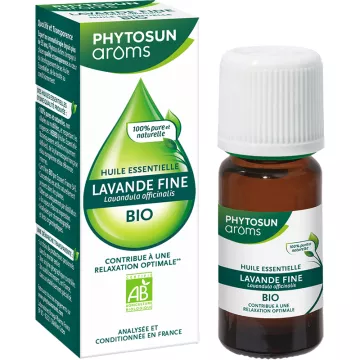
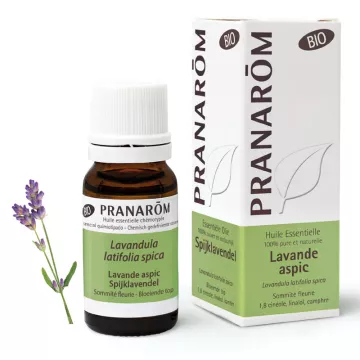
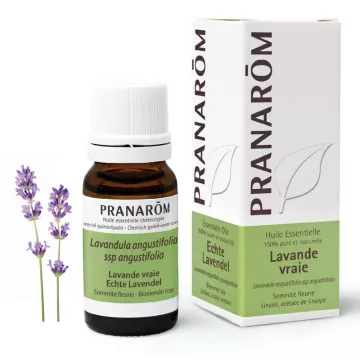
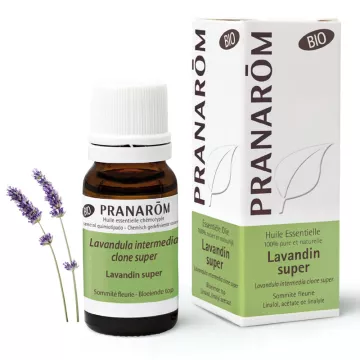
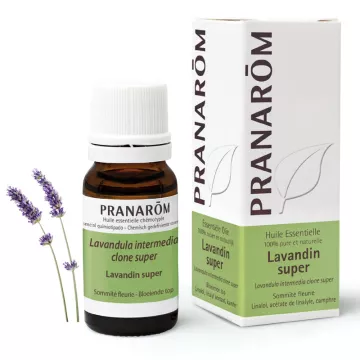
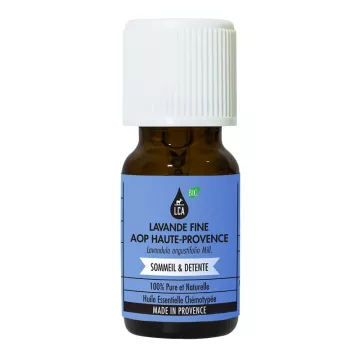
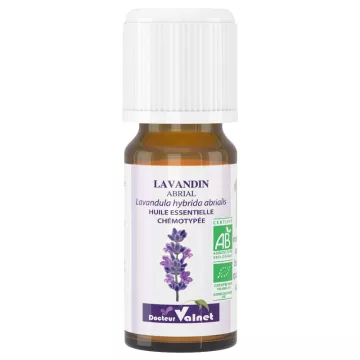
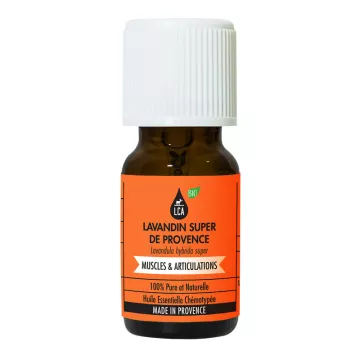
If you could only have one essential oil at home, this would be it: true lavender is the most versatile and one of the best-tolerated—for relaxation, sleep, and skin care. Discover our laboratories’ organic lavender products and the skincare items that contain them here.
More details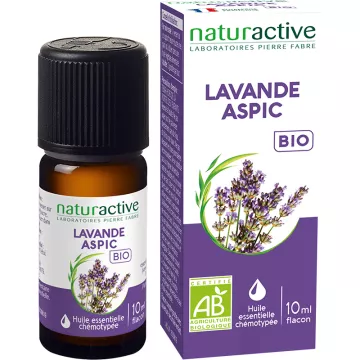
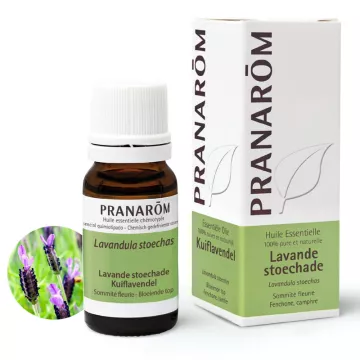
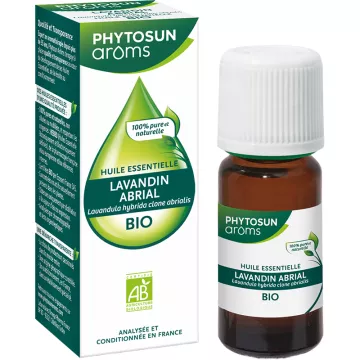
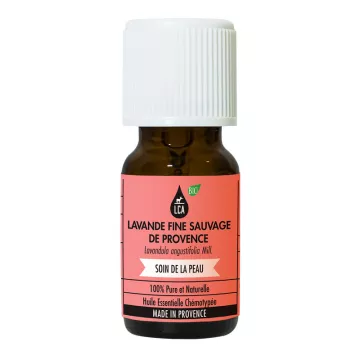
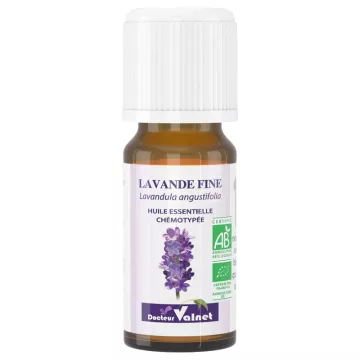
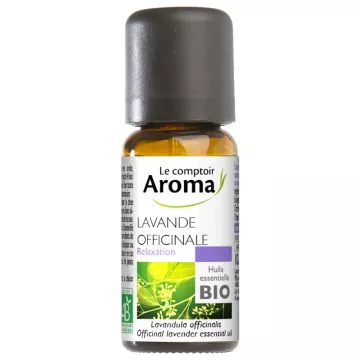
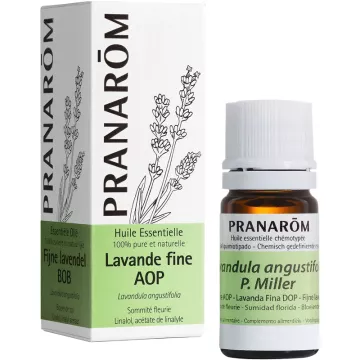
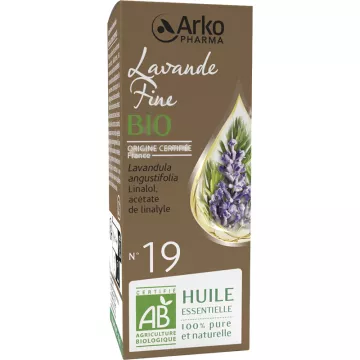
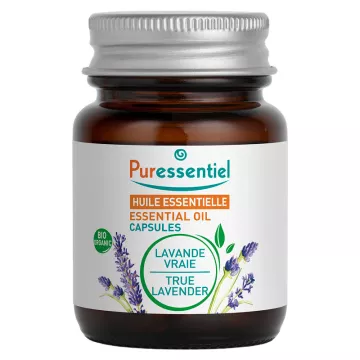
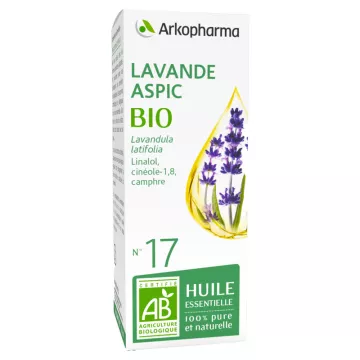
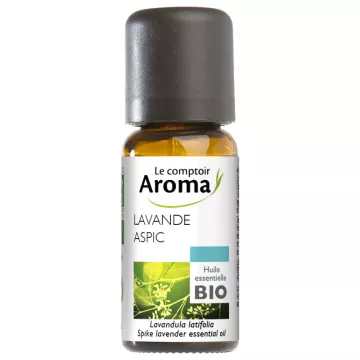
True lavender (or medicinal lavender) essential oil is distilled from the flowering tops of Lavandula angustifolia, harvested at high altitudes, particularly in Provence. Its chemotype combines linalool and linalyl acetate. It should be distinguished from lavandin (a more camphor-like, “muscular” hybrid) and spike lavender: the Latin name on the bottle is the definitive identifier.
True lavender is used in aromatherapy for relaxation and sleep—diffused in the evening, inhaled, or applied in diluted form via massage to the solar plexus and wrists, as featured in our essential oils and sleep section—and for the skin: irritations, sore spots, and minor everyday injuries, diluted in a carrier oil. Traditionally, it’s also used to prevent head lice, with a few diluted drops applied behind the ears. Although generally well-tolerated, it is still an essential oil: dilute before applying to the skin; avoid use during the first trimester of pregnancy and on children under 3 years of age without consulting a professional; perform a skin test first. Persistent sleep disturbances warrant a consultation—see also our sleep and stress solutions.
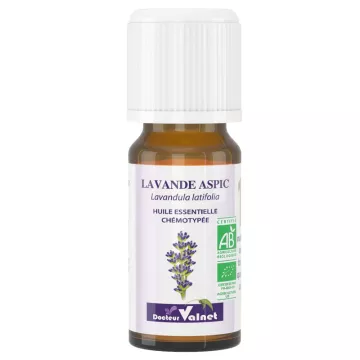
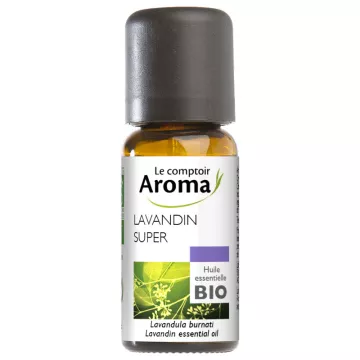
As a single organic essential oil (5 to 30 ml) from Pranarôm, Phytosun Arôms, Puressentiel, Docteur Valnet, and Le Comptoir Aroma; as lavender hydrosol for sensitive skin and children; and in numerous relaxation blends, pillow sprays, and diffuser blends. In combination: petitgrain bigarade or Roman chamomile for relaxation, tea tree for the skin.
Essential oils are not medicines: lavender aids in relaxation and basic skin care; it does not treat insomnia or established skin conditions. For sleep, consistency is key: diffuse for 10 minutes at bedtime or place 2 drops on a tissue near your pillow every night for two to three weeks, along with good sleep hygiene (schedules, screen time, coffee). When applied to the skin, dilution is always recommended—10 to 20% in a carrier oil—even for this oil, which is known for being gentle.
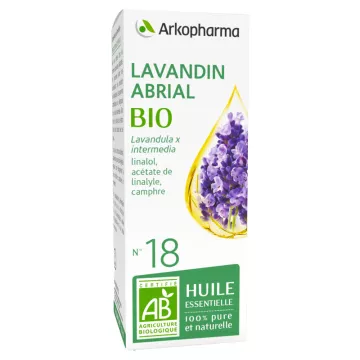
True lavender is for relaxation, sleep, and the skin; lavandin, which has a camphor-like scent and is less expensive, is better suited for muscles and laundry. Check the Latin name: Lavandula angustifolia versus Lavandula × intermedia.
Never add it directly: the essential oil does not disperse in water. Dilute it first in a neutral bath base or a spoonful of vegetable oil.
Written and reviewed by Arnaud, Ph.D. in Pharmacy — the Soin et Nature Pharmacy team.
Sources: European Medicines Agency (EMA), HMPC monograph on Lavandulae aetheroleum; ANSES and ANSM, recommendations for the use of essential oils.