Arnica montana is one of the most widely used medicinal plants in Europe. It is traditionally used to treat bruises, contusions, muscle soreness, and to aid recovery after exercise. Available as a gel, cream, massage oil, and homeopathic granules, it comes in a variety of forms to meet both everyday needs and those of athletes.
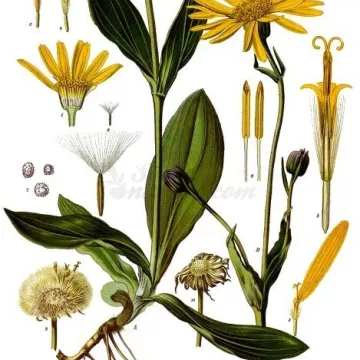
Arnica Montana, also known as “fall herb” or “Vosges tobacco,” is a perennial plant in the Asteraceae family. It is found on mountain meadows in Europe and North America, where it grows in siliceous, low-limestone soils. Its yellow flower heads, similar to those of daisies, contain the active ingredients used in pharmaceuticals and herbal medicine.
Arnica is available in two distinct therapeutic forms: the plant for topical use (gel, cream, oil, tincture), listed in the European Medicines Agency’s HMPC monograph for traditional use; and the homeopathic remedy in high dilutions (5 CH, 9 CH, 15 CH, 30 CH), a staple of every family first-aid kit. In both these capacities, Arnica ranks alongside the other essential homeopathic remedies in the French materia medica.
Arnica montana L. is a protected species throughout France. Its collection in the wild is strictly regulated, and virtually all extracts used in cosmetics and pharmaceuticals come from supervised cultivation, particularly in the Vosges, the Carpathians, and the Balkans.
Its flower heads contain high concentrations of the active ingredients for which it is renowned: sesquiterpene lactones (helenalin, dihydrohelenalin), flavonoids, essential oils, polyacetylenes, and phenolic acids.Helenalin is the primary marker of topical activity recognized by the EMA, provided that use is strictly external and on intact skin.
The EMA officially recognizes Arnica as a plant with traditional use in the symptomatic treatment of contusions, bruises, mild sprains, and muscle soreness resulting from physical exertion. These indications apply exclusively to preparations for topical use on healthy skin.
Athletes value Arnica for relieving muscle soreness and aiding in post-exercise recovery. The plant is also widely used after minor trauma such as a blow or a fall, to promote muscle comfort and the visible reduction of bluish bruises related to microcirculation. In this regard, it complements active ingredients that support blood circulation in natural treatments.
Topical Arnica preparations are the most extensively studied and most commonly used in daily life. They contain a concentrated flower extract in a lipid-based or water-based formula, ready for local application.
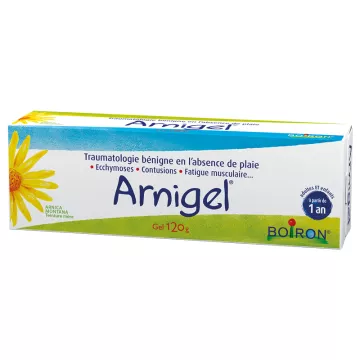
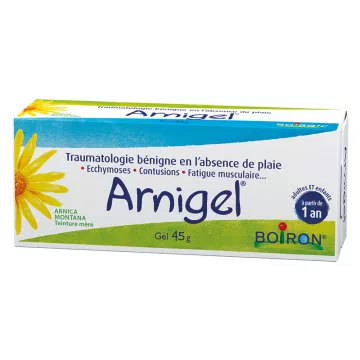
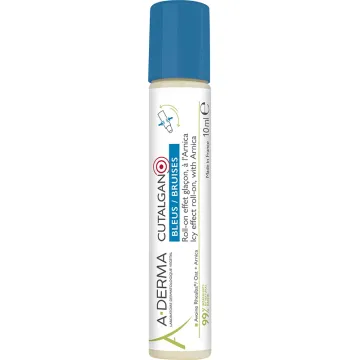
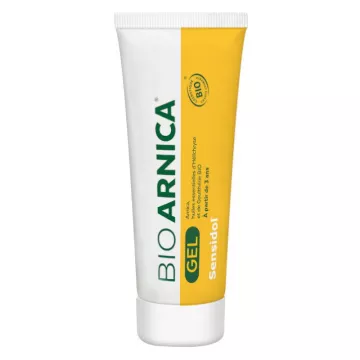
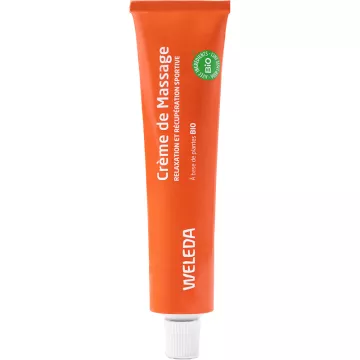
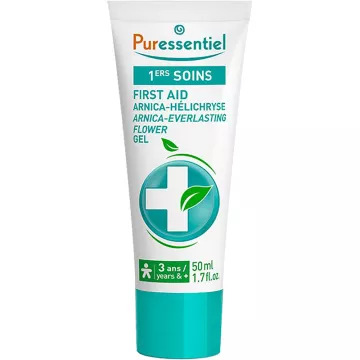
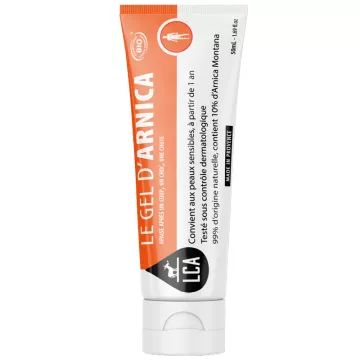
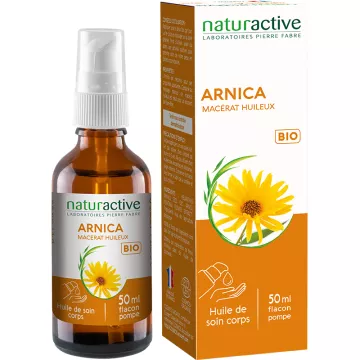
Arnica gel, with its cooling texture, is applied to the affected area after an impact, physical exertion, or a workout, massaged gently until absorbed. Arnica cream, which is more nourishing, is ideal for joint areas and dry skin.Arnica massage oil, often combined with essential oils such as wintergreen andItalian helichrysum, supports muscle comfort and joint flexibility before or after physical activity.
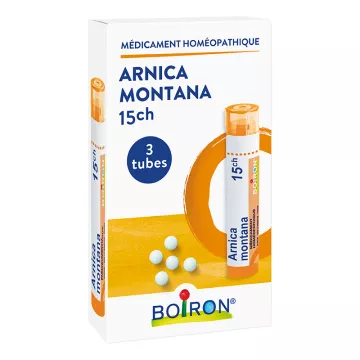
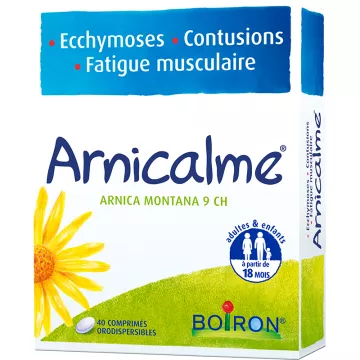
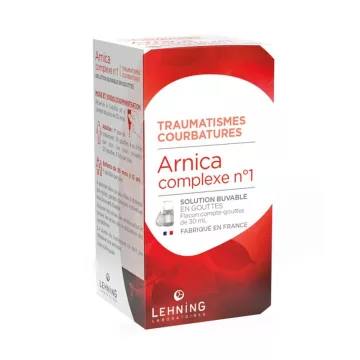
Arnica Montana in homeopathic granules is likely the best-known strain in French materia medica. It is found in most family first-aid kits alongsideInfluenzinum, Thymulin, and Yersin’s serum.
The most commonly prescribed dilutions are 5 CH, 9 CH, 15 CH, and 30 CH, available as granules to be allowed to dissolve under the tongue or as single doses. The French National Authority for Health (HAS) evaluated homeopathy in 2019 but did not conclude that it was more effective than a placebo, and homeopathic medicines have not been reimbursed by the French national health insurance system since 2021. Arnica granules nevertheless remain deeply entrenched in French medical practice, used as a complementary treatment and not as a substitute for medical advice when it is needed.
The dosage of Arnica depends directly on the chosen dosage form. Standard protocols provide guidelines, but a pharmacist’s advice remains invaluable for adjusting the dosage based on the individual’s specific condition.
For topical use, apply 2 to 3 times a day to the affected area with a light massage for 5 to 7 days, and never apply to broken skin or mucous membranes. In homeopathy, the standard regimen calls for 5 granules every 1 to 2 hours during the acute phase (shock, contusion, muscle soreness), followed by gradually increasing the interval as the condition improves. The granules should be taken away from meals, tobacco, coffee, and strong essential oils.
Although it is of natural origin, Arnica Montana requires several strict precautions. Internal use of the undiluted plant is toxic and strongly discouraged: only homeopathic dilutions or controlled pharmaceutical preparations may be ingested.
Topical Arnica should never be applied to an open wound, mucous membranes, the eye, or a weeping lesion. People allergic to the Asteraceae family (chamomile, dandelion, yarrow, daisy, chrysanthemum) should perform a skin test in the crook of the elbow before use and stop immediately if redness, itching, or contact dermatitis occurs. Use is not recommended for pregnant or breastfeeding women without medical advice, nor for children under three years of age when using concentrated topical forms. In cases of severe pain, significant swelling, fever, or a deep wound, medical attention is required.
In pharmacies and drugstores, arnica is available in various formulations designed to address specific needs. The right choice depends on the nature of the discomfort and the context of use.
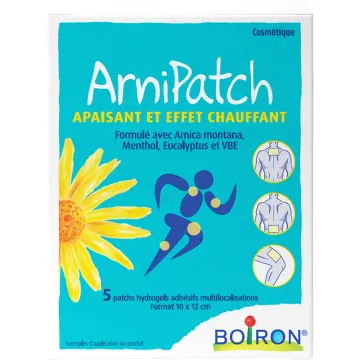
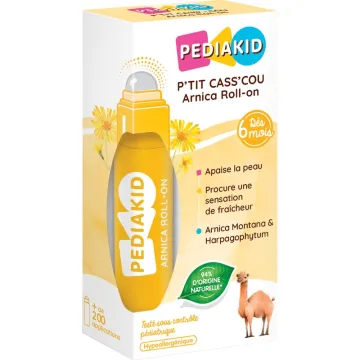
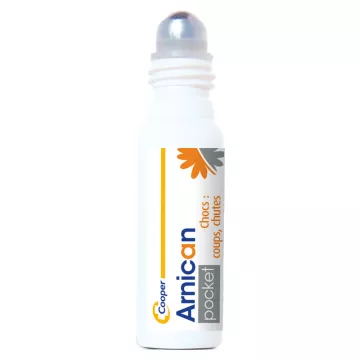
Arnica gel remains the go-to choice for everyday bumps and bruises.Arnica massage oil is better suited for athletes looking for a product that spreads easily during a massage. The restorative cream provides relief for dry or joint-related areas, particularly for bruises, bumps, and contusions. Homeopathic granules are a great addition to a family first-aid kit alongside other homeopathic remedies. For a high-quality topical product, it’s best to choose one with a sufficient concentration of Arnica mother tincture, free of unnecessary allergens, and—when possible—an organic certification guaranteeing the traceability of the raw materials.
Arnica is also used for dogs, cats, and horses—either as a topical application or in homeopathic granules—to help with bruises, muscle aches, and recovery after exercise or surgery.
Arnica homeopathic granules are among the most commonly recommended remedies in veterinary homeopathy and in homeopathic treatments for dogs and cats. Any administration to animals must be approved by a veterinarian, who will adjust the dilution and frequency based on the species, weight, and clinical condition. The application of gels concentrated in essential oils is not suitable for all species, particularly cats, which are especially sensitive to certain volatile compounds.