
Yersin serum is an immunological treatment developed by Dr. Alexandre Yersin, a renowned Franco-Swiss physician and bacteriologist, in the late 19th century. This serum was developed as part of his research on the bubonic plague, a devastating disease that was then ravaging Asia and Europe.
In 1894, during his expedition to Hong Kong, Yersin isolated the bacterium responsible for the plague, now known as Yersinia pestis. He then developed an anti-plague serum in collaboration with the Pasteur Institute to neutralize the infection and reduce mortality from the disease. Today, Yersin’s serum survives in the form of a rare homeopathic remedy, prepared according to the Pasteurian method of dilutions.
Yersin’s serum was one of the first biological treatments used to combat the bubonic plague. Its introduction marked a turning point in the history of infectious disease medicine:
Neutralization of the Yersinia pestis bacterium through specific antibodies capable of halting the progression of the infection. Reduction in mortality among infected patients, with a significant decrease in serious complications. Support for the immune response, helping the body fight the bacterium. Prophylactic use, through preventive administration to individuals exposed to epidemic zones. Ultimately, this was a major breakthrough in bacteriology that paved the way for modern therapeutic serums and antibacterial vaccines.
Although this biological serum is no longer prescribed today, its development represents a key milestone in the fight against infectious diseases. To naturally support immunity on a daily basis, remedies such as propolis andechinacea remain widely used in herbal medicine.
Yersin’s serum was produced using a process similar to that used for antivenom serums. This passive immunotherapy technique shaped bacteriological medicine in the late 19th century.
Researchers injected the attenuated bacteria into horses, whose immune systems then developed specific antibodies against Yersinia pestis. Blood was then drawn from the immunized horses to extract the antibody-rich plasma. After a serum purification step—which removed impurities and concentrated the immunological agents—the finished product was injected into infected patients, neutralizing the bacteria and strengthening their immune defenses.
This treatment provided rapid relief from the infection, provided it was administered early. Its effectiveness depended directly on the stage of the disease at the time of injection.
Yes, its introduction significantly reduced the mortality rate from bubonic plague, which had previously been nearly universal. Doctors observed markedly better results when the serum was administered quickly.
Several effects were documented: better outcomes with early treatment, including an increased survival rate among patients treated within the first few hours; a significant decline in epidemics in areas where the serum was available; and its status as the first specific treatment for the plague, as no effective therapy existed prior to Yersin’s work.
The serum’s effectiveness, however, depended on several factors, including the timing of administration, the severity of symptoms, and the quality of the serum batch. These limitations spurred further research in immunology.
Several reasons explain the gradual phasing out of Yersin’s biological serum during the 20th century. The main reason wasthe advent of modern antibiotics such as streptomycin, doxycycline, and chloramphenicol, which proved to be more effective and easier to administer against the plague (sources: WHO, HAS).
Added to this were the difficulties in producing and storing the serum—which required a complex production process and precise logistics—andchanges in public health strategies, where hygiene measures, rodent control, and vaccination have reduced the frequency of epidemics. Today, bubonic plague is effectively treated with antibiotics, provided that a rapid diagnosis is made in a hospital setting.
Nevertheless, the serum continues to be used in Pasteurian homeopathy, in the form of high dilutions (rare strains), alongside other preparations such asinfluenzinum or thymulin.
Yersin serum is a curative treatment containing ready-to-use antibodies, administered after infection to neutralize the bacterium. It acts immediately, but its protection is temporary.
The plague vaccine, on the other hand, is a preventive preparation that stimulates the immune system to produce its own antibodies against Yersinia pestis. Its protection develops gradually but lasts much longer. This distinction between passive and active immunization continues to shape modern infectious disease medicine, from hyperimmune immunoglobulins to recombinant vaccines.
To maintain a robust immune response on a daily basis, the intake of micronutrients such as zinc and vitamin C remains a recognized cornerstone (EFSA).
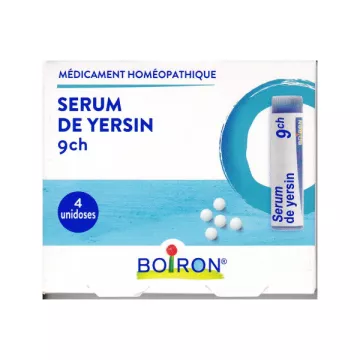
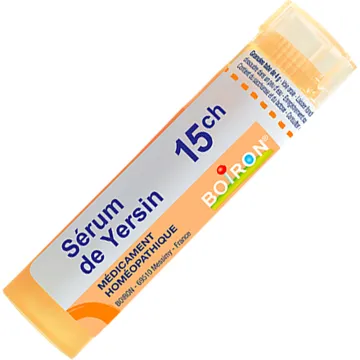
Biological anti-plague serum has disappeared from medical practice, but its name persists in homeopathic materia medica. Pasteur Institute laboratories offer dilutions of Yersin serum among their essential homeopathic remedies, typically in high dilutions (9 CH, 15 CH, 30 CH).
These preparations are part of the isotherapeutic tradition, in which the pathogenic substance, diluted to the extreme, is used according to the principle of similarity. Their use is part of a complementary approach and in no way replaces medical advice or conventional anti-infective treatments. In the event of symptoms suggestive of a serious infection (high fever, painful swollen lymph nodes, return from an endemic area), immediate medical consultation is essential. Homeopathy retains a recognized role in supportive care, provided it is administered under medical supervision.
Beyond Yersin serum, several well-documented natural approaches help strengthen the body’s natural defenses as a preventive measure. Adaptogenic plants, bee products, and key micronutrients form the cornerstones of this daily strategy.
Echinacea root is traditionally used to support the immune system during the winter months. Royal jelly, rich in amino acids, and propolis, with antibacterial properties recognized by the EMA, usefully complement this strategy. For a structured approach, the “Immune Defense” category brings together leading dietary supplements in the fields of phytotherapy and nutritherapy.
Alexandre Yersin’s work was pioneering in several medical fields, and his influence extends far beyond the treatment of the plague alone. His name remains associated with major scientific foundations, both in France and in Asia.
The development of therapeutic serums, based on the use of antibodies derived from immunized animals, inspired treatments for diphtheria, tetanus, and later certain types of poisoning. The advances in passive immunotherapy pioneered by Yersin and Behring still underpin certain treatments today for emerging viruses and bacterial toxins. His research also spurred the creation of new antibacterial vaccines against cholera, diphtheria, and whooping cough. Finally, Yersin helped found the Pasteur Institute in Indochina, dedicated to the study of tropical pathogens and still active today under the auspices of the International Network of Pasteur Institutes.
Alexandre Yersin’s scientific legacy remains a major reference in bacteriology and infectious disease medicine, studied in medical and pharmacy schools as a foundational milestone in the era of microbiology.