What is thymulin?
The term “thymulin” encompasses two very different concepts that must be distinguished:
- Endogenous thymulin (sometimes called Serum Thymic Factor, STF): a true nonapeptide naturally secreted by the epithelial cells of the human thymus. Described in the research of Jean-François Bach and his team in the late 1970s, it plays a role in the maturation of T lymphocytes. Its serum concentration gradually decreases with age, in parallel with thymic involution.
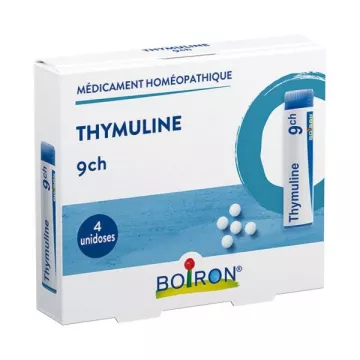
- “Thymulin 9CH ”: This is an over-the-counter homeopathic preparation manufactured according to the principles of Hahnemannian dilution. At a 9CH dilution (10⁻¹⁸), the concentration of the original substance is less than Avogadro’s number: statistically, no active thymulin molecules are present in the granules.
This page focuses primarily on the homeopathic Thymuline 9CH, as sold in pharmacies and drugstores. For immune support based on solid scientific data, see the pages dedicated to immune defenses and natural immunity.
What does science say about Thymuline 9CH?
The scientific consensus on homeopathic Thymuline must be presented honestly:
- International meta-analyses (Shang et al., The Lancet, 2005; NHMRC, Australia, 2015): no evidence of homeopathic efficacy beyond the placebo effect in the indications studied.
- High Authority for Health (HAS, France): issued an unfavorable opinion regarding reimbursement for homeopathic preparations in June 2019; full withdrawal of reimbursement took effect on January 1, 2021, due to the lack of sufficient evidence of efficacy.
- FrenchNational Academy of Medicine and French National Academy of Pharmacy: critical stances on the therapeutic claims of homeopathy.
- Nevertheless, many users report subjective satisfaction, often attributed to the placebo effect, the spontaneous remission of symptoms, or increased attention to their lifestyle.
Thymuline 9CH remains available over the counter in France, including on the advice of certain pharmacists and physicians accustomed to this practice. Its use is a matter of informed personal choice.
What are the traditional uses of Thymuline 9CH?
In standard homeopathic practice, Thymuline 9CH is traditionally used to:
- Supporting immune health during the winter months.
- Help the body better cope with recurrent infections (nasopharyngitis, bronchitis, sinusitis).
- Provide supplemental support for certain seasonal allergic conditions.
- Support individuals who are fatigued or convalescing.
- Supporting older adults during periods of immune vulnerability.
These uses are based on a tradition of homeopathic prescribing, not on conclusive controlled clinical trials. They are not a substitute for a medical consultation in cases of confirmed infection, persistent fever, severe allergies, or chronic conditions.
How should Thymuline 9CH be used?
Dosage regimens commonly recommended by homeopathic manufacturers (for informational purposes only; not intended as medical advice):
- Prevention during the winter months: 1 dose of Thymuline 9CH per week, generally from October through March.
- As a supplement during an infectious episode: 1 dose every 3 days for 2 weeks, followed by 1 dose per week as maintenance.
- General support: 5 granules of Thymuline 9CH in the morning and evening for 3 weeks.
- Take away from meals, coffee, tobacco, and mint (traditional recommendations for homeopathic intake), allowing the granules to dissolve under the tongue.
Thymuline injections (a form distinct from the granules, used in certain historical medical protocols) are strictly reserved for medical use and require a doctor’s prescription. They must never be administered as self-medication.
Consult a pharmacist to tailor the use to your individual needs, particularly if you are currently taking other medications, have an autoimmune condition, are immunocompromised, or are pregnant or breastfeeding.
Thymuline and ENT Infections: What Do We Know?
Thymuline 9CH is traditionally used to support the management of recurrent winter ENT disorders. Its efficacy beyond that of a placebo has not been demonstrated in controlled clinical trials.
For the common cold, the flu, or other ENT infections, the approaches with the best-documented efficacy are:
- Annualflu vaccination for at-risk populations (older adults, pregnant women, immunocompromised individuals, and healthcare workers) according to the recommendations of Santé publique France.
- Preventive measures (handwashing, wearing a mask during outbreaks, social distancing).
- Vitamin D supplementation in cases of documented deficiency, particularly in winter and among people with limited sun exposure.
- Zinc: documented benefit at the onset of upper respiratory tract infections in reducing the duration of symptoms.
- Vitamin C: modest but documented effect on the duration and severity of episodes.
- Herbal remedies (echinacea, propolis, ravintsara): recognized traditional uses; benefits vary depending on the indication and the quality of the preparations.
- Adequate sleep, a varied diet, and regular physical activity.
In cases of high fever, deterioration in general health, marked respiratory symptoms (breathing difficulties, chest pain), or symptoms persisting beyond 5 to 7 days, a medical consultation is recommended.
Can Thymuline help relieve allergies?
Thymuline 9CH is sometimes recommended as a supplement for seasonal allergies (hay fever, in particular). Its effectiveness beyond that of a placebo has not been demonstrated in controlled trials.
For allergies, the following approaches have documented effectiveness:
- Avoidance of identifiedallergens (pollen, dust mites, animal dander) as much as possible.
- Second-generation antihistamines (cetirizine, loratadine, fexofenadine, desloratadine) taken over-the-counter or by prescription, depending on the individual’s profile.
- Prescriptionnasal corticosteroids for moderate to severe allergic rhinitis.
- Allergen desensitization (specific immunotherapy): the only approach that truly modifies the immune response in the long term, prescribed by an allergist.
- Allergy testing to precisely identify the responsible allergens.
An allergy consultation is recommended for severe allergies, for children, or when symptoms significantly impact quality of life.
Is thymulin beneficial for older adults?
With age, endogenous thymulin production does indeed decrease, which is part of the broader phenomenon ofimmunosenescence (the progressive decline in immune function). However, taking the homeopathic remedy Thymuline 9CH does not replenish this endogenous deficit (there is no measurable active molecule at this dilution).
For older adults, the documented approaches to supporting the immune system include:
- Vaccination: annual flu vaccine, pneumococcal vaccine, shingles vaccine, and COVID-19 vaccine, in accordance with current recommendations.
- Nutritional status: adequate intake of protein, vitamins (D, B12, B9), zinc, and selenium.
- Vitamin D: Deficiency is very common among older adults; supplementation is often recommended (under medical supervision, following testing).
- Appropriatephysical activity to preserve muscle mass and immune function.
- Quality sleep, combating social isolation, and stress management.
- Thoroughoral hygiene.
- Regularmedical checkups for early detection of chronic conditions.
Thymuline and other immune-supporting supplements
Several approaches are sometimes compared to Thymuline 9CH in clinical practice:
- Thymuline 9CH: a homeopathic preparation with no proven efficacy beyond that of a placebo according to meta-analyses, but with a long tradition of use in homeopathy.
- Echinacea (Echinacea purpurea): a plant traditionally used to support immunity. Limited but existing clinical data support its use in preventing upper respiratory infections and reducing their duration.
- Propolis: a bee resin with documented in vitro antibacterial and antiviral properties; traditionally used for sore throats.
- Ravintsara (essential oil of Cinnamomum camphora, 1,8-cineole chemotype): traditionally used for the respiratory tract; contraindicated for pregnant and breastfeeding women and children under 6 years of age.
- Zinc: documented effect on the duration of viral infections at the onset of symptoms (Cochrane meta-analyses).
- Vitamin C: modest but documented effects on the duration and severity of respiratory symptoms.
- Vitamin D: supplementation is beneficial in cases of deficiency; documented benefits for immunity.
- Oralimmunostimulants based on bacterial lysates (prescription only): indicated for certain recurrent infections.
None of these approaches replaces a medical consultation in cases of serious infection, persistent fever, or chronic conditions. Vaccination remains the most effective means of prevention for conditions for which it is recommended.
How to choose Thymuline 9CH?
To help you choose a homeopathic preparation:
- A preparation from a recognized homeopathic laboratory that complies with the French Pharmacopoeia.
- A dosage form suitable for the intended use: granules (5 granules per dose) or single doses (to be allowed to dissolve completely under the tongue).
- A dilution appropriate for common use: 9CH is the most widely used dilution for Thymuline.
- Storage: Keep away from heat, light, and strong odors (perfumes, essential oils).
- Consult a pharmacist at a pharmacy to confirm the appropriateness of use based on your profile and to be guided toward the approaches best suited to your situation.
See also Influenzinum, another homeopathic product traditionally used for flu prevention as part of a winter regimen.
Does Thymuline have any contraindications?
Homeopathic Thymuline 9CH is generally well tolerated, precisely because there is no measurable active ingredient at this dilution. Common precautions:
- Pregnant and breastfeeding women: No known contraindications at this dilution, but professional advice is recommended.
- Children: Use the pre-measured dose or granules diluted in a little water for younger children.
- Diabetes: Take the composition of the excipient (lactose, sucrose in the granules) into account if following a strict diet.
- Immunocompromised individuals (immunotherapy, chemotherapy, biotherapy, HIV-positive status, organ transplants): Medical advice is essential before taking any action, and validated approaches should be prioritized (appropriate vaccinations, close medical monitoring).
- Active autoimmune conditions (lupus, multiple sclerosis, rheumatoid arthritis): medical advice is recommended.
- Do not self-medicate in cases of severe infection, persistent high fever (>3 days), neurological symptoms, chest pain, or significant breathing difficulties.
- Homeopathy is never a substitute for prescribed medical treatment (antibiotics for a positive urine culture, antivirals, or long-term management of a chronic condition).
For any efforts to support the immune system or prevent infections, personalized medical or pharmaceutical advice can help identify the most appropriate approaches for your situation, combining evidence-based strategies (vaccination, vitamin D, zinc, lifestyle) and, if desired, traditional approaches based on your preferences.