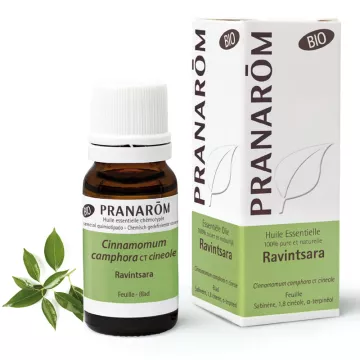
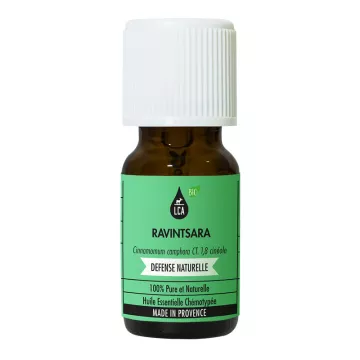
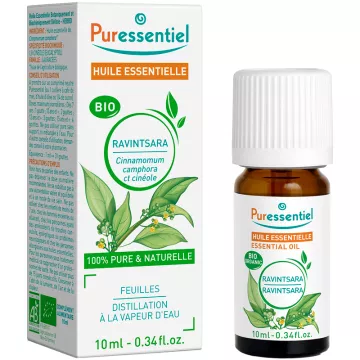
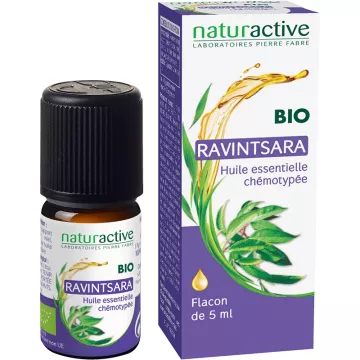
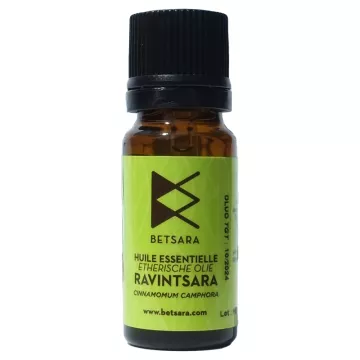
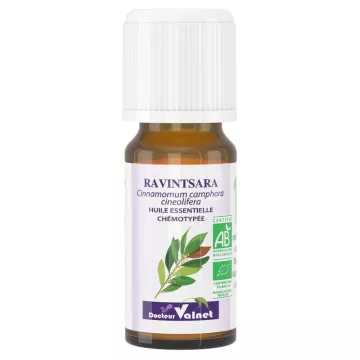
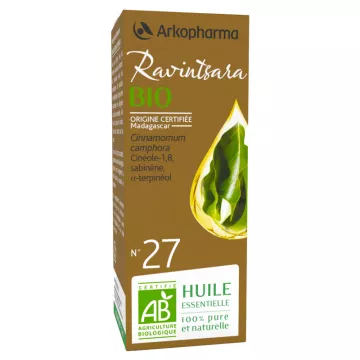
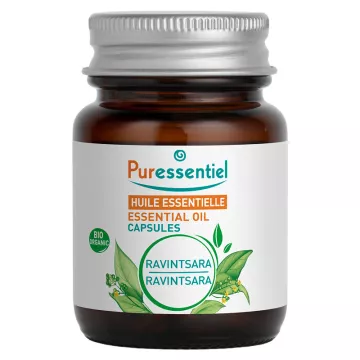
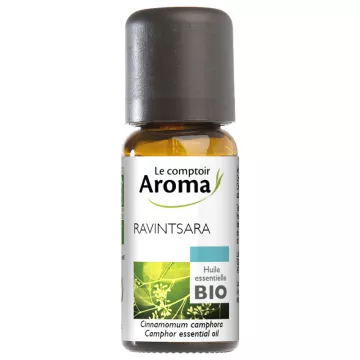
If you could only have one essential oil for the winter, it would probably be ravintsara. Derived from the leaves of a Malagasy camphor tree (Cinnamomum camphora ct. cineole), it has the most potent cineole profile in the family: 50–65% 1,8-cineole, complemented by sabinene and terpinene-4-ol. Immune-boosting, respiratory support, and anti-fatigue—the trio we start missing as early as October. Check out our winter ailments and immunity product line.
Why is ravintsara the go-to essential oil for winter?
It’s no coincidence—its biochemical profile combines exactly the properties we seek during the cold season.
- It has the highest concentration of 1,8-cineole (50–65%) among Malagasy essential oils—ahead of mandravasarotra (30–45%) and niaouli (40–60%)—providing a more immediate and powerful expectorant effect
- Documented immunostimulant: terpinene-4-ol and sabinene activate immune cells—the essential oil to reach for at the first signs of feeling under the weather
- Do not confuse with ravintsare (Ravensara aromatica, saponaceum)—two different plants, two completely different profiles—genuine ravintsara bears the botanical name Cinnamomum camphora ct. cineole on the label
- Choose an organic essential oil chemotyped as “CT cineole”—non-chemotyped oils can vary greatly in composition
Ravintsara and respiratory comfort?
When it comes to the bronchial tubes, ravintsara is one of the most effective aromatherapeutic agents right from the first days of a cold.
- A powerful expectorant and mucolytic: 1,8-cineole deeply thins bronchial secretions—breathing becomes easier quickly
- Inhalation: 4–5 drops in a bowl of hot water, 10 minutes, with your head covered—twice a day during the acute phase
- Chest massage: 4–5% diluted in a vegetable oil (arnica, calophyllum) — morning and evening on the chest and back
- Preventive rub: 2 drops diluted on the soles of the feet—5 days a week, starting in the first days of a cold
- See our respiratory care line
Ravintsara and winter immunity?
This is where ravintsara truly stands out from other respiratory essential oils.
- The essential winter trio: ravintsara + niaouli + eucalyptus radiata—mixed in equal parts with a carrier oil, then rubbed onto the soles of the feet or the chest morning and night
- For preventive diffusion: 10 drops in a diffuser for 20 minutes in the morning—reduces the microbial load in the air in confined spaces
- Preventive fall regimen: 3 weeks at the start of the school year, 3 weeks in January—preferably in the morning (tonic essential oil; avoid in the evening)
- Combine with mandravasarotra for people who have trouble tolerating pure cineole—Saro moderates and complements it
Ravintsara and winter fatigue?
Ravintsara isn’t just an essential oil for the sickly winter—it’s also the essential oil for exhausting winters.
- General tonic: 1,8-cineole stimulates the sympathetic nervous system—a revitalizing effect noticeable right from the moment you diffuse it in the morning
- Relief from physical and mental fatigue: 2 drops on the wrists, followed by deep inhalation—an immediate midday energy boost
- Do not use in the evening if you are a light sleeper—its stimulating effect may delay falling asleep (opt for mandravasarotra or balsam fir for nighttime diffusion)
Precautions for use?
- Pregnant women (1st trimester): not recommended—1,8-cineole crosses the placental barrier
- Children under 6 years of age: avoid direct inhalation—diffuse only in a well-ventilated room. Infants 3–6 months: external use permitted only under medical supervision, diluted to a fraction of a percent, never on the face or nostrils
- Asthmatics: consult a doctor — high concentrations of cineole can cause bronchospasms in people with severe asthma
- Always dilute to 3–5% for topical use—never apply undiluted
- Oral use: not recommended for self-medication—reserve for specialized aromatherapy prescriptions