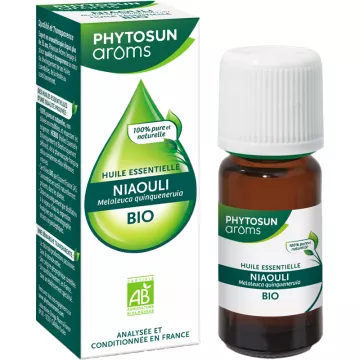
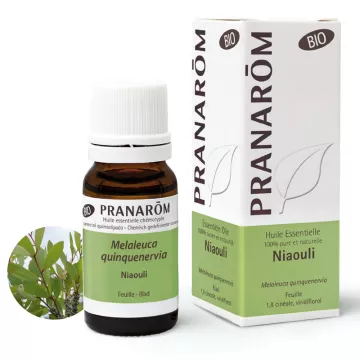
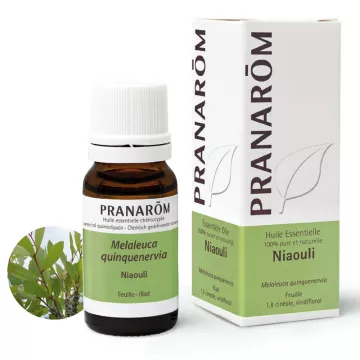
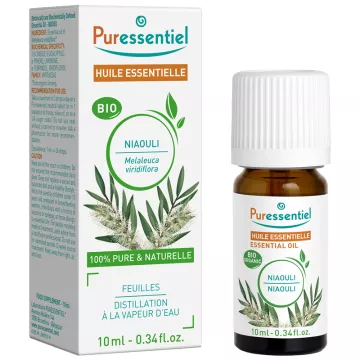
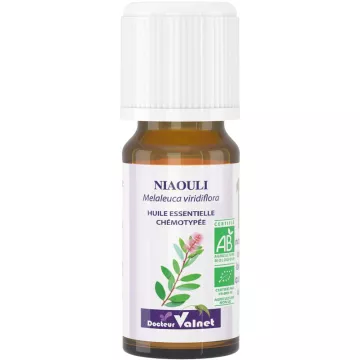
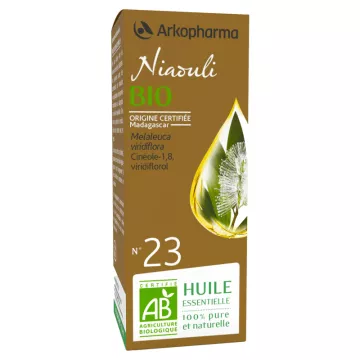
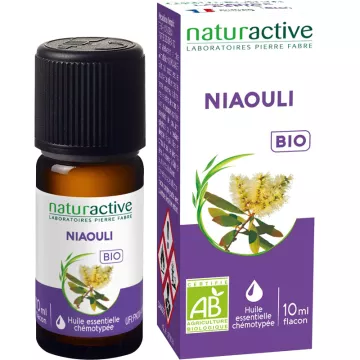
Niaouli (Melaleuca quinquenervia ct. viridiflorol) is one of the most versatile essential oils in the Myrtaceae family—it supports respiratory health, purifies the air, strengthens blood vessels, and is gentle on the skin. Its chemical profile, which combines 1,8-cineole (40–60%) and viridiflorol (10–20%), gives it a broader range of applications than tea tree oreucalyptus. A must-have for winter aromatherapy kits. Discover our immunity line.
Why choose niaouli over tea tree?
Same botanical family, very different uses—niaouli is in a league of its own.
- Niaouli: predominantly 1,8-cineole + viridiflorol—beneficial for respiratory health, vein health, and skin care—gentle enough for sensitive skin—softer, slightly minty scent
- Tea tree: dominant terpinene-4-ol — higher concentration of purifying active ingredients — best for occasional skin blemishes, fungal infections, and oral hygiene
- Niaouli is the essential oil to choose when you want to support your bronchial health, boost immunity, and care for your skin—all in a single bottle
- Better tolerated than Eucalyptus globulus for repeated use during the winter
- Combine with ravintsara for the classic anti-winter trio: niaouli + ravintsara + eucalyptus radiata
Niaouli and winter respiratory comfort?
Its 1,8-cineole content makes it a leading active ingredient for the respiratory system —with better tolerance than Eucalyptus globulus.
- Expectorant and mucolytic: thins bronchial secretions and eases breathing during colds and winter ENT conditions
- Chest application: 3–5% in a carrier oil, massage morning and evening—directly on the chest and back
- Preventative diffusion: 8 drops in a diffuser for 20 minutes in the morning—to purify the air and support the body’s natural defenses
- Synergistic blend: niaouli + ravintsara + mandravasarotra — a gentle and effective trio for the whole family ages 6 and up
- See our line for winter ailments and respiratory health
Niaouli and skincare?
Viridiflorol is what makes niaouli unique compared to other cineole-based essential oils—it has a beneficial effect on the skin and veins that neither tea tree nor eucalyptus possesses.
- Oily and acne-prone skin: 1–2% in jojoba oil—purifying and rebalancing, gentler than tea tree on sensitive skin
- After-sun care and skin protection: Niaouli was traditionally applied before sun exposure to support the skin’s resilience—blended with calophyllum vegetable oil
- Light skin comfort care: redness, minor irritations, small cuts—2% in a vegetable oil, applied gently to the affected area
- Veinotonic effect via viridiflorol: supports capillary circulation, relieves heavy legs—massage upward from the feet toward the knees, 3% in calophyllum oil
How to use niaouli?
Its mild and versatile profile allows for many ways to use it daily.
- Diffusion: 8–10 drops in a diffuser, 20–30 min — purifying atmosphere and support for natural defenses
- Reflexology rub: 2 drops diluted on the soles of the feet or wrists — winter prevention regimen, 5 days a week
- Chest massage: 3–5% in a vegetable oil—morning and evening during vulnerable periods
- Targeted skin care: 1–2% in jojoba or calophyllum oil—for blemish-prone skin or when venous support is needed
- Aromatherapy bath: 10 drops diluted in a solubilizing base — invigorating effect and recovery after exercise or a busy day
What should you know before using niaouli?
- Pregnant and breastfeeding women: not recommended—1,8-cineole crosses the placental barrier
- Children under 6 years old: Avoid direct inhalation and application to the face—use only via diffusion in a well-ventilated room
- People with asthma: use for short periods, ensure good ventilation—seek medical advice if in doubt
- Always dilute to 2–5% for topical use—never apply undiluted
- Contrary to what is sometimes claimed, niaouli does not contain neurotoxic ketones—its 1,8-cineole + viridiflorol profile is well documented and well tolerated at recommended doses