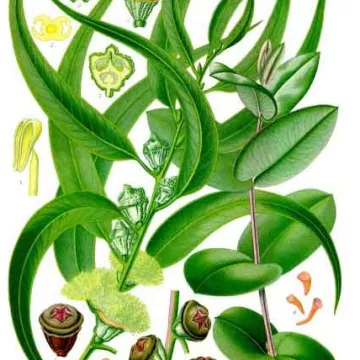
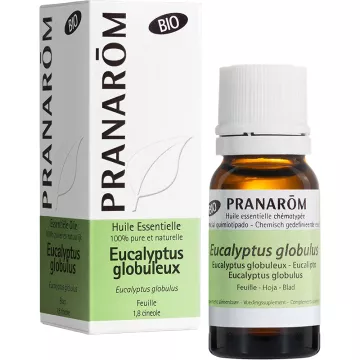
The eucalyptus genus includes more than 700 species of Australian trees in the Myrtaceae family—three of which are used in French aromatherapy: Eucalyptus globulus (the most potent), Eucalyptus radiata (the most family-friendly), and Corymbia citriodora (lemon eucalyptus, which does not contain cineole). Choosing the right species is key to ensuring effectiveness and safety of use. Explore our aromatherapy and respiratory care line.
Which eucalyptus species are used in aromatherapy?
Choosing the right eucalyptus species is just as important as choosing the essential oil itself—their biochemical profiles and recommended uses differ significantly.
- Eucalyptus globulus (common eucalyptus): 1,8-cineole 70–85% — the most potent and most readily available — strong expectorant, airway antiseptic — for adults only, contraindicated in cases of asthma
- Eucalyptus radiata (radiata eucalyptus): 1,8-cineole 60–70% + α-terpineol 10–15% — milder and more balanced profile — suitable for children ages 6 and up — immunostimulant and respiratory support — see our Eucalyptus radiata page
- Eucalyptus smithii: even milder — sometimes used in children over 3 years of age under supervision
- Corymbia citriodora (lemon eucalyptus): citronellal 65–80%, no cineole — insect-repellent properties + joint comfort — see our lemon eucalyptus page
- Always check the full botanical name on the label—"eucalyptus essential oil" without further specification may refer to any of these species
Eucalyptus and respiratory comfort?
1,8-cineole (eucalyptol), found in both Eucalyptus globulus and radiata, is the most well-documented respiratory active ingredient in aromatherapy.
- Expectorant and mucolytic: 1,8-cineole thins bronchial secretions and facilitates their expulsion—supporting respiratory health during seasonal ENT conditions
- Airborne antiseptic when diffused: reduces the microbial load in the air—helps prevent winter illnesses
- Inhalation: 5 drops in a bowl of hot water, 5–10 minutes — clears the upper respiratory tract — 1 to 2 times a day during the acute phase
- Topical application to the chest: 3–5% in a vegetable oil (arnica, calophyllum) — massage 2 to 3 times a day
- See our winter ailments line
Eucalyptus and Immune Support?
Beyond its respiratory benefits, eucalyptus containing α-terpineol supports the immune system.
- The α-terpineol in Eucalyptus radiata stimulates the activity of macrophages and NK cells—a documented immunostimulant not found in Eucalyptus globulus
- Classic winter immunity blend: Eucalyptus radiata + ravintsara + niaouli —the standard protocol in French aromatherapy
- Preventive rub: 2 drops of Eucalyptus radiata diluted on the soles of the feet, once a day, 5 days out of 7
- Combine with mandravasarotra for individuals sensitive to essential oils with high cineole content
Eucalyptus and other uses?
Depending on the species chosen, eucalyptus has a wide range of applications.
- Joint comfort: lemon eucalyptus (citronellal)—massage with a 3–5% dilution on areas of joint pain —mild local anesthetic effect
- Natural repellent: lemon eucalyptus (citronellal, PMD)—documented protection against mosquitoes—see our natural mosquito repellents
- Vitality and concentration: Eucalyptus radiata diffused in the morning—1,8-cineole stimulates the sympathetic nervous system—helps combat winter fatigue
- Care for oily skin: 1% eucalyptus globulus in jojoba oil—astringent and purifying properties—visibly refines pores
Precautions and contraindications?
Precautions vary by species—but there are some rules common to the entire family.
- Pregnant and breastfeeding women: Avoid all species—cineole and citronellal cross the placental barrier
- Children under 6 years of age: Eucalyptus globulus is strictly contraindicated—prefer Eucalyptus radiata for children over 6 or Eucalyptus smithii for children over 3 under supervision—never apply to the face or nostrils (laryngeal spasm)
- Asthma and epilepsy: Eucalyptus globulus is contraindicated—Eucalyptus radiata requires medical advice
- Always dilute to 2–5% for topical use—never apply undiluted
- Storage: in a dark bottle, away from heat—shelf life of 2–3 years for monoterpene species