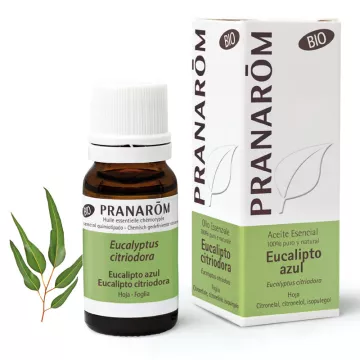
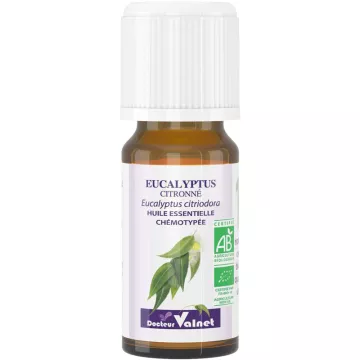
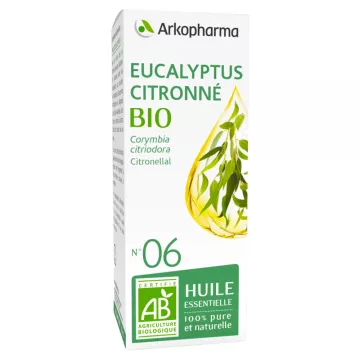
Lemon eucalyptus essential oil (Corymbia citriodora, syn. Eucalyptus citriodora, leaves, Australia) is biochemically unlike any other eucalyptus—it contains virtually no 1,8-cineole. Its profile is dominated by citronellal (65–80%) —a terpene aldehyde responsible for its two specific uses: joint comfort when used in massage and as a natural insect repellent. Check out our natural mosquito repellents and our aromatherapy line.
Lemon Eucalyptus vs. Other Eucalyptus Species?
Lemon eucalyptus is the only eucalyptus essential oil without a respiratory profile—a unique position within the family.
- Corymbia citriodora (lemon eucalyptus): citronellal 65–80%, citronellol, isopulegol— no 1,8-cineole —no respiratory use—joint comfort + insect repellent profile
- Eucalyptus radiata: 60–70% cineole + α-terpineol — family respiratory profile
- Eucalyptus globulus: 70–85% cineole — powerful respiratory profile for adults
- The change in botanical genus (Eucalyptus → Corymbia) clearly reflects the profound difference from other eucalyptus species
- See the eucalyptus hub for the complete family
Lemon eucalyptus and joint comfort?
Citronellal is one of the few terpenic aldehydes with a sustained effect on joint comfort that has been documented in aromatherapy.
- Spasmolytic and soothing properties of citronellal: supports relief from joint pain and muscle tension during massage
- Refreshing and mild local anesthetic effect: a sensation of coolness followed by gradual soothing during massage
- Massage application: 3–5% in a vegetable oil (arnica, St. John’s wort) on joint areas—using gentle circular motions
- Joint synergy: lemon eucalyptus (3) + wintergreen (2) + true lavender (2) in 30 mL of arnica oil—protocol for muscle and joint comfort
- Aromatic joint bath: 10 drops diluted in a solubilizing base, warm bath for 15–20 minutes
Lemon eucalyptus as a natural repellent?
This is the most popular use of lemon eucalyptus—a natural alternative to chemical repellents, as documented by health agencies.
- Citronellal and citronellol are recognized as insect repellents by the WHO and the U.S. EPA—with documented effectiveness against Aedes aegypti (tiger mosquito) and Culex pipiens
- The derivative PMD (p-menthane-3,8-diol, obtained by chemical conversion of citronellal) is the most effective natural active ingredient among plant-based repellents
- Topical repellent application: 2–3% in a vegetable oil (sweet almond) or aloe gel—apply to exposed areas, reapply every 2–3 hours
- Combine with Java citronella to enhance the repellent effect—see our line of pest control products and mosquito sprays
- Do not apply undiluted to the skin—high concentrations of citronellal can cause skin sensitization
Lemon Eucalyptus and Well-Being?
The aldehyde profile of citronellal provides a soothing and relaxing note distinct from cineole-type eucalyptus oils.
- Citronellal has a mild sedative effect on the central nervous system—it has a more calming effect than cineole-rich eucalyptus varieties
- Evening diffusion: lemon eucalyptus + true lavender + marjoram—a soothing atmosphere for relaxation and sleep
- Air purification: 10 drops in an ultrasonic diffuser—a fresh, purifying citrus note
- Care for oily skin: 1% in jojoba oil—a lemony and purifying note, with visibly refined pores
- Combine with tea tree oil for a complete skin-purifying treatment
Precautions and contraindications?
Lemon eucalyptus has an aldehyde profile—take specific precautions for terpenic aldehydes.
- High potential for skin sensitization (citronellal): always dilute to 1–3% — never apply undiluted — risk of contact dermatitis with repeated undiluted use
- Pregnant women: not recommended
- Children under 6 years of age: avoid—citronellal may irritate young mucous membranes
- Perform a skin patch test 24 hours before any extensive use—particularly important for individuals sensitive to aldehydes (perfumes, cosmetics)
- Avoid application to the face and mucous membranes—never use for direct inhalation (irritating to the respiratory tract)