Lavender is the most widely used essential oil in the world—and the most versatile. Soothing, purifying, and restorative: its linalool and linalyl acetate work to promote sleep, improve skin health, and relieve tension all at the same time. But “lavender” encompasses several species with different profiles—choosing the right one makes all the difference. Explore our range of essential oils for sleep and stress relief.
True lavender, spike lavender, or lavandin: which one should you choose?
Three species, three profiles—the right choice depends on what you’re looking to address.
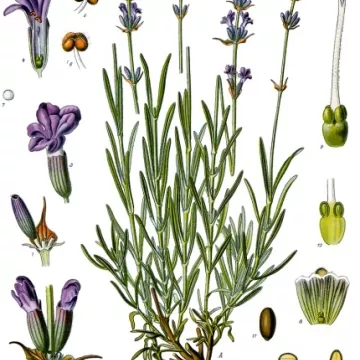
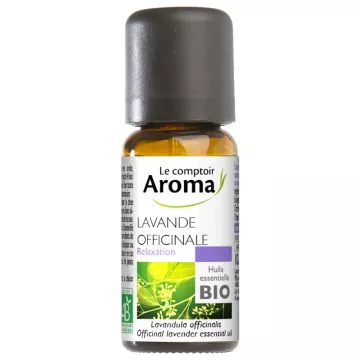
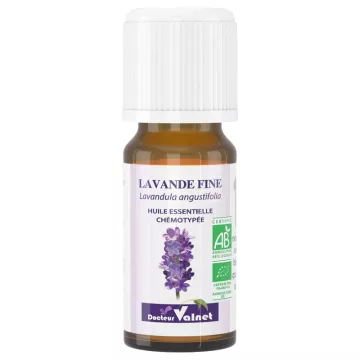
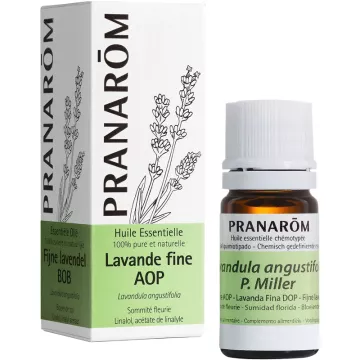
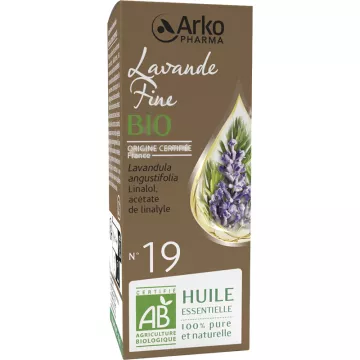
- True lavender (Lavandula angustifolia, syn. officinalis): linalool + linalyl acetate (70–85%)—the mildest and most soothing— sleep, stress, sensitive skin, children as young as 3 months —harvested at high altitudes (1,000–1,800 m)
- Lavandin (Lavandula x intermedia, hybrid): camphor 6–12% + linalool + cineole — less expensive, more widely produced — primarily for muscular and respiratory issues — less suitable for sleep and children
- Spearmint lavender (Lavandula latifolia): cineole 30–40% + camphor 15–20% + linalool — decongestant and dermatological profile — insect bites, minor burns, skin
- For sleep and relaxation: always Lavandula angustifolia, chemotyped as linalool-linalyl acetate
- Check the full botanical name on the label—"lavender" alone is not enough
Lavender and sleep: does it really work?
Several clinical studies confirm what grandmothers already knew—the linalool in true lavender helps you fall asleep.
- Diffusion 20 minutes before bedtime: 8 drops of true lavender in an ultrasonic diffuser—reduces the time it takes to fall asleep and improves sleep quality
- Direct olfactory application: 1 drop on the wrists or pillow—gently inhale before falling asleep
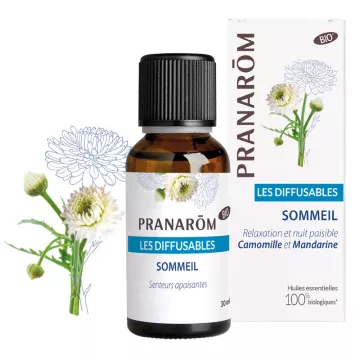
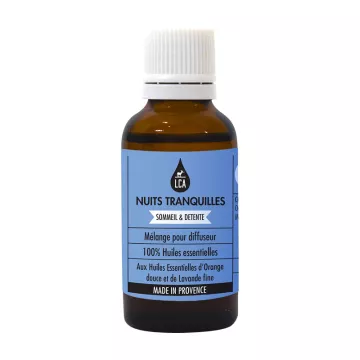
- Nighttime blend: true lavender + marjoram + Roman chamomile —a soothing trio for use in a diffuser during the most difficult nights
- True lavender is suitable for children as young as 3 months when diffused in a well-ventilated room—and for children aged 3 and up when applied to the skin in a diluted form
- See also our complementary sleep products
Lavender and Stress: More Than Just a Scent?
Linalool acts on the GABA receptors in the central nervous system—this is scientifically documented, not just olfactory poetry.
- Quick inhalation: 2 drops on the wrists, rub gently, and take 5 deep breaths—immediate stress relief noticeable within minutes
- Relaxing massage: 3% true lavender in sweet almond oil—neck, shoulders, solar plexus—ideal after a busy day
- Blend: True lavender + ylang-ylang in a diffuser—a deep floral note that promotes emotional balance
- For more persistent stress: Lavender in aromatherapy remains a temporary aid—complement it with our relaxation, sleep, and stress management lines
Lavender and skincare?
True lavender is one of the few essential oils that can be safely used in very small doses without dilution on small areas—an exception to be used with discretion.
- Skin imperfections and acne-prone skin: 1 drop undiluted on the blemish for targeted application, or 1% diluted in aloe vera as part of your daily skincare routine
- Insect bites, minor burns: 1 undiluted drop on the affected area—linalyl acetate quickly soothes redness and itching
- Combination and sensitive skin: 1–2% in jojoba oil—a gentle sebum regulator with a pleasant floral note
- Hair and scalp: 2–3 drops in shampoo—soothes irritated scalps and has a mild lice-repellent effect
Precautions?
- True lavender: very well tolerated—one of the safest essential oils on the market
- Lavandin and spike lavender: contain camphor—not recommended for pregnant women, infants, or people with epilepsy—never use undiluted on the skin
- True lavender during pregnancy: generally accepted after the first trimester when diffused or applied in diluted form—check with your doctor
- Ingestion: Not recommended without a specialized aromatherapy prescription—linalool remains a pharmacologically active compound