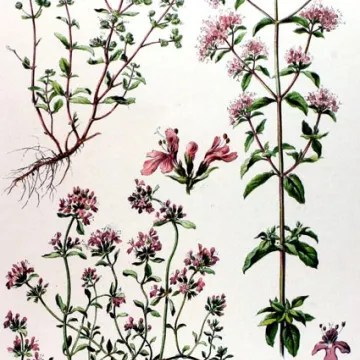
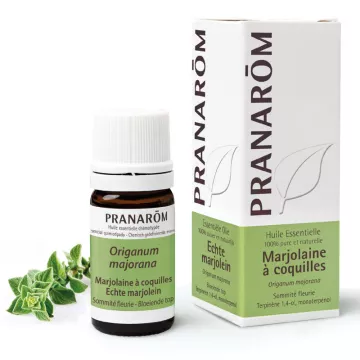
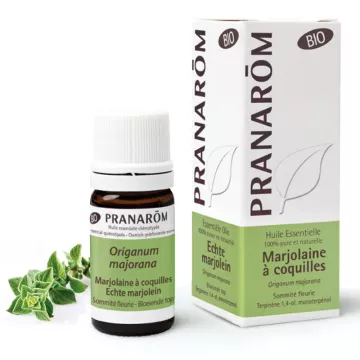
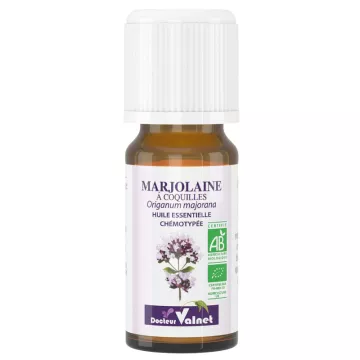
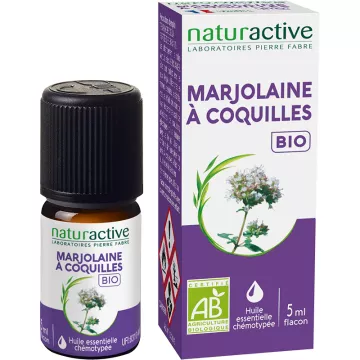
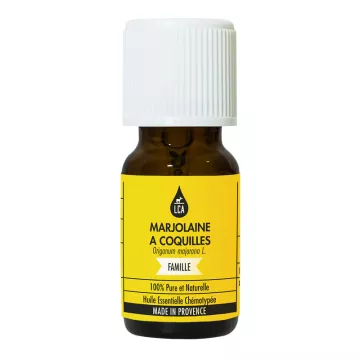
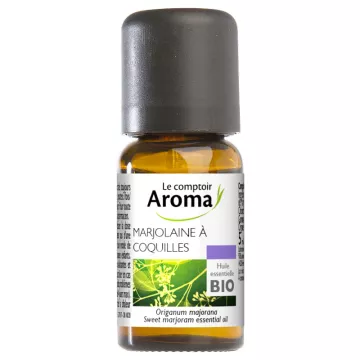
Shell marjoram (Origanum majorana) is often confused with oregano (Origanum vulgare)—they belong to the same botanical genus but have very different effects. Oregano is stimulating and a powerful antiseptic. Marjoram is soothing and parasympathicotonic. Choosing one for the intended use of the other is a common mistake. Explore our range of aromatherapy products and plant extracts.
Marjoram vs. Oregano: How to Tell Them Apart?
On labels, confusion can be costly—the two are not used in the same way at all.
- Marjoram (Origanum majorana): terpinene-4-ol 40–50% + sabinene—mild profile, parasympathicotonic, antispasmodic— sleep, stress, nervous digestive cramps
- Compact oregano (Origanum compactum): carvacrol + thymol 60–80%—highly stimulating and potent antiseptic profile—infections, winter ailments—should not be used in the same way or at the same doses
- Common oregano (O. vulgare): variable intermediate profile — less commonly used in aromatherapy than the previous two
- On the label: Always check the full Latin name—"marjoram" alone can refer to several species depending on the country
- Approximate price: Oregano compact essential oil is often less expensive—it is not a substitute for marjoram for nervous system and digestive uses
Marjoram as a dietary supplement: when should you opt for capsules?
Essential oil isn’t always the most practical form—standardized extracts have their own specific uses.
- Chronic functional digestive disorders (recurrent bloating, IBS with a nervous component): dried marjoram extract in capsules—precise dosage, prolonged action on the digestive tract
- Long-term stress and sleep treatment (3–6 weeks): a supplement combining marjoram, lavender, and valerian—more convenient than daily aromatherapy for active individuals
- Herbal tea: 1 tsp of dried herb in 200 mL of water at 90°C, steeped covered for 8–10 minutes — drink 30 minutes after a meal or before bedtime
- Essential oil remains superior for immediate effects (muscle tension, falling asleep)—capsules work more deeply on the underlying issues, over the longer term
Marjoram and winter support?
Its terpinene-4-ol also gives it an effect on the body’s natural defenses—distinct from the radical action of oregano.
- Support for the body’s natural defenses during winter: diffuse marjoram + ravintsara + eucalyptus radiata—a gentle blend suitable for the whole family ages 6 and up
- Dry inhalation: 2 drops of essential oil on a handkerchief, short inhalations — supports the upper respiratory tract without irritation
- Chest and back massage: 3% dilution in calophyllum oil—for children over 6 years old and adults—not to be confused with compact oregano, which is much more irritating to the skin
- Marjoram is not a substitute for oregano in cases of active infections—it is useful for prevention and as a complementary treatment
Marjoram and muscle pain?
Its unique quality: it relaxes without stimulating—ideal for evening aches or people who are overworked.
- Evening massage for muscle tension: 4% in arnica oil—neck, shoulders, lower back—with no stimulating effect, unlike rosemary or peppermint
- Menstrual cramps: apply 3% in calophyllum oil to the abdomen using circular massage motions—its muscle antispasmodic and parasympatholytic properties address both aspects
- Gentle post-workout recovery: marjoram + spike lavender —for yoga sessions or light recovery, not for intense exercise
Precautions?
- Pregnant and breastfeeding women: Essential oils not recommended—a mild herbal tea is generally tolerated after the first trimester
- Low blood pressure: mild hypotensive effect—monitor if currently on medication
- Anticoagulants: Inform your doctor—terpinen-4-ol may potentiate their effect
- Do not confuse with compact oregano essential oil (carvacrol)—a potent skin irritant at high concentrations; usage and dilution are very different
- Dilute to 2–5% for topical use; reserve for evening use if a sedative effect is desired