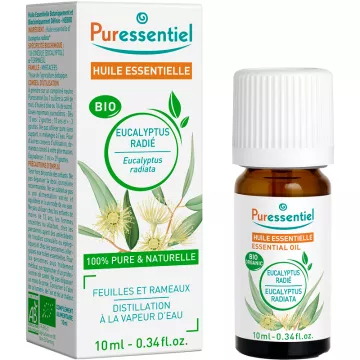
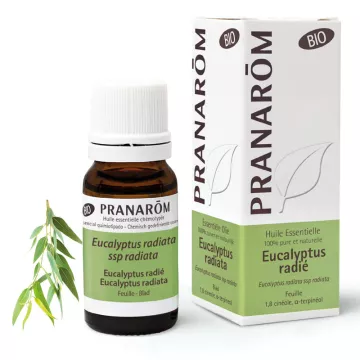
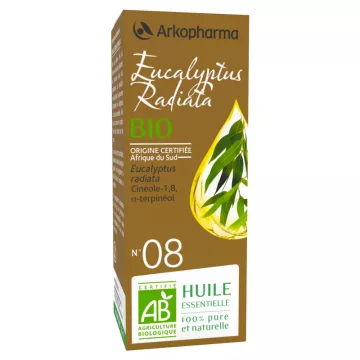
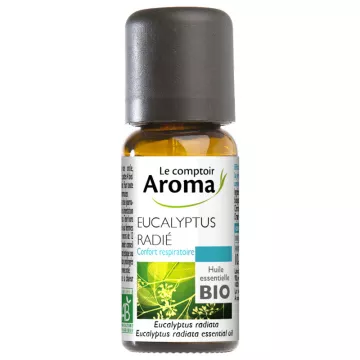
Eucalyptus radiata essential oil (Eucalyptus radiata, leaves, Australia) is the go-to eucalyptus for household use—milder and better tolerated thanEucalyptus globulus due to its more balanced biochemical profile: 1,8-cineole (60–70%) + α-terpineol (10–15%) + limonene. α-Terpineol tempers the strong, oxidizing effect of cineole and adds a gentler, more floral note—ideal for respiratory comfort in adults, teens, and children ages 6 and up. Explore our winter ailments collection.
Eucalyptus radiata vs. Eucalyptus globulus?
Distinguishing between eucalyptus species is essential for choosing the right essential oil based on the user’s needs.
- Eucalyptus radiata (radiata eucalyptus): 60–70% 1,8-cineole + α-terpineol (10–15%)—softer, floral note—safe for ages 6 and up—suitable for family use and long-term use
- Eucalyptus globulus: 70–85% 1,8-cineole — stronger, more intense profile — for adults only — contraindicated in cases of asthma
- Eucalyptus smithii: profile similar to radiata but even milder — sometimes recommended for children over 3 years of age under supervision
- Eucalyptus citriodora: contains no cineole, rich in citronellal — completely different profile, used for joint comfort and to repel insects
- See the eucalyptus hub for a complete overview of the genus
Eucalyptus radiata and respiratory comfort?
Eucalyptus radiata is the best-documented cineole-containing essential oil for upper and lower respiratory tract comfort.
- Expectorant and mucolytic: 1,8-cineole thins bronchial secretions and promotes their clearance—supports relief from colds and winter ENT conditions
- Inhalation: 5 drops in a bowl of hot water; cover your head and inhale for 5–10 minutes—1 to 2 times a day during the acute phase
- Chest application: 3–5% in a vegetable oil (arnica, calophyllum) — chest and back massages 2 to 3 times a day
- Diffusion: 10 drops in an ultrasonic diffuser, 20–30 minutes — air purification and respiratory support in the environment
- 7- to 10-day treatment during the symptomatic phase — 5 days out of 7 for preventive use in winter
Eucalyptus radiata and winter immunity?
α-Terpineol in Eucalyptus radiata is the primary immunostimulant — a property absent in Eucalyptus globulus, which has a high content of pure cineole.
- α-Terpineol modulates the activity of innate immune cells (macrophages, NK cells) — supporting natural defenses during high-risk periods
- Winter Preventive Protocol: 2 drops diluted on the wrists or soles of the feet, once a day, 5 days out of 7
- Synergistic immunity blend: Eucalyptus radiata + Ravintsara + Niaouli —the classic trio of winter protocols in aromatherapy
- Combine with mandravasarotra for a gentler immunostimulant profile in sensitive individuals
Eucalyptus radiata and energy?
Its invigorating profile makes eucalyptus radiata a useful active ingredient against winter fatigue.
- 1,8-cineole stimulates the central nervous system through the sense of smell—promoting alertness and concentration without causing restlessness
- Morning diffusion: 5 drops of eucalyptus radiata + 3 drops of Scots pine + 2 drops of lemon—an invigorating atmosphere
- Direct inhalation: 1–2 drops on the wrists, inhale slowly—a quick boost when energy levels are low
- Safe for driving (unlike sedative essential oils)—use in the morning or during the day, not late at night
Recommended synergistic blends?
Eucalyptus radiata can be incorporated into several families of therapeutic blends.
- Winter respiratory blend: radiata + ravintsara + niaouli (5 + 4 + 3 drops) in a diffuser—20 minutes, twice a day
- Nasal decongestant: radiata + peppermint (4 + 1 drop) in vegetable oil—apply under the nostrils (without touching the mucous membranes)
- Nighttime relaxation: radiata + true lavender (3 + 7 drops) — diffuse for 20 minutes before bedtime
- Post-workout muscle relief: radiata + camphor rosemary + wintergreen (3 + 3 + 2 drops) in 30 mL of arnica oil — muscle massage
Precautions and contraindications?
Eucalyptus radiata is one of the best-tolerated cineole-containing essential oils—but there are a few essential precautions to follow.
- Pregnant and breastfeeding women: not recommended—1,8-cineole crosses the placental barrier
- Children under 6 years of age: Do not use for direct inhalation or on the face — never on or near an infant’s face (laryngeal spasm)
- Severe asthma and epilepsy: use with caution—medical advice recommended
- Always dilute to 3–5% for topical use—never apply undiluted
- Storage: in a dark bottle, away from heat—shelf life 2–3 years (monoterpenes and cineole are stable)