Why is peppermint essential oil so different from other mints?
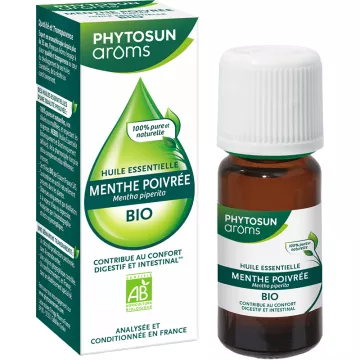
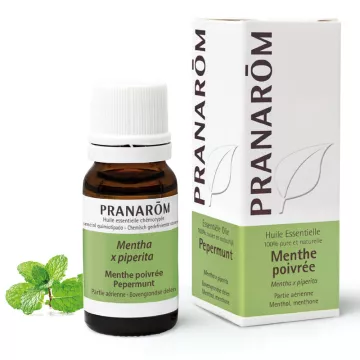
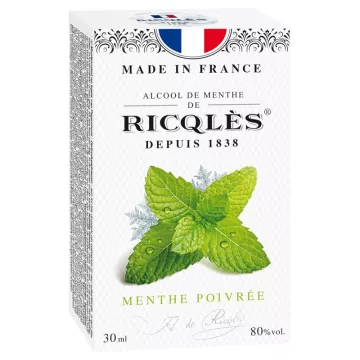
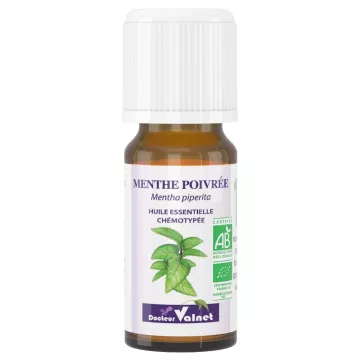
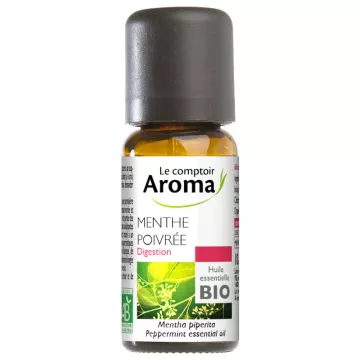
Peppermint essential oil (Mentha × piperita) is the most potent and best-documented of all mint essential oils. Its menthol (40–55%) and menthone (15–30%) give it a profile that is incomparably more active than that of spearmint or spearmint hydrosol. It is peppermint essential oil that activates TRPM8 receptors with the greatest intensity—a mechanism responsible for nearly all of its effects: skin cooling, decongestion, local analgesia, and cognitive support.
What uses for peppermint are recognized by the EMA?
Peppermint is one of the plants most thoroughly covered by the EMA/HMPC monographs—two uses are recognized as “well-established.”
- Relief of functional digestive disorders (bloating, gas, cramps): EMA-recognized well-established use for peppermint leaf preparations and for essential oil in enteric-coated capsules for irritable bowel syndrome
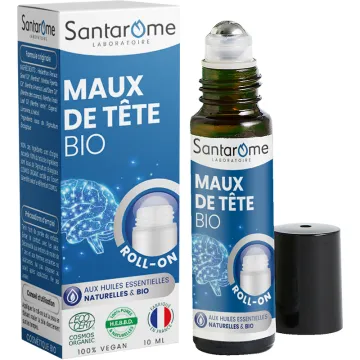
- Topical application to relieve tension headaches: EMA-recognized traditional use for peppermint essential oil applied to the forehead—validated by several randomized clinical trials
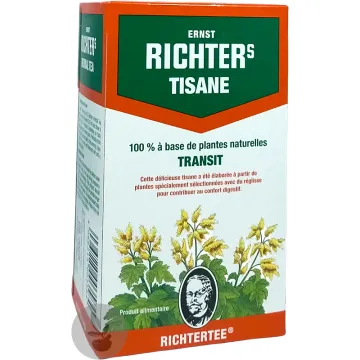
- Herbal tea: 1–2 tablespoons of dried leaves in 250 mL of water at 90°C, steeped for 5–10 minutes — 1 cup after a meal for digestive comfort
- Enteric-coated essential oil capsules: pure essential oil released directly into the intestine, preventing gastric reflux—the most effective form for functional bowel disorders
How to use peppermint essential oil for headaches?
This is its most well-documented clinical use—and one of the most surprising for those new to aromatherapy.
Several randomized clinical trials (including Göbel et al. 1996) have shown efficacy equivalent to 1 g of acetaminophen for tension headaches, with application of a 10% essential oil solution in ethanol to the forehead and temples. The mechanism: menthol activates TRPM8, creates a cooling sensation, and reduces the sensitivity of local nociceptors.
- Application for headaches: 1–2 drops diluted to 10% in ethanol or 2–3% in a vegetable oil—apply to the forehead and temples—avoid the eye area
- Never apply pure or concentrated menthol near the eyes, nostrils, or on children’s faces
- Repeat application every 15–30 minutes if necessary
What are some other practical uses for peppermint essential oil?
Beyond headaches and digestive issues, its menthol makes it a versatile active ingredient for several everyday uses.
- Nausea and motion sickness: 1 drop on a tissue, inhale directly—activates the nasal TRPM8 receptor, reduces nausea through the sense of smell—a practical alternative to ginger when traveling
- Concentration and mental fatigue: diffuse 5–8 drops for 15–20 minutes—menthol stimulates the sympathetic nervous system, with documented support for alertness
- Respiratory comfort: Inhale 2–3 drops from a bowl of hot water—TRPM8 sensation of a clear nose (menthol does not actually dilate the bronchi but creates the perception of improved airflow)
- Fresh breath and mouthwash: 1 drop in 200 mL of lukewarm water, gargle for 30 seconds — sanitizing effect on oral flora and long-lasting freshness — see our fresh breath line
What precautions should be taken with peppermint essential oil?
- Children under 6 years old: Contraindicated for direct inhalation, on the face, and in the nostrils—risk of reflex bronchospasm via nasal TRPM8
- Asthmatics: consult a doctor—menthol may trigger reflex bronchoconstriction in certain individuals
- Pregnant and breastfeeding women: not recommended — menthol may reduce milk production
- Epilepsy: consult a doctor—menthone may induce seizures at high doses
- Gastroesophageal reflux: Avoid taking essential oil orally or drinking herbal tea—menthol relaxes the lower esophageal sphincter
- Dilute to 2–3% for topical use—menthol is a skin irritant at high concentrations