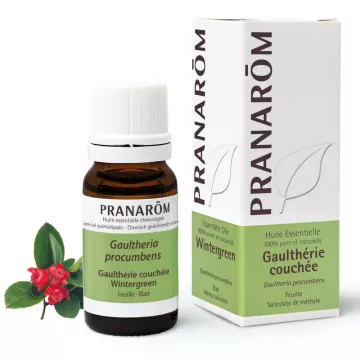
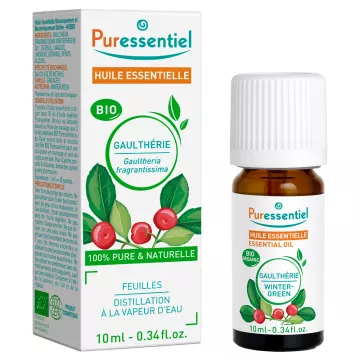
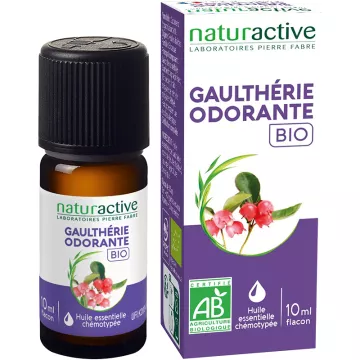
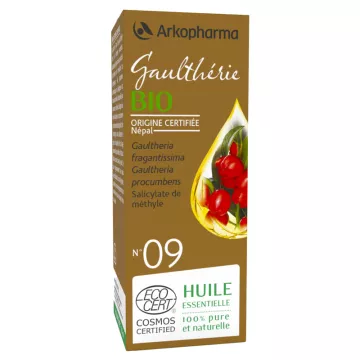
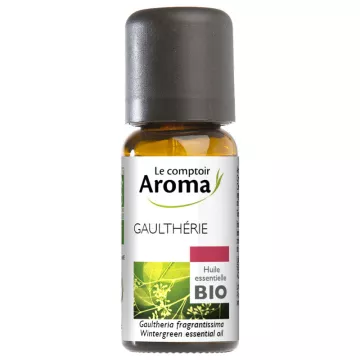
Why is wintergreen essential oil so special among all essential oils?
Wintergreen (Gaultheria procumbens) is an exception in the world of essential oils: it consists of 95–99% of a single molecule, methyl salicylate. This is what gives it its distinctive “warming ointment” scent and its remarkably targeted action on muscle and joint pain.
Methyl salicylate is the lipophilic form of salicylic acid—the same active ingredient as aspirin. This chemical relationship explains both its effectiveness and its strict contraindications: anyone allergic to aspirin or taking blood thinners should not use this essential oil.
What are the practical uses of wintergreen essential oil for muscle comfort?
This is its primary area of application—and the use for which it is irreplaceable among all essential oils.
- Sore muscles and muscle fatigue: 3–5% in a vegetable oil (arnica or calophyllum), massage in circular motions on the painful areas—gradual warmth, long-lasting relief
- Tendinitis and localized pain: 2–3% in aloe vera gel or a vegetable oil—apply 2–3 times a day to the affected area—take a break after 3 weeks of regular use
- Before and after exercise: “hot-cold” sports blend: wintergreen + peppermint (2:1) in a carrier oil—the warmth of wintergreen + the coolness of peppermint, the classic sports synergy
- Chronic joint pain: wintergreen + true lavender — methyl salicylate provides local relief, while lavender supports reflex muscle relaxation
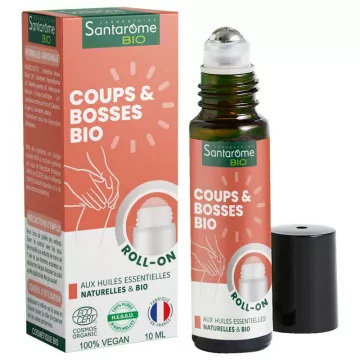
Wintergreen and bruises: an effective combination?
Methyl salicylate easily penetrates the skin and improves local microcirculation—which accelerates the resolution of bruises.
- Go-to combination: wintergreen + immortelle + helichrysum — the bruise/ecchymosis trio in aromatherapy — apply gently without rubbing to the affected area
- Lower dilution for bruises: 1–2%—never apply to broken skin, burns, or open wounds
What are the absolute precautions for wintergreen essential oil?
It is one of the essential oils with the strictest contraindications—be sure to familiarize yourself with them before any use.
- Allergy to aspirin or salicylates: absolute contraindication — percutaneous methyl salicylate can trigger the same reaction as oral aspirin
- Anticoagulants (warfarin, heparin, apixaban, rivaroxaban): absolute contraindication—salicylate significantly potentiates the anticoagulant effect and increases the risk of bleeding
- Pregnant and breastfeeding women: contraindicated — methyl salicylate crosses the placental barrier
- Children under 7 years of age: contraindicated—risk of Reye’s syndrome (a rare but serious reaction associated with salicylates in children)
- Damaged, burned, or irritated skin: never apply directly
- Always dilute: 2–5% maximum when massaging — never use undiluted
- Duration: Take regular breaks every 3 weeks to prevent skin sensitization