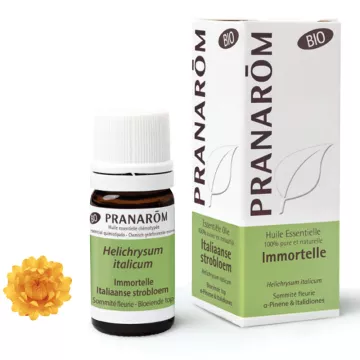
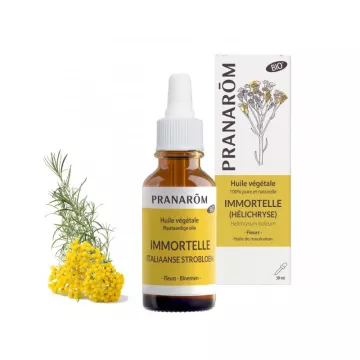
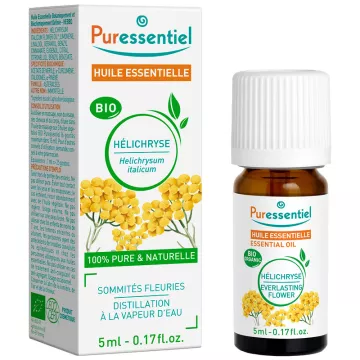
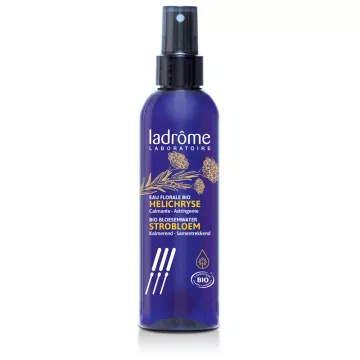
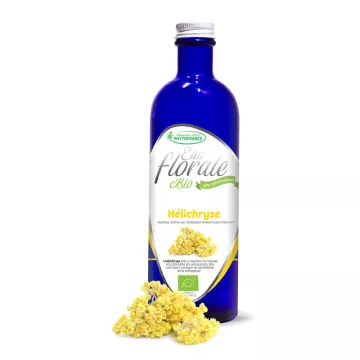
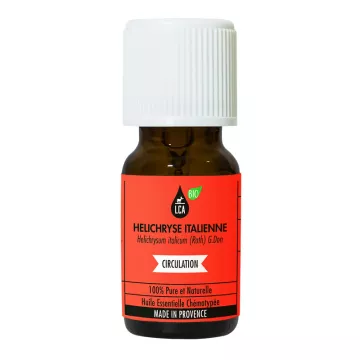
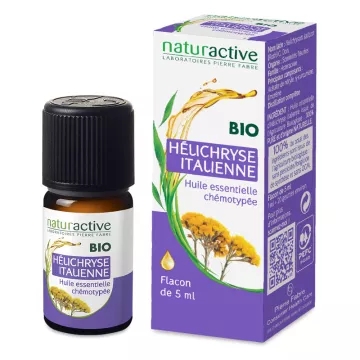
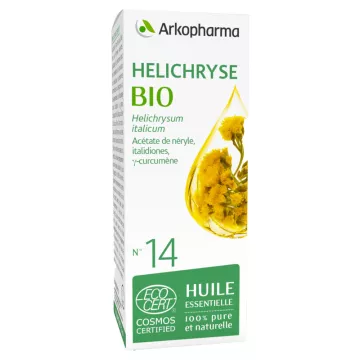
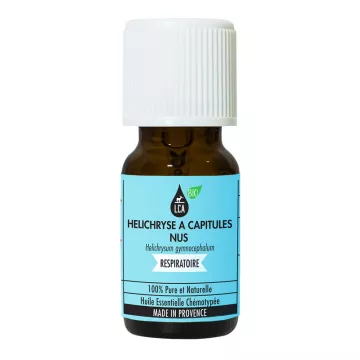
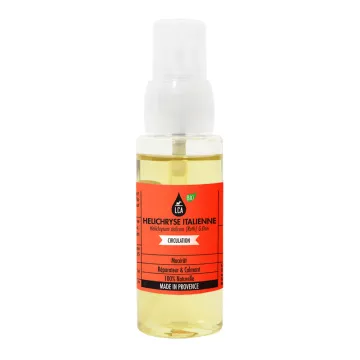
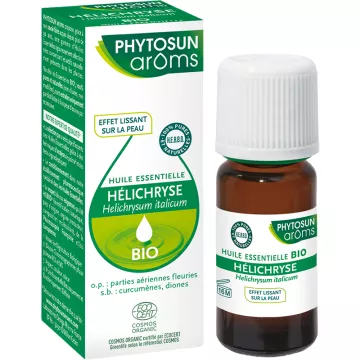
Helichrysum (Helichrysum italicum)—it’s the same plant as immortelle; two names for a single species. But in practice, two very different products are sold under this name:the essential oil from the flowers (concentrated, precious, used for bruises and anti-aging) and the oil macerate —flowers macerated in a vegetable oil, which is much more affordable and suitable for daily skincare. Knowing which one to use makes all the difference. Explore our aromatherapy line.
Helichrysum Essential Oil vs. Oil Macerate: Which One for What?
Two products, two price points, two levels of intensity—confusion is very common.
- Helichrysum essential oil: distilled from fresh flowers—italidiones + neryl acetate + β-caryophyllene—highly concentrated, 25–50 €/5 mL for Corsican-quality oil—bruises, intensive anti-aging, circulation as a short-term treatment
- Helichrysum oil macerate: flowers macerated in a vegetable oil (often sunflower or jojoba) — much less concentrated in italidiones — affordable, well-tolerated — daily care for sensitive skin, redness, mild rosacea
- The macerate is the alternative for highly reactive skin that does not tolerate concentrated essential oils well—or for long-term daily use without the risk of sensitization
- In practice: use the macerate in the morning as part of your daily routine, and essential oil in the evening for targeted treatment or in cases of acute need (bruises, sprains)
Helichrysum and care for skin with rosacea and reactive skin?
This is an area where the macerate often outperforms pure essential oil in terms of tolerance.
- Rosacea and diffuse redness: helichrysum macerate + a few drops of cypress essential oil in a neutral cream—supports skin vascular tone and soothes redness
- Very sensitive skin that reacts to conventional essential oils: the macerate alone, applied in a thin layer at night—a honey-like, slightly spicy scent that quickly fades upon absorption
- Puffiness and dark circles: a cold macerate compress applied for 5 minutes in the morning under the eyes—β-caryophyllene supports local microcirculation
- Radiant complexion: macerate + 0.5% neroli essential oil—a floral-resin blend for dull, lackluster skin
Helichrysum and respiratory comfort?
An often-overlooked use—the cineole in helichrysum also gives it a mild respiratory profile.
- Dry inhalation: 2 drops of essential oil on a handkerchief—warm, honey-like note—supports the upper respiratory tract during episodes of mild congestion
- Chest massage: 2% in calophyllum oil—combine with ravintsara or eucalyptus radiata for a more complete synergy
- Helichrysum is not a leading respiratory essential oil (ravintsara and eucalyptus globulus remain the gold standards)—but it effectively complements winter blends by providing its vascular and mucous membrane-soothing properties
Helichrysum and long-term circulation support?
Its circulatory action is less dramatic than that of fresh blue chamomile, but effective as part of a treatment regimen.
- Chronic heavy legs: 4–6-week course of treatment, macerate + 2% essential oil in calophyllum, upward massage in the evening—supports gradual venous return
- Long-term circulatory blend: helichrysum + cypress + Egyptian geranium in calophyllum — a veinotonic, draining trio
- Mild hemorrhoids: 1–2% essential oil in calophyllum oil—apply topically after bathing, 2–3 times a day during the acute phase—seek medical advice if symptoms persist
Key combinations for helichrysum?
Its natural partners depending on the goal.
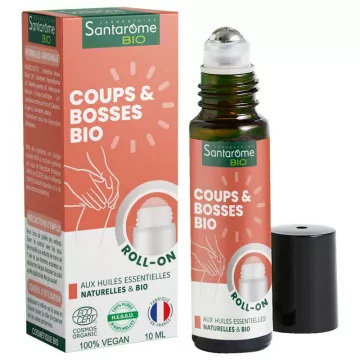
- Sports bruise relief: helichrysum + arnica + wintergreen in vegetable oil — see our muscle comfort page
- Mature and rosacea-prone skin: helichrysum macerate + muscat rose + neroli essential oil
- Leg circulation: helichrysum + cypress + Egyptian geranium in calophyllum
- Winter respiratory support: helichrysum + ravintsara + eucalyptus radiata in a diffuser
Precautions?
- Anticoagulants: documented interaction; inform your doctor—italidiones potentiate the anticoagulant effect
- Pregnant and breastfeeding women: not recommended (diketones)
- Essential oils: Do not apply to open wounds—dilute to 1–3%
- Essential oil treatment: maximum 3 weeks—diketones accumulate—take a break before resuming
- Macerate: Well tolerated for long-term daily use — check the flower content on the label