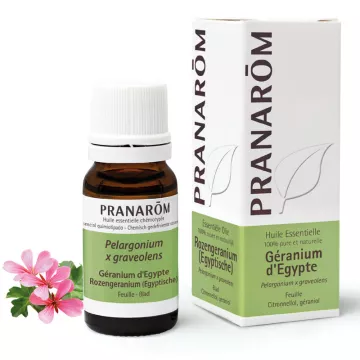
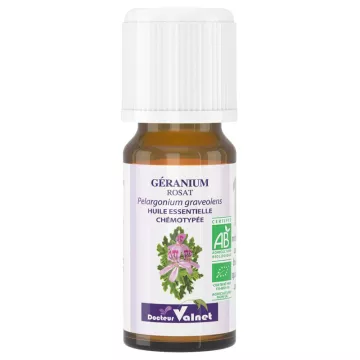
Egyptian geranium (Pelargonium graveolens, “Egypt” cultivar) is produced primarily in the Nile Valley—a region that yields a biochemical profile slightly different from that of Bourbon geranium (Reunion) or South African geranium. With a higher concentration of citronellol (up to 40–45%), it is particularly valued for its repellent, circulatory, and skin-nourishing properties. Its scent is more herbaceous and less floral than that of Bourbon geranium, but just as versatile. Explore our aromatherapy line and our natural mosquito repellents.
Egyptian Geranium vs. Bourbon Geranium: What Are the Differences?
Same species, different terroirs—profiles that justify choosing one over the other depending on the intended use.
- Egyptian geranium (P. graveolens, Nile Valley): citronellol 35–45% + geraniol 15–25% + citronellyl formate — a more herbaceous note, slightly less floral — a more pronounced repellent and circulatory profile
- Bourbon geranium (P. x asperum, Réunion): higher geraniol content, more rosy and floral notes—a premium cosmetic profile for anti-aging skincare and perfumery
- Moroccan/South African rose geranium (P. graveolens): intermediate profile — the most common and accessible
- For a natural repellent or a circulation-boosting skincare product: prioritize Egyptian geranium (high citronellol content)
- For mature skin care or use in fine perfumery: premium-quality Bourbon geranium or rose geranium
- See our Rose Geranium page for a complete overview of the species
Egyptian geranium and insect repellents?
Its high citronellol content makes it the most effective geranium as a repellent—a property directly linked to its citronellol content.
- Citronellol is a recognized insect repellent—it works through the same mechanism as citronellal found in Java citronella
- Topical repellent application: 2–3% in a light vegetable oil (jojoba, sweet almond)—apply to exposed areas, reapply every 2–3 hours
- Outdoor or semi-open diffusion: 10 drops in a diffuser—keeps mosquitoes and biting insects away during the session
- Powerful blend: Egyptian geranium + Java citronella + lemon eucalyptus—the natural repellent trio
- See our range of pest control products and mosquito repellent sprays
Egyptian geranium and circulatory care?
The high concentration of citronellol in Egyptian geranium gives it a documented vascular tonic effect.
- Mild venous and lymphatic tonic: citronellol exerts a gentle capillary vasoconstrictive effect—supports relief from heavy legs
- Leg massage: 3–5% in calophyllum oil (a venotonic) — use upward strokes from the feet toward the knees, twice daily
- Circulatory blend: Egyptian geranium + evergreen cypress + grapefruit—a classic veinotonic trio
- Support for skin microcirculation: 1% in rosehip or calophyllum oil — facial treatment for dull complexions and minor redness
Egyptian Geranium and Skincare?
Its sebum-regulating properties remain a key benefit, even if it is less floral than Bourbon geranium.
- Combination and oilyskin: 1% in jojoba oil—sebum regulation and visually refined pores
- Skin imperfections: combine with tea tree oil for an enhanced purifying effect—apply in the evening to affected areas
- Hair care: 2 drops in shampoo for oily scalps—reduces sebum and adds a pleasant, slightly herbaceous note
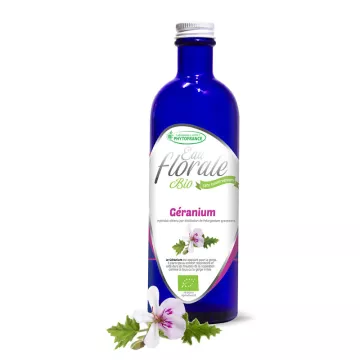
- Geranium hydrosol: versatile facial toner—fresh, floral scent; firms the skin and evens out the complexion as part of your daily skincare routine
Precautions?
- Pregnant and breastfeeding women: Not recommended
- Hormone-dependent cancers and hormone therapies: consult a doctor—geraniol may have estrogen-like activity
- Allergy to Geraniaceae: Perform a skin test before extensive use
- Dilute to 1–3% for topical use — citronellol: a potential allergen listed in Regulation (EC) No. 1223/2009 at high concentrations