0
Menu

Cypress: Benefits for Circulation and Health

Filter
Number of products : 11
Sort
Sort
Close
Dr. Valnet Dynarome Light Legs Lotion Dr. Valnet Dynarome Light Legs Lotion
50 ml 100 ml
€7.49
Add to cart
Shipped within 24h
Pileje Phytostandard Cypress Astragale 30 tablets Pileje Phytostandard Cypress Astragale 30 tablets
€13.39
Shipped within 24h
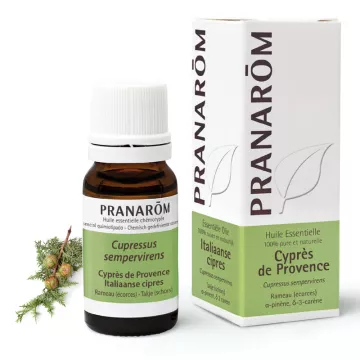
Pranarom Provence Cypress Essential Oil 10 ml Pranarom Provence Cypress Essential Oil 10 ml
€5.49
Shipped within 24h
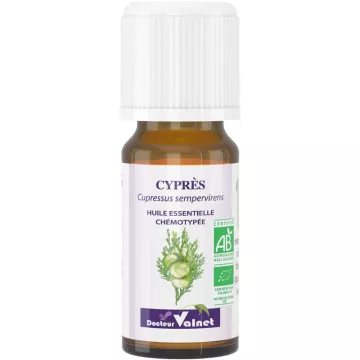
Dr Valnet Cypress Organic Essential Oil 10 ml Dr Valnet Cypress Organic Essential Oil 10 ml
€8.87
Shipped within 24h
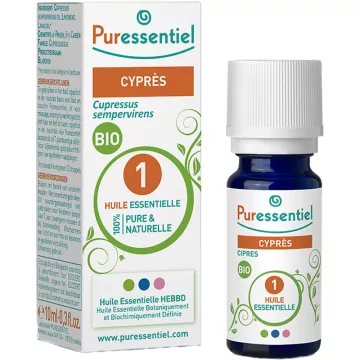
Puressentiel Organic Cypress Essential Oil 10 ml -20% Puressentiel Organic Cypress Essential Oil 10 ml
€6.31 €7.90
Shipped within 24h
Puressentiel Forest Diffuser Essential Oil, 30 ml Puressentiel Forest Diffuser Essential Oil, 30 ml
€10.90
Shipped within 24h
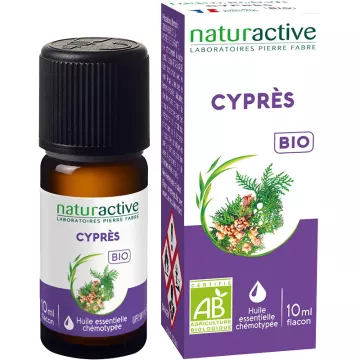
Naturactive Cypress Organic Essential Oil 10 ml -20% Naturactive Cypress Organic Essential Oil 10 ml
€5.11 €6.40
Shipped within 24h
Vitall+ Cypress & Echinacea 30 vegetarian capsules Vitall+ Cypress & Echinacea 30 vegetarian capsules
€23.70
Replenishment in progress
Cypress Crushed Walnut Iphym Herboristerie Cupressus sempervirens Cypress Crushed Walnut Iphym Herboristerie Cupressus sempervirens
100 g 250 g +
€7.10
Add to cart
Usually ships in 5-7 business days

Cypress essential oil (Cupressus sempervirens, leaves and twigs) is one of the few essential oils with a documented venotonic effect—a property that clearly distinguishes it from other conifer essential oils. Its profile, rich in α-pinene (40–65%), cedrene, and camphene, gives it well-established vascular, astringent, and expectorant properties in aromatherapy. It is the go-to essential oil for venous drainage massages and relief from heavy legs. Discover our range of products for heavy legs and venous circulation.

What is cypress essential oil?

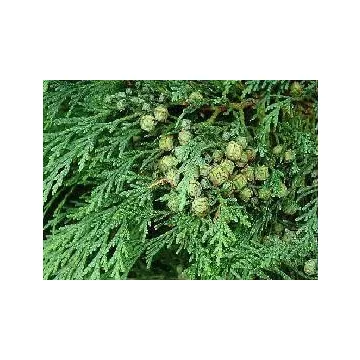
The evergreen cypress (Cupressus sempervirens) is a Mediterranean conifer—the only species of the genus Cupressus used in French aromatherapy. Its essential oil is extracted by steam distillation of the leaves and twigs. It is rich in α-pinene (the predominant monoterpene, 40–65%), β-myrcene, cedrene (a sesquiterpene), and sabinol—a monoterpene-sesquiterpene profile that explains its specific venotonic and astringent properties. It should be distinguished from Atlas cedar (lymphotonic, himachalene): cypress targets venous circulation, while cedar targets lymphatic circulation—two complementary mechanisms.

Cypress and Venous Comfort: The Veinotonic of Aromatherapy?

This is cypress’s primary and best-documented use in aromatherapy.

  • Venotonic: α-pinene strengthens the tone of the venous walls—supporting venous return and comfort in the lower limbs
  • Vascular astringent: constricts dilated capillaries—supports relief from hemorrhoids when applied topically in a diluted form
  • Venous massage: 2–3% in calophyllum vegetable oil (also a veinotonic) — upward strokes on the lower limbs, twice daily
  • Classic “heavy legs” trio: cypress + peppermint + mastic — vein-toning synergy and sensory freshness
  • See our line for heavy legs and venous circulation

Cypress and respiratory comfort?

Cypress is one of the most useful aromatherapeutic ingredients for seasonal bronchial comfort.

  • Expectorant and mucolytic: α-pinene thins bronchial secretions — supports respiratory comfort during episodes of productive cough
  • Mild bronchial antispasmodic: reduces the spasms that cause an irritative cough
  • Topical application to the chest: 2–3% in a carrier oil—use for chest and back massages 2 to 3 times a day
  • Diffusion: 8–10 drops in an ultrasonic diffuser — purifies the air and supports the upper respiratory tract
  • Combine with eucalyptus radiata essential oil for comprehensive respiratory support

Cypress and Sweat Regulation?

Cypress’s astringent properties make it a natural regulator of sweating.

  • Astringent and antiseptic properties: regulates excessive sweating (mild hyperhidrosis) of the underarms, feet, and hands
  • Cypress hydrosol: a toning lotion for direct application—a gentle astringent for oily skin and enlarged pores
  • Incorporated into natural deodorants at 1–2%: neutralizes odors and regulates the surface skin microbiome
  • Combined with sage essential oil (anti-sweating) for menopausal-related excessive sweating — recommended by aromatherapists

Cypress and oily skin?

Cypress’s astringent and purifying properties make it a dermo-cosmetic active ingredient suitable for seborrheic skin.

  • Regulates sebum and skin keratin production—visibly refines pores
  • Oily and acne-prone skin: 1% in jojoba oil or aloe vera gel—apply topically
  • Cypress hydrosol: daily toner after cleansing the face—a gentle astringent that doesn’t cause irritation
  • Combine with tea tree essential oil for anti-blemish care on combination skin

Precautions and contraindications?

Cypress essential oil is well tolerated—but there are a few important precautions to note.

  • Pregnant women (1st trimester): avoid—α-pinene may have a uterotonic effect
  • History of hormone-dependent cancer: not recommended—cypress contains compounds with potential estrogen-like activity—medical advice is essential
  • Severe high blood pressure: α-pinene may have a vasoconstrictive effect—use with caution; medical advice is recommended
  • Always dilute to 2–5% for topical use—never use undiluted
  • Storage: in a dark bottle, away from heat—shelf life 2–3 years (monoterpenes are less stable than sesquiterpenes)