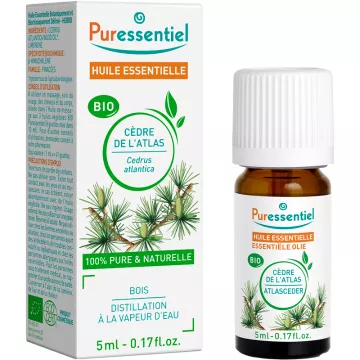
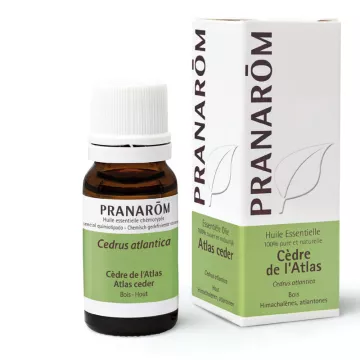
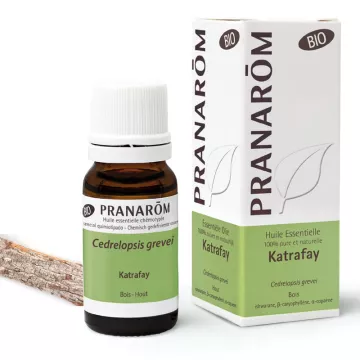
Cedar essential oil is primarily extracted from Cedrus atlantica (Atlas cedar, Morocco) through steam distillation of the wood. Its biochemical profile, dominated by sesquiterpenes (β-himachalene, α-himachalene 40–60%) and sesquiterpenols (atlantol), gives it a woody, warm, and slightly amber scent—an essential base note in perfumery. Its uses in aromatherapy include joint comfort, scalp health, and nervous system balance. Explore our aromatherapy line.
What is cedar essential oil?
There are several botanically distinct cedar species, each with essential oils that have different profiles.
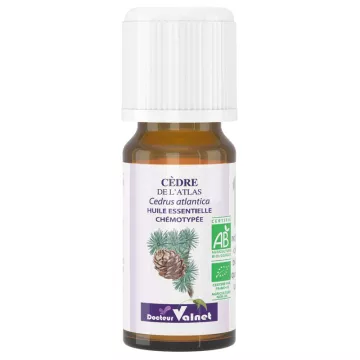
- Cedrus atlantica (Atlas cedar, North Africa): rich in himachalene sesquiterpenes (40–60%) and atlantol—the gold standard in aromatherapy, with a lymphotonic and nerve-calming profile
- Cedrus deodara (Himalayan cedar): slightly different sesquiterpenes, a softer, woody note—used in Ayurveda
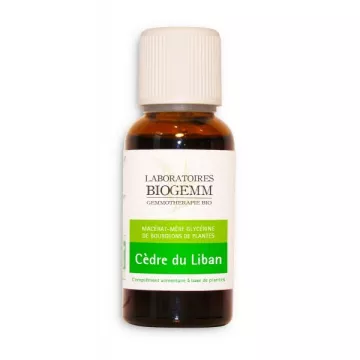
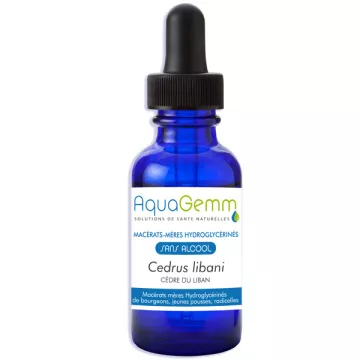
- Cedrus libani (Lebanese cedar): more rarely extracted; used primarily for traditional and spiritual purposes
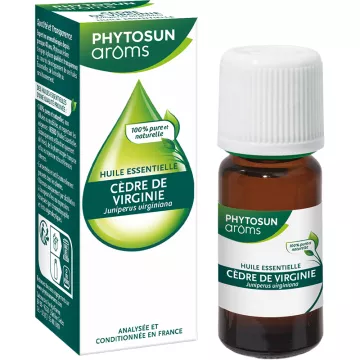
- Not to be confused with Juniperus virginiana (Virginia cedar)—which is not a true cedar but a juniper—sometimes marketed under the name “cedar wood”
- Check the species and the source material on the label: “Cedrus atlantica, wood” for the most well-documented essential oil
Aromatherapeutic properties and uses?
Atlas cedar essential oil is one of the few essential oils with a predominantly sesquiterpene profile—properties distinct from those of monoterpene essential oils.
- Lymphotonic and venotonic: supports lymphatic circulation—used in draining massages on the limbs, combined with cypress and grapefruit
- Mild nervous systemsedative: himachalenes act on the central nervous system via the sense of smell—promotes relaxation and prepares the body for sleep
- Joint and muscle comfort: in massage diluted to 3–5%—supports joint comfort in rheumatic conditions and muscle tension
- Mucolytic expectorant: applied topically to the chest—promotes respiratory comfort during seasonal congestion
- Pest repellent: documented insect-repelling action against mites and certain insects — see our pest control line
Cedar and hair care?
Atlas cedar essential oil is one of the most commonly used essential oils in scalp care.
- Hair loss: stimulates microcirculation in the scalp — incorporate 2–3% into a mild shampoo or hair oil — see our shampoo line
- Dandruff and itching: helps regulate the scalp’s microbial flora and promotes healthy keratinization—regulates sebum production in oily scalps
- Hair Care Protocol: 5 drops of cedarwood essential oil + 5 drops of true lavender essential oil + 30 mL of jojoba oil—apply to the scalp using circular massage motions 15 minutes before shampooing
- Combine with rosemary cineole essential oil (to stimulate circulation) for a comprehensive anti-hair loss treatment
Cedarwood and oily skin?
In skincare, cedarwood essential oil is particularly well-suited for seborrheic skin.
- Astringent and keratoregulatory properties: reduces excess sebum and refines skin texture
- Oily and acne-prone skin: mix 1–2% into jojoba oil or a lightweight skincare product—use in the evening
- Air-purifying properties when diffused: combine with tea tree or lavandin essential oil to purify indoor spaces
- Never apply undiluted to the skin—always dilute in a vegetable oil or cosmetic product at 1–3%
How to use cedarwood essential oil?
Methods of use vary depending on the desired benefit.
- Diffusion: 10–15 drops in an ultrasonic diffuser—20–30 min—soothing woody base note, perfect before bedtime or meditation
- Skin massage: 2–5% in a vegetable oil (jojoba, arnica, St. John’s wort)—joints, muscles, or lymphatic drainage areas
- Hair care: 2–3% in shampoo or hair oil — massage into the scalp in circular motions
- Pregnant women (1st trimester) and children under 6 years of age: avoid — not recommended as a precaution
- Storage: in a tinted bottle, away from heat and light — shelf life 3–5 years (stable sesquiterpenes)