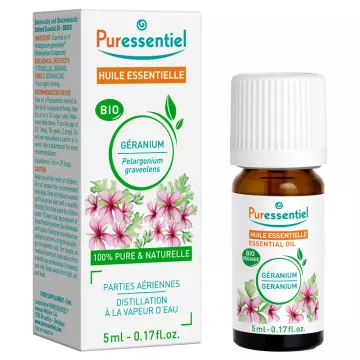
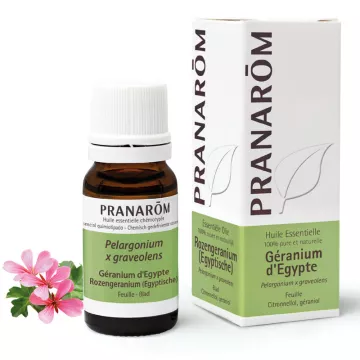
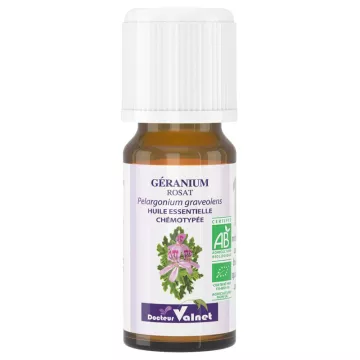
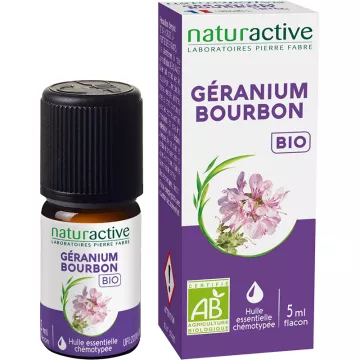
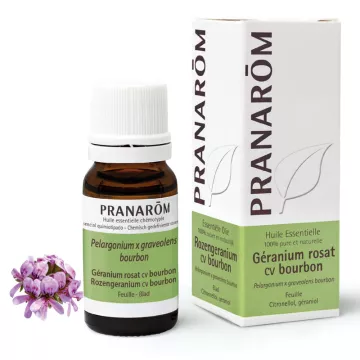
Rose geranium essential oil (Pelargonium graveolens, leaves, South Africa—Morocco for Bourbon geranium) is one of the most versatile oils in aromatherapy: purifying, rebalancing, repellent, and soothing. Rich in citronellol and geraniol (60–80% of the monoterpenols), it works on the skin, the environment, and the emotions. And it smells like roses—but is more affordable. Explore our aromatherapy line.
What is rose geranium?
The term “geranium” encompasses several species—and is often a source of botanical confusion.
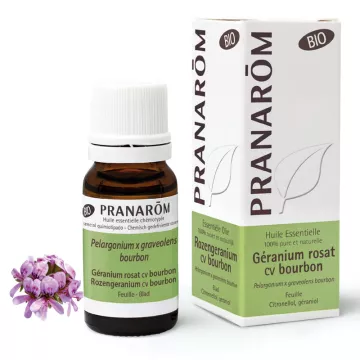
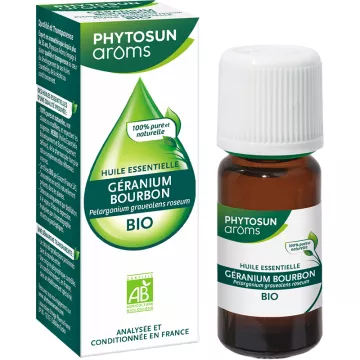
- Pelargonium graveolens: the classic rose geranium—the main commercial source of essential oil—grown in South Africa and Morocco
- Pelargonium x asperum (Bourbon geranium, Réunion Island): slightly different profile, softer note—used in fine perfumery as an economical alternative to rose
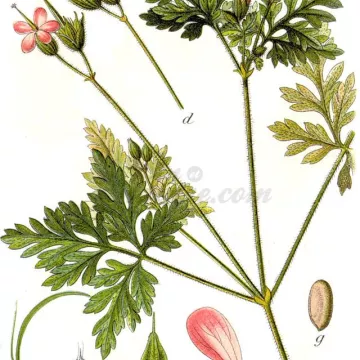
- Not to be confused with wild European Geranium species (blood geranium, Robert’s herb) — a related family but with entirely different properties and essential oils
- Essential oil composition: citronellol (20–40%), geraniol (15–30%), linalool, citronellyl formate—a dominant monoterpenol profile that explains its skin-soothing and balancing effects
- Always check for “Pelargonium graveolens” or “P. x asperum” on the label—not just “geranium”
Geranium and skincare?
Its monoterpenol profile makes it one of the most comprehensive aromatherapeutic active ingredients for the skin.
- Combination and seborrheicskin: geraniol regulates sebum production—1% in jojoba oil for daily morning skincare
- Acne-prone skin: citronellol has a purifying effect on pores—as a complement to tea tree
- Sensitive and reactiveskin: one of the best-tolerated profiles among essential oils—a soothing treatment for redness and tightness at 0.5–1%
- Anti-aging care: Geraniol stimulates collagen synthesis and improves elasticity—a complementary active ingredient to retinol in natural skincare for mature skin
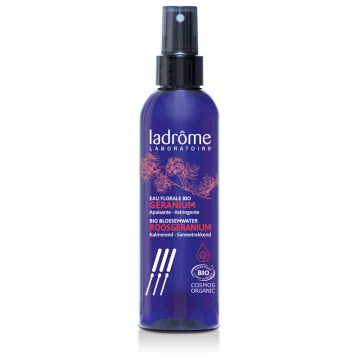
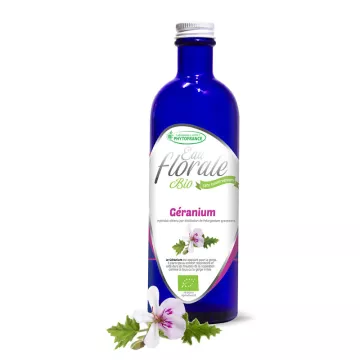
- Geranium hydrosol: a daily facial toner—with a soft, rosy scent that firms the skin and evens out the complexion
Geranium as a natural repellent?
The citronellol in geranium is documented as an insect repellent—and this is also why lemongrass and lemon eucalyptus work.
- Mosquito repellent: 2–3% in a light vegetable oil (jojoba, sweet almond) — apply to exposed areas, reapply every 2–3 hours
- Combine with lemongrass to enhance the repellent effect—the synergy between citronellol and citronellal is well-documented
- Insect-repelling diffusion: 8 drops of geranium + 5 drops of citronella in a diffuser in an open or semi-open space
- See our mosquito repellent line and our pest control products
Geranium and emotional balance?
Geranium is one of the most widely used essential oils in emotional aromatherapy—for its balancing effect on mood swings.
- Support for mood swings and emotional imbalances related to the menstrual cycle—used in abdominal massage diluted to 2–3%
- Diffusion: 8–10 drops in a diffuser for 20–30 minutes—supports emotional balance and overall well-being
- Emotional blend: geranium + ylang-ylang —a balancing, feminine, and warm floral duo
- Sleep support: geranium + true lavender diffused in the evening — soothing floral note
- History of hormone-dependent cancers: medical advice recommended—geraniol may have estrogen-like activity at high doses
Geranium and hair care?
Its sebum-regulating action also applies to the scalp.
- Oily scalp: 2–3 drops in shampoo — regulates sebum production and adds a fresh rose scent to the treatment
- Revitalizing hair mask: 5 drops of geranium + 5 drops ofylang-ylang in 30 mL of jojoba oil—apply 30 minutes before shampooing
- Sensitive and irritated scalp: geranium hydrosol spray after shampooing—soothes and balances pH
Precautions?
- Pregnant and breastfeeding women: not recommended—geraniol may affect hormonal balance
- Hormone-dependent cancers and ongoing hormone therapy: medical advice is essential
- Allergy to the Geraniaceae family: perform a skin test before any extensive use
- Dilute to 1–3% for topical use — never apply undiluted; citronellol is a potential allergen (EC Regulation 1223/2009) at high concentrations