0
Menu

Saffron: Benefits for Health, Mood, and Beauty

Filter
Number of products : 8
Sort
Sort
Close
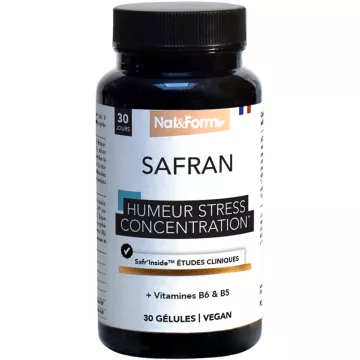
Nat & Form Nutraceutique Saffron 30 capsules Nat & Form Nutraceutique Saffron 30 capsules
€12.55
Shipped within 24h
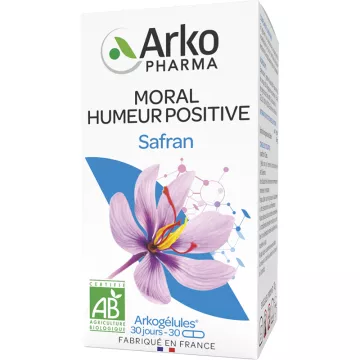
Arkocaps Safran Moral Humeur Positive Bio 30 Capsules Arkocaps Safran Moral Humeur Positive Bio 30 Capsules
€16.65
Shipped within 24h
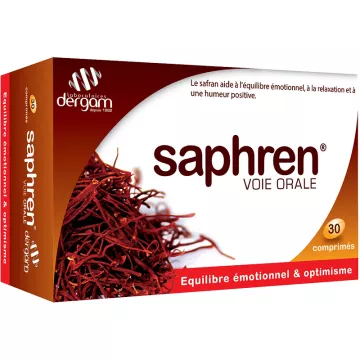
Saphren Depression emotional balance 30 tablets Dergam Saphren Depression emotional balance 30 tablets Dergam
€27.80
Shipped within 24h
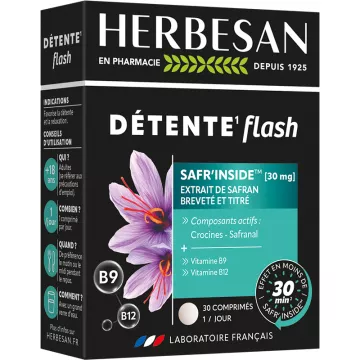
Herbesan Détente Flash Sraf'Inside - Saffron - 30 tablets Herbesan Détente Flash Sraf'Inside - Saffron - 30 tablets
€17.10
Shipped within 24h
Santarome Bio Stress Control 20 Ampoules Santarome Bio Stress Control 20 Ampoules
€14.65
Shipped within 24h
Ladrôme Organic Plant Extracts Saffron 50 ml Ladrôme Organic Plant Extracts Saffron 50 ml
€19.75
Shipped within 24h
HDNC Formule Safran Bio Saffr'Inside 30 capsules HDNC Formule Safran Bio Saffr'Inside 30 capsules
€15.99
Ships in 5-7 business days

Saffron (Crocus sativus), often called “red gold,” is a precious spice extracted from the stigmas of the crocus flower. Used for centuries in herbal medicine and cosmetics, it contains active pigments—crocin and safranal—with antioxidant properties. It is found primarily in dietary supplements and in skincare products designed to enhance radiance.

What is saffron?

Saffron comes from the cultivation of Crocus sativus, each flower of which produces only three stigmas, which explains its high price. In herbal medicine, its active ingredients—crocin and safranal—are rich in powerful antioxidant polyphenols.

What are the benefits of saffron?

Saffron is traditionally used for various purposes in herbal medicine and cosmetics.

  • Supporting emotional well-being and nervous system balance during periods of temporary stress
  • Support for women’s comfort, particularly during painful periods
  • Traditionally believed to support libido and vitality
  • Helps with digestive comfort and provides traditional liver support
  • Cosmetic care: radiant complexion and antioxidant protection for the skin

In what forms should saffron be used?

In health food stores, saffron is available in forms tailored to specific uses.

  • Capsules or tablets: standardized extracts, typically dosed at 30 mg per day
  • Skincare: creams and serums for a radiant complexion and anti-aging benefits
  • Herbal tea: a few stigmas in a hot beverage, for a gentle, traditional use

Opt for organic, certified saffron in pistil form rather than powdered saffron, which is harder to authenticate.

Does saffron affect mood and stress?

Crocin and safranal are being studied for their effects on emotional well-being. Saffron is traditionally used to help manage periods of nervousness, temporary stress, and to promote relaxation. It may also promote quality sleep during restless nights.

It does not treat depression or anxiety disorders. These conditions require medical supervision: a prescribed treatment should never be replaced by a supplement without medical advice. Saffron may interact with antidepressants—be sure to tell your doctor if you’re taking it.

Saffron or Turmeric: What’s the Difference?

These two spices are often confused, but they have distinct profiles.

  • Saffron: stigmas of the crocus, rich in crocin and safranal, used for emotional well-being, the menstrual cycle, and cosmetic purposes
  • Turmeric: rhizome, contains curcumin, traditionally associated with joint and digestive comfort

Does saffron have any contraindications?

Natural does not mean risk-free: saffron requires real precautions.

  • Contraindicated in high doses during pregnancy: it can cause uterine contractions
  • Possible interaction with antidepressants: seek medical advice
  • Overdose (more than 5 g/day): headaches, nausea, drowsiness—do not exceed the recommended dosage
  • Rare allergies to the Iridaceae family: use caution in sensitive individuals

Content reviewed by Arnaud, Ph.D. in Pharmacy.