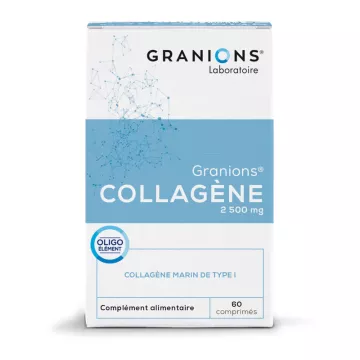
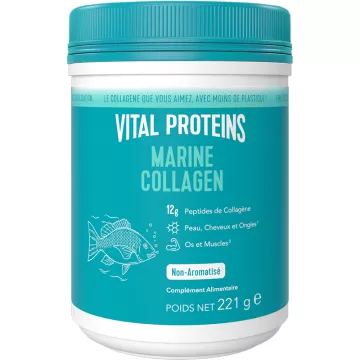
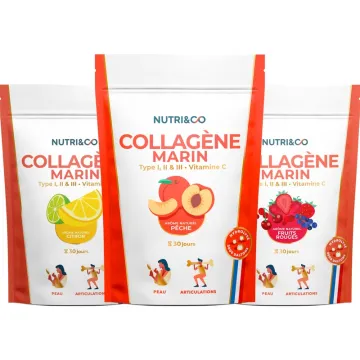
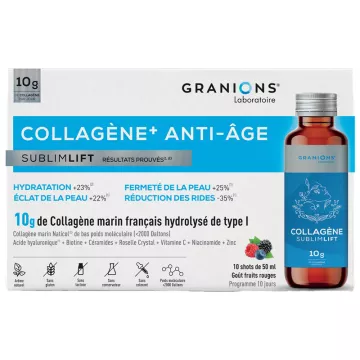
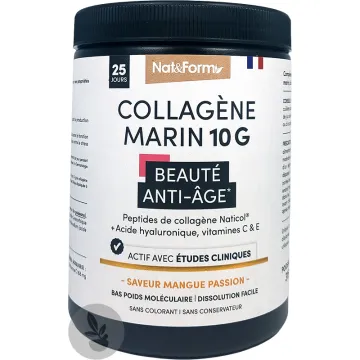
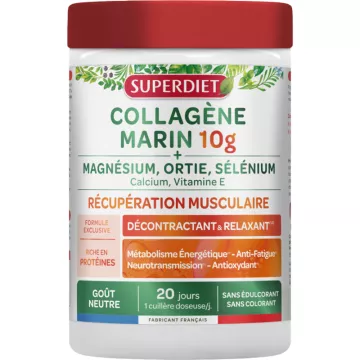
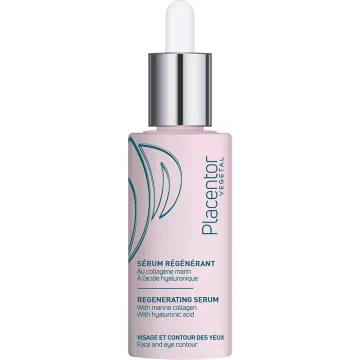
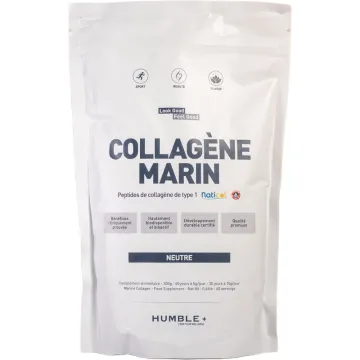
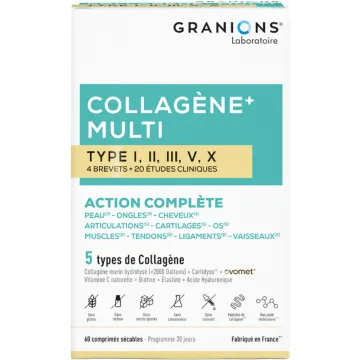
Marine collagen is a hydrolyzed collagen extracted from fishery byproducts—primarily fish skins and scales. What sets it apart: low-molecular-weight peptides (1,000–3,000 Da) that pass through the intestinal wall more quickly than bovine collagen peptides, giving it what is considered superior bioavailability. It is primarily type I —the collagen found in skin, tendons, and bones. Find our collagen line at pharmacies and visit the collagen page for a complete overview of the different types.
What is marine collagen?
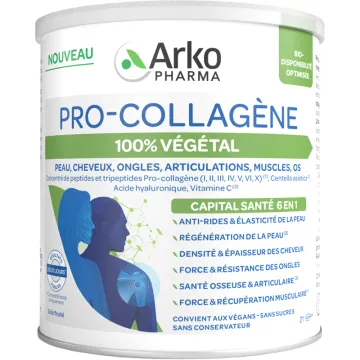
Marine collagen is extracted through enzymatic or thermal hydrolysis from the skins, bones, and scales of fish (cod, whiting, tilapia). It is genuine hydrolyzed animal collagen—not to be confused with “vegan collagen booster” complexes, which do not contain collagen but rather cofactors for its endogenous synthesis. In its hydrolyzed form, marine collagen is broken down into bioactive peptides (glycine-proline-hydroxyproline) that can be directly utilized by dermal fibroblasts and joint chondrocytes. It makes use of byproducts from the fishing industry—a circular economy approach.
Marine vs. Bovine Collagen: What Are the Differences?
Both sources provide effective hydrolyzed collagen, with distinct profiles.
- Marine collagen: predominantly type I, very low molecular weight peptides (better absorption), an ideal source for the skin and tendons, free of bovine allergens— note that fish allergies should be reported
- Bovine collagen: Types I and III, slightly larger peptides but very well tolerated, more affordable, suitable for people without seafood dietary restrictions
- Chicken collagen: undenatured type II—specific to cartilage, to be combined with chondroitin and glucosamine
- For the skin and skin aging: marine collagen is the gold standard
- For joints: Type II collagen (chicken) combined with chondroitin is the most extensively studied combination
Marine collagen and the skin: what are the benefits?
Type I marine collagen is best suited for skin support and anti-aging formulas.
- Its peptides are taken up by dermal fibroblasts, which in turn increase their synthesis of collagen, elastin, and hyaluronic acid
- Contributes toskin elasticity and helps reduce loss of firmness
- Vitamin C is essential when used in combination—it contributes to normal collagen formation for normal skin function (EFSA claim)
- Progressive results: a minimum of 8 to 12 weeks of regular use
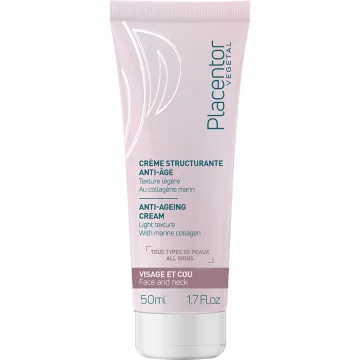
- See our anti-aging skincare products and serums
Marine Collagen and Joints?
Although primarily Type I, hydrolyzed marine collagen can support joint and tendon comfort.
How should marine collagen be used?
The powder form is the most common and best suited for therapeutic doses.
- Typical dosage: 5 to 10 g per day of hydrolyzed marine collagen peptides
- Dilute in cold water, juice, or a smoothie (do not heat above 60°C—this breaks down the peptides)
- Always take with vitamin C —an essential cofactor for proline hydroxylation
- Optimal combinations: vitamin C + hyaluronic acid + zinc + organic silicon
- 3- to 6-month course of treatment—effects on the skin and joints are gradual and dose-dependent
Precautions and contraindications?
Marine collagen is well tolerated—but there are a few precautions to be aware of.
- Fish allergy: a strict contraindication—choose bovine or chicken collagen
- Choose products with clear traceability (species, fishing area) and testing for heavy metals and contaminants
- Prefer MSC or sustainable fishing labels for seafood products
- Pregnancy and breastfeeding: consult a healthcare professional as a precaution
- Children: supplementation not recommended unless prescribed—collagen needs are met through diet