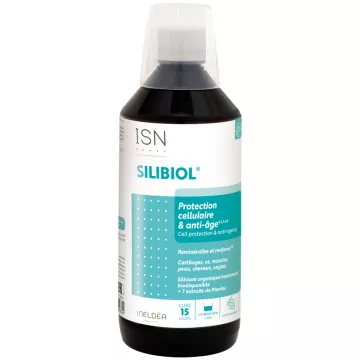
What is organic silicon, and how does it differ from mineral silicon?
Organic silicon refers to silicon compounds bound to organic groups (carbon)—offering greater cellular bioavailability than inorganic mineral silicon (SiO₂) and the simple orthosilicic acid found in mineral water. It is the most advanced form of silicon supplementation. Discover our joint supplements and anti-aging products that incorporate organic silicon into their formulas.
- Mineral silicon (SiO₂, quartz): not bioavailable — mineral silicon dioxide from rocks — is not absorbed by the body in this form — used as a food additive (anti-caking agent E551) — irritating to the lungs if inhaled (silicosis)
- Orthosilicic acid [Si(OH)₄]: water-soluble inorganic form found in mineral waters — 50–65% bioavailability but unstable in concentrated solution — polymerizes spontaneously → loses its bioactivity — requires stabilization for use in supplements
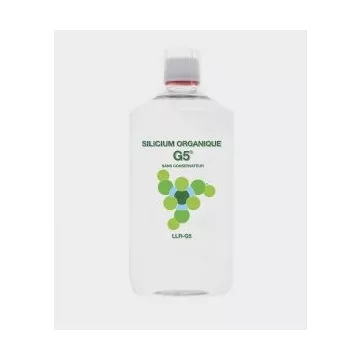
- Organic silicon G5 (methylsilanetriol): synthetic organosilicon compound (Si bound to a methyl group) — developed by Dr. Loïc Le Ribault (France, 1990s) — stabilized in aqueous solution — improved cellular penetration — first commercially available synthetic organic silicon
- ch-OSA (choline-stabilized orthosilicic acid): orthosilicic acid stabilized by choline — the most clinically studied form — published studies on the skin (type I collagen), hair (hair shaft diameter), and bone (bone formation markers) — superior bioavailability and stability compared to plain orthosilicic acid
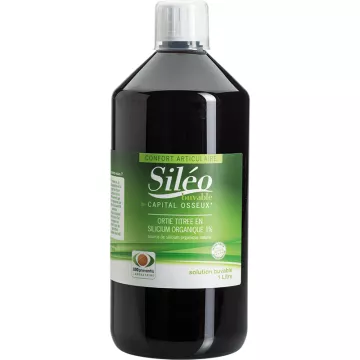
- Organic silicon extracted from plants (bamboo, horsetail, stinging nettle): silicon organically bound to plant matrices — natural intermediate forms — bioavailability varies depending on the raw material and extraction process — choice between mineral (low) and synthetic (optimal) forms
Flagship Formulations and Clinical Studies on Organic Silicon
- G5 Siliplant: methylsilane triol organic silicon in oral solution—10–30 mL/day on an empty stomach—flagship product of the synthetic organic silicon line—used in numerous clinics and wellness centers in France and Europe
- ch-OSA (BioSil®): randomized controlled trial (Barel et al., 2005) — 10 mg Si/day × 20 weeks → increased skin collagen + improved skin micro-relief — study on hair (Wickett et al., 2007) → 13% increase in hair shaft diameter + improved tensile strength — reproducible results
- Organic silicon + glucosamine + chondroitin: the gold-standard combination for osteoarthritis — organic silicon enhances the synthesis of GAGs (chondroitin sulfate + hyaluronic acid) in chondrocytes — combine calcium, magnesium, and vitamin D3 for comprehensive bone support
- Organic silicon gel (Biotisol, PharmaVie): hydrocolloidal gel based on organic silicon — topical application to joints, muscles, and scars — documented anti-inflammatory and tissue-regenerating effects — combine withhyaluronic acid in joint gels for lubricating synergy
- Organic silicon + biotin + keratin + zinc: the gold standard for hair care—each component targets a specific aspect of the hair shaft—a 3–6-month regimen for results in volume, thickness, and reduced hair loss—find these supplements in our remineralizing line
Therapeutic and Anti-Aging Applications of Organic Silicon
- Osteoarthritis and joint regeneration: organic silicon stimulates GAG production by chondrocytes and inhibits metalloproteinases (MMP-3, MMP-13) responsible for cartilage degradation—a minimum 6-month treatment course for measurable results in pain relief and joint mobility
- Osteoporosis and bone fragility: stimulation of osteoblasts (Runx2, osteocalcin) + inhibition of osteoclasts (RANK-L) — synergy with calcium + vitamin D3 + vitamin K2 — epidemiological studies show a positive correlation between dietary silicon and BMD (bone mineral density) in premenopausal women
- Skin anti-aging: stimulation of fibroblasts → type I/III collagen + elastin + endogenous hyaluronic acid — improved firmness + reduction in fine lines — to be used in combination with topical hyaluronic acid and anti-aging serums
- Wound healing and trauma: organic silicon accelerates the synthesis of wound-healing collagen (type III followed by type I) — reduces keloid formation — topical gel applied 2–3 times daily to a closed or post-surgical wound
- Aluminum detoxification: Methylsilanetriol forms stable Si-Al complexes → promotes the urinary excretion of aluminum — relevant for individuals with high dietary exposure (aluminum salts in food additives) or occupational exposure
Selecting, dosing, and using organic silicon
- Quality criteria: purity ≥ 98% of the active ingredient — elemental silicon concentration indicated on the label (mg Si/dose) — free of preservatives (parabens, bisulfite) — stability guaranteed until the expiration date — organic product if plant-based
- Recommended dosage: oral use → 5–30 mg/day of bioavailable silicon depending on the form — topical gel → 1–3 applications/day depending on the indication — 3–6-month course for joint and bone benefits — 2–3 months for beauty benefits — repeat twice a year
- Precautions and contraindications: renal insufficiency (reduced silicon filtration, possible accumulation—relative contraindication)—anticoagulants (consult a healthcare provider; possible interaction with blood clotting)—pregnancy and breastfeeding (consult a healthcare provider; limited data available for synthetic forms)
- Optimal timing: oral solution → on an empty stomach in the morning with a large glass of water — capsules → with meals — topical gel → twice daily, morning and evening, on clean, dry skin
- Storage: oral solution → refrigerate after opening; limited shelf life (3–6 weeks) — capsules → store away from moisture and heat — gel → do not freeze