
Skin elasticity refers to the skin’s ability to deform under mechanical stress and return to its original shape. It depends mainly on collagen (types I and III, which provide structural rigidity) and elastin (cross-linked by fibrillin, which provides elastic rebound). Starting at age 25–30, collagen synthesis decreases by about 1% per year. Factors that accelerate this loss include:
Signs of loss of elasticity include: sagging cheeks, permanent deep wrinkles, loss of skin bounce when pinched, drooping eyelids, and a general lack of firmness.
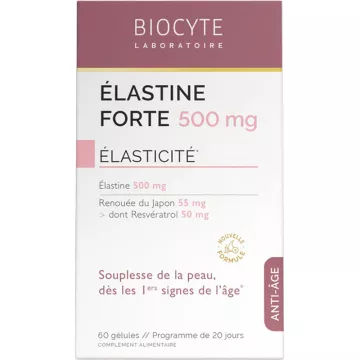
Hydrolyzed marine collagen (Type I peptides derived from fish, MW 3,000–5,000 Da) is absorbed into the bloodstream as di- and tripeptides and reaches the dermis, where it stimulates fibroblasts to synthesize endogenous collagen. A meta-analysis of 19 trials (Journal of Cosmetic Dermatology, 2019) shows a significant improvement in skin hydration, elasticity, and density after 8 to 12 weeks of supplementation. The effective dose ranges from 2.5 to 10 g per day. Elastin as a dietary supplement (500 mg/day) is less well-documented than collagen—its peptides are absorbed, but evidence of their direct effect on dermal elastic fibers remains limited.
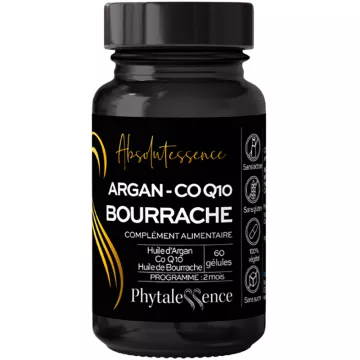
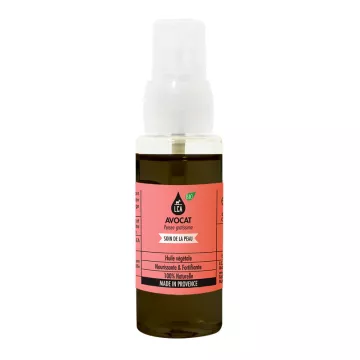
Several nutricosmetic active ingredients work synergistically to improve skin elasticity.Avocado oil (rich in phytosterols, oleic acid, and vitamin E) nourishes the deep layers of the epidermis and stimulates collagen synthesis—when applied topically, it improves the suppleness of mature skin and its resistance to tightness. Omega-3s (EPA + DHA) reduce the silent inflammation responsible for the breakdown of collagen fibers and improve the quality of the dermal lipid barrier. The Argan + Borage (gamma-linolenic acid) synergy + CoQ10 is a well-established nutricosmetic formula—gamma-linolenic acid stimulates anti-inflammatory prostaglandins in the skin, argan provides squalene and vitamin E, and CoQ10 neutralizes free radicals in fibroblasts.
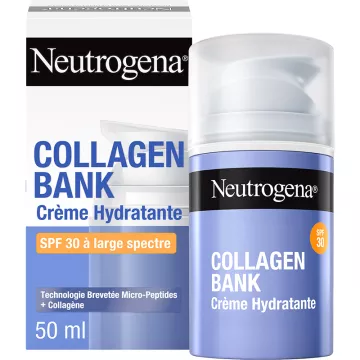
Vitamin E (tocopherol, fat-soluble) is the skin’s primary lipid antioxidant—it protects cell membranes and collagen fibers from lipid peroxidation caused by UV rays and free radicals. It works synergistically with vitamin C in the skin’s antioxidant cycle—vitamin C regenerates oxidized vitamin E after it has neutralized a free radical. When applied topically, the combination of vitamin C, vitamin E, and SPF provides the most effective protection against photoaging to preserve elasticity. Coenzyme Q10 (ubiquinol) neutralizes reactive oxygen species produced by the mitochondria of aging fibroblasts, preserving their ability to synthesize collagen.
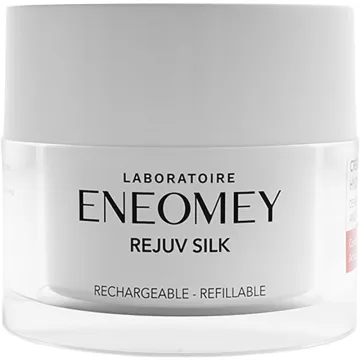
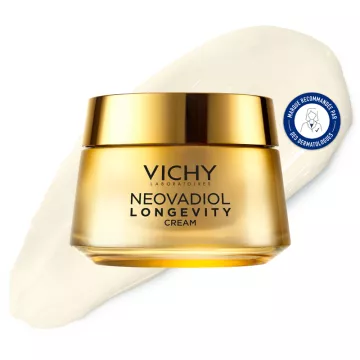
Lemongrass essential oil (Cymbopogon flexuosus, rich in geranial and neral—the two terpenic aldehydes of citral) has a toning and skin-tightening effect. Diluted to 1–2% in avocado or jojoba vegetable oil and applied with circular massage strokes to sagging areas (face, décolletage, inner arms), it visibly improves skin tone through local vasodilation and stimulation of microcirculation. Serums combining hyaluronic acid fragments of different sizes (low and high molecular weight) provide both immediate plumping effects and long-term stimulation of fibroblasts. Revitalizing creams for mature skin (peptide complexes + phytoestrogens) target the loss of elasticity associated with menopause.