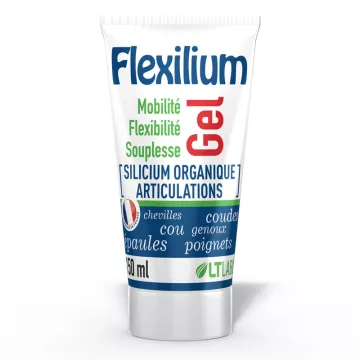
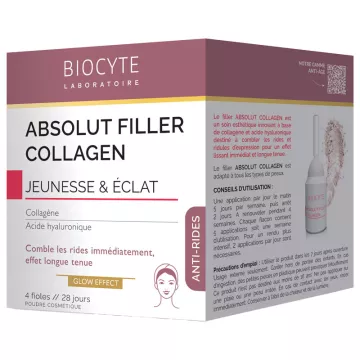
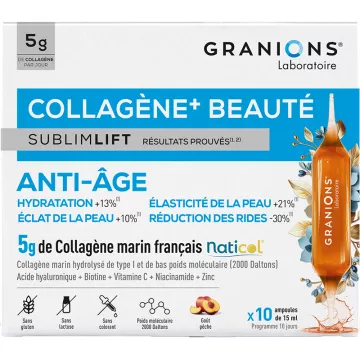
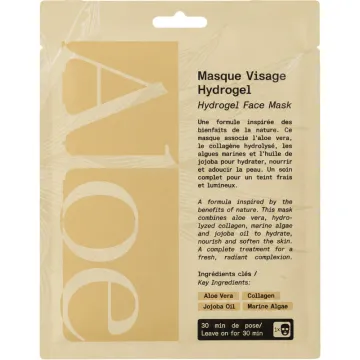
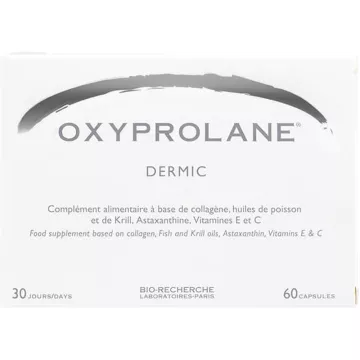
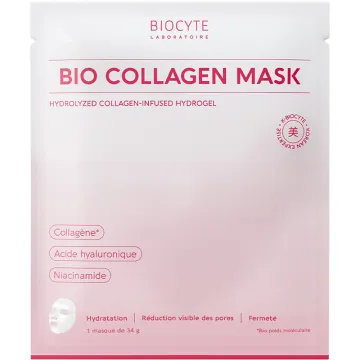
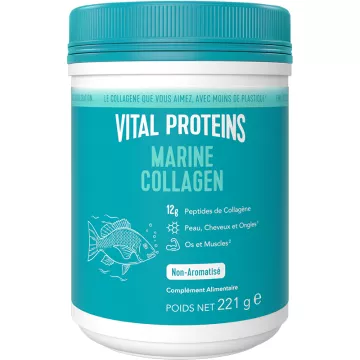
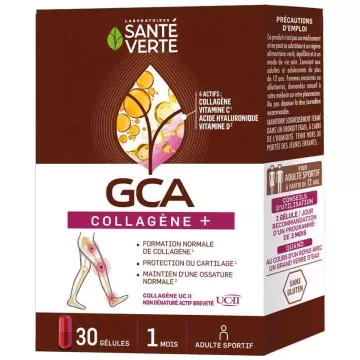
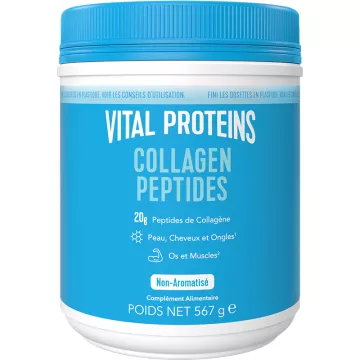
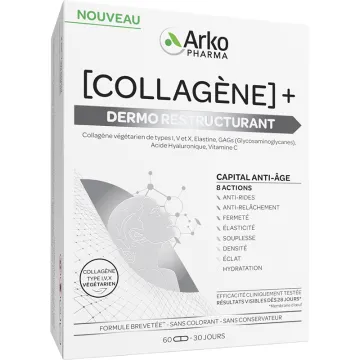
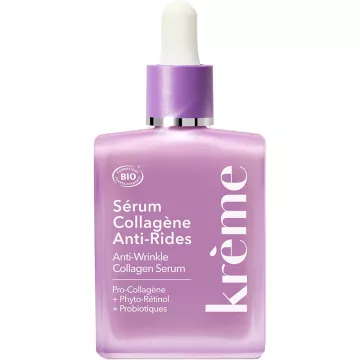
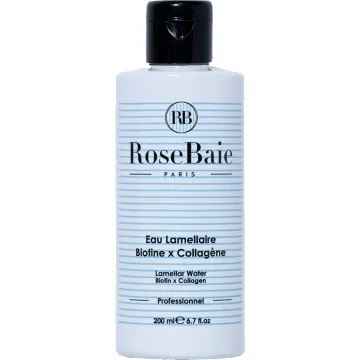
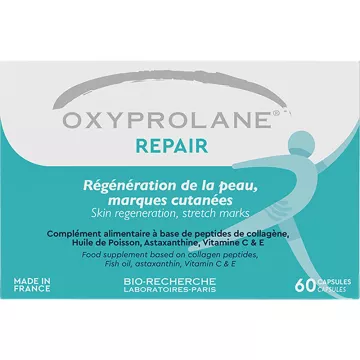
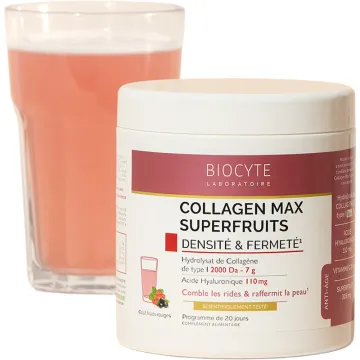
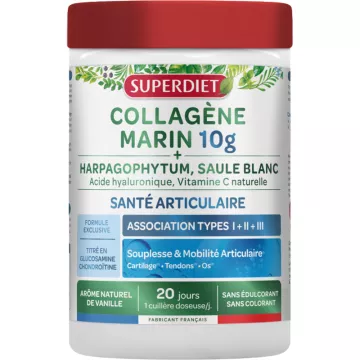
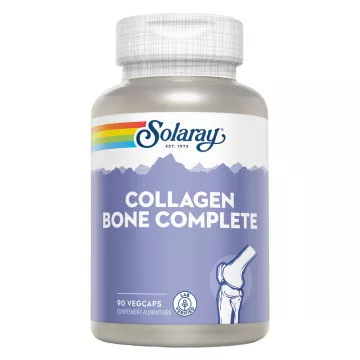
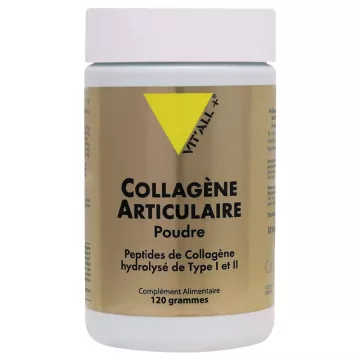
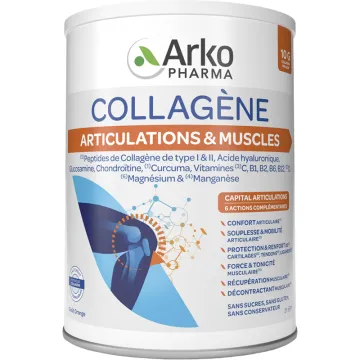
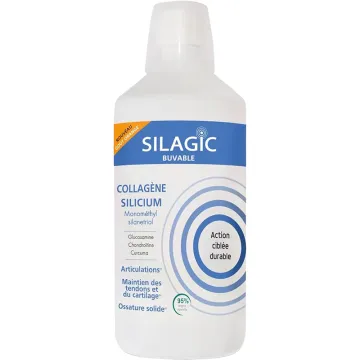
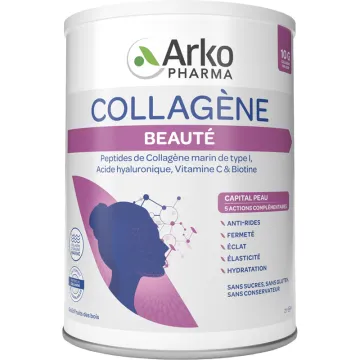
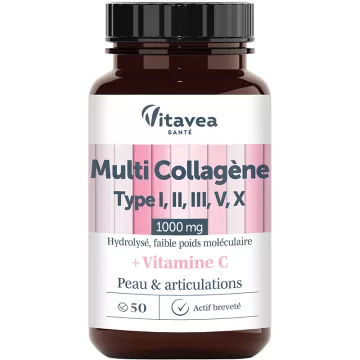
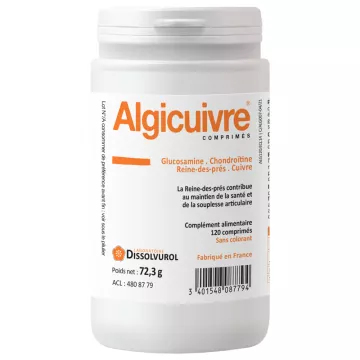
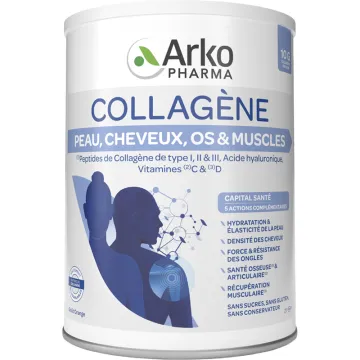
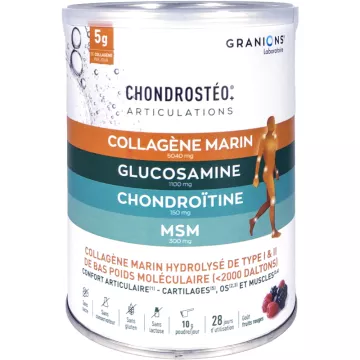
Collagen is the most abundant protein in the human body—it accounts for about 30% of total protein mass. Found in the skin, tendons, ligaments, cartilage, and bones, it provides mechanical strength and elasticity to connective tissues. Its production gradually decreases starting at age 25–30—hence the growing interest in hydrolyzed collagen peptide supplements. Discover our collagen range for joints.
What is collagen?
Collagen is a fibrous glycoprotein composed of three polypeptide chains wound into a triple helix. It is synthesized by fibroblasts (skin), chondrocytes (cartilage), and osteoblasts (bone), with vitamin C, zinc, and manganese serving as essential cofactors. As a dietary supplement, it is available in the form of hydrolyzed collagen peptides (collagen broken down into small chains of amino acids through enzymatic hydrolysis)—a form that is more easily absorbed than native collagen.
Types of Collagen: What Are the Differences?
There are more than 28 types of collagen—the three main types used in supplements target distinct tissues.
- Type I: the predominant collagen in the skin (80%), bones, tendons, and ligaments—used in anti-aging and bone support formulas
- Type II: collagen specific to articular cartilage—formulated with chondroitin and glucosamine in joint supplements
- Type III: found in blood vessel walls, skin, and organs—often combined with Type I
- Combined formulas of Types I + III (skin, hair, nails) and Type II (joints) address the main needs
Collagen and Joints: What Support Does It Provide?
Type II collagen makes up about 50% of dry articular cartilage—its supplementation is one of the most extensively studied applications.
- It provides the amino acids (glycine, proline, hydroxyproline) necessary for chondrocytes to synthesize cartilage collagen
- Hydrolyzed collagen peptides accumulate in the cartilage after absorption—stimulating local synthesis
- Combine with chondroitin, glucosamine, and MSM for comprehensive joint support
- Vitamin C is essential in these formulas: it contributes to normal collagen formation (EFSA claim) for cartilage and bones
- See our selection for joint pain
Collagen and skin: what are the benefits?
The skin contains 75% collagen by dry weight—its gradual breakdown accounts for the signs of skin aging.
Bovine, marine, or plant-based: which source?
Each source of collagen has its own specific benefits depending on the profile and objective.
- Marine collagen (fish): small peptides, rapid intestinal absorption, rich in type I — the standard for beauty and skin care formulas
- Bovine collagen: rich in types I and III (skin, bones, tendons), more widely available, suitable for non-strict vegetarians
- Chicken collagen: a source of undenatured Type II collagen—specifically for joint and cartilage support
- Plant-based alternatives: No plant-based collagen (a protein found exclusively in animals)—“vegan collagen booster” formulas provide vitamin C, zinc, manganese, and organic silicon to stimulate endogenous synthesis
How should collagen be used as a supplement?
Timing and combinations largely determine the effectiveness of supplementation.
- Dosage: 5 to 10 g of hydrolyzed collagen peptides per day for skin health — 10 to 15 g for joint support
- Best taken on an empty stomach or with a light meal—for optimal absorption
- Always take with vitamin C: an essential cofactor for proline hydroxylation (collagen synthesis)
- Minimum 3-month course—effects on the skin and joints are gradual
- Water-soluble powder: dilute in cold water, juice, or a smoothie — tasteless in most formulations