What is manganese, and what are its enzymatic functions?
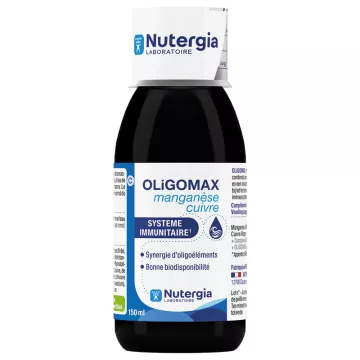
Manganese (Mn) is an essential trace mineral found in small amounts in the body (10–20 mg in adults)—concentrated in the liver, kidneys, bones, brain, and mitochondria. As a cofactor for four key metalloenzymes, it is essential for mitochondrial antioxidant protection, cartilage synthesis, and nitrogen metabolism. Discover our manganese ampoules in Granions and Oligosol oligotherapy.
- MnSOD (mitochondrial manganese superoxide dismutase): the only antioxidant enzyme present in mitochondria—protects hepatocytes and cardiomyocytes against superoxide radicals (O₂⁻) generated by cellular respiration—without MnSOD, mitochondria are rapidly destroyed by oxidative stress
- Glucosyl-galactosyl-hydroxylysyl transferase: a manganese-dependent enzyme — catalyzes the glycosylation of type II collagen (articular cartilage)—essential for the structure and mechanical strength of cartilage—a unique role for manganese in joint health compared to copper (collagen cross-linking) and zinc (collagenase)
- Arginase: a manganese-dependent enzyme of the hepatic urea cycle — converts arginine to ornithine + urea → elimination of ammonia nitrogen — deficiency → mild hyperammonemia
- Pyruvate carboxylase: a manganese-dependent enzyme involved in neoglucogenesis—converts pyruvate to oxaloacetate—regulates blood glucose levels and carbohydrate metabolism—works synergistically with chromium in blood glucose regulation
- Glycosyltransferases (proteoglycans): proteoglycans (aggrecan, versican) in the extracellular matrix require manganese for their biosynthesis → major components of cartilage, intervertebral discs, and the cornea
Deficiency, toxicity, and at-risk populations
- Manganese deficiency (rare, poorly documented in humans): joint pain + bone fragility + impaired carbohydrate metabolism + infertility (manganese is essential for follicular maturation) — more frequently observed in individuals on prolonged parenteral nutrition without manganese
- Manganism (chronic toxicity): neurological syndrome resembling Parkinson’s disease—tremors + muscle rigidity + psychiatric disorders → manganese deposits in the globus pallidus—caused by occupational exposure (welders, manganese miners) or excessive parenteral nutrition—MRI imaging: bilateral T1 hyperintensity in the basal ganglia
- Liver failure: the liver is the primary route of manganese excretion (bile) — cirrhosis + liver failure → accumulation of manganese in the brain → hepatic encephalopathy with a manganese component → monitor serum manganese levels in severe liver diseases
- Antagonistic interactions: iron inhibits intestinal absorption of manganese (shared DMT-1 transporter)—calcium and phosphorus also reduce absorption—take manganese away from meals rich in iron and calcium
- RDA for manganese (EFSA): adults 3 mg/day — tolerable upper intake level set at 8 mg/day for adults — dietary sources are generally sufficient — supplementation > 8 mg/day without medical supervision is not recommended
Dietary Sources, Oligotherapy, and Practical Guidelines
- Foods highest in manganese: black tea (1–3 mg/cup—the world’s leading source)—pecans (4.5 mg/100 g)—flaxseeds (2.5 mg/100 g) — tofu (1.6 mg/100 g) — cooked spinach (0.85 mg/100 g) — whole grains — legumes — dark chocolate
- Manganese oligotherapy (Granions, Oligosol Mn): ionic manganese in sublingual ampoules — 1 ampoule per day on an empty stomach — traditional use: allergic tendencies and immune dysfunction (Mn-Cu in functional oligotherapy) — combined with copper for anti-inflammatory joint support
- Joint formulas with manganese: manganese + magnesium + copper + vitamin C + glucosamine + chondroitin — anti-degenerative mineral triad for cartilage — vitamin C, a cofactor in procollagen hydroxylation (synergistic with manganese)
- Manganese and allergic conditions: in functional oligotherapy (Ménétrier), manganese is associated with dystrophic and allergic conditions — Mn-Cu (manganese-copper) treatment: respiratory allergies, atopic asthma, eczema — sessions 2–3 times per week using ionic trace elements
- Bioavailability: low (2–10% absorption) — enhanced by vitamin C — reduced by tea (chelating tannins), phytates (unfermented grains), excess iron and calcium — chelated forms (manganese bisglycinate) = better bioavailability
Manganese, joints, blood sugar, and the nervous system
- Osteoarthritis and joint health: Manganese is essential for the synthesis of cartilage proteoglycans (aggrecan) — combine manganese + copper + zinc + glucosamine in osteoarthritis formulas — manganese enhances the action of glucosamine sulfate on extracellular matrix synthesis
- Blood sugar and type 2 diabetes: Manganese-dependent pyruvate carboxylase regulates neoglucogenesis — Lowered blood manganese levels are found in patients with type 2 diabetes — Synergy with chromium in blood sugar-regulating formulas
- Neuroprotection: Mitochondrial MnSOD protects neurons from oxidative stress — regulated manganese levels are important for brain health — caution: excess manganese is neurotoxic (manganism)
- Pregnancy: Manganese is essential for fetal bone and cartilage development — slightly increased requirements during pregnancy — dietary intake is generally sufficient — avoid supplements exceeding 3 mg/day without medical advice
- Osteoporosis: Manganese stimulates osteoblast differentiation and inhibits osteoclasts — combine manganese, calcium, magnesium, vitamin D3, and K2 in bone-health formulas — complete formulas available in our remineralizing line