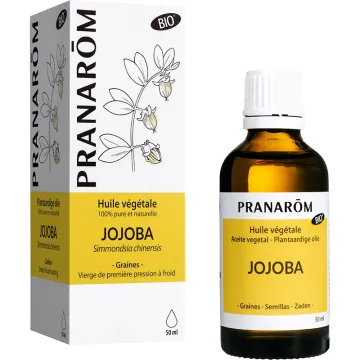
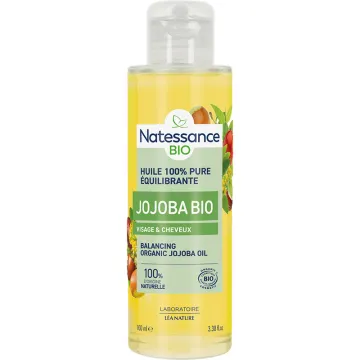
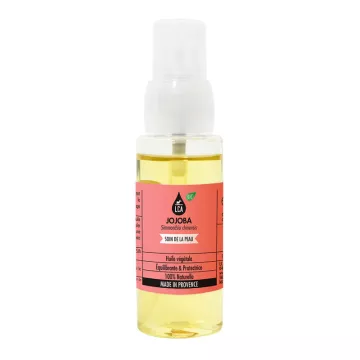
Jojoba oil is actually a liquid wax extracted from the seeds of the jojoba plant (Simmondsia chinensis), a shrub native to the deserts of North America. What makes it unique is its composition of wax esters, which is remarkably similar to human sebum—this explains why it absorbs quickly without leaving a greasy film and is so well tolerated. Rich in omega-9, vitamin E, and antioxidants, it is one of the most versatile cosmetic oils, alongsideargan and macadamia oils. Its very low comedogenic index (0 to 2) makes it suitable for all skin types, including blemish-prone skin.
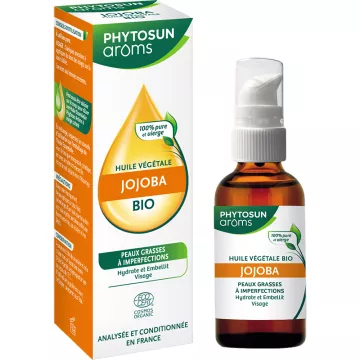
Counterintuitively, jojoba is the go-to oil for oily, combination, and acne-prone skin:
For combination skin, applying the product specifically to dry areas helps maintain the skin barrier’s balance.
For dry, sensitive, and mature skin, jojoba provides comfort and suppleness. Rich in vitamin E with antioxidant properties, it helps protect the skin from external aggressors (cold, wind, pollution) and soothes tight-feeling skin. Apply a few drops in the morning and evening to clean skin, either on its own or mixed with your usual moisturizer to enhance its nourishing effect. For mature skin, it can serve as a base for antioxidant serums as part of your evening skincare routine. Its lightweight texture doesn’t leave a greasy residue and is suitable for daily use under makeup.
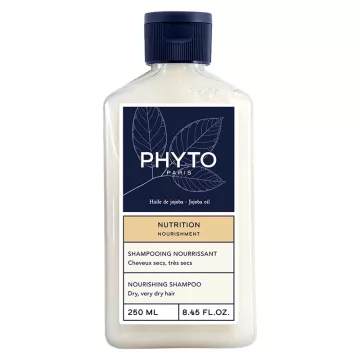
Jojoba is suitable for all hair types. For dry and damaged hair, use it as a pre-shampoo oil treatment on the lengths and ends, 30 minutes to 1 hour before washing. For oily hair, its balancing effect on the scalp makes it an unexpected ally: massaging a small amount into the scalp helps regulate excess sebum. As a leave-in treatment, 1 to 2 drops on the ends tame frizz and add shine without weighing hair down. Its light texture is even suitable for fine hair. A few drops added to shampoo or a hair mask enhance the protective effect. Jojoba also protects the hair shaft from heat styling.
Jojoba is an excellent natural makeup remover: it gently dissolves makeup—including waterproof formulas—while preserving the skin’s hydrolipidic film. Apply a few drops to a cotton pad or directly to the face, massage in, then remove. Its gentle formula is suitable for the sensitive eye area. A few drops on the eyelashes can complement a routine aimed at promoting longer lashes. For men’s grooming, jojoba is ideal as a beard oil: it softens the hair, moisturizes the skin beneath the beard, and reduces itching and tightness. As an aftershave treatment, it soothes irritation and redness caused by shaving.
Jojoba can be used in a daily massage on areas prone to stretch marks (stomach, hips, thighs, chest), especially during pregnancy or weight fluctuations, to soften the skin and maintain its comfort. Regular massage application promotes skin suppleness. For dry and rough areas (elbows, knees, heels), it provides long-lasting comfort when applied to specific areas. It can serve as a neutral base for diluting essential oils in relaxing massage blends. When applied to skin after hair removal, it reduces redness and soothes the skin’s texture. A 48-hour patch test on the inner elbow is still recommended, even though jojoba is one of the best-tolerated oils.
Jojoba oil is exceptionally well-tolerated and suitable for all skin types, with no known risk of irritation or allergy in the vast majority of cases. However, a few simple precautions apply. A patch test on the inner elbow for 48 hours is still recommended before first use to rule out a rare individual reaction. Jojoba oil is not intended for dietary use: although it is non-toxic in small doses, it is not metabolized like an edible oil and should not be ingested in large quantities. It should be stored away from light and heat to preserve its properties. Its high oxidative stability (due to its nature as a liquid wax) gives it a long shelf life, longer than that of most conventional vegetable oils. It is suitable for pregnant and breastfeeding women and for babies’ skin when used externally for cosmetic purposes.
Several criteria indicate a high-quality oil. The label “first cold-pressed” guarantees the preservation of heat-sensitive active ingredients. The Bio AB or Ecocert certification ensures the absence of pesticide residues. The label “100% pure, virgin, and unrefined” is essential for optimal cosmetic use. A golden color is characteristic of high-quality virgin oil (refined oil is colorless and depleted of active ingredients).
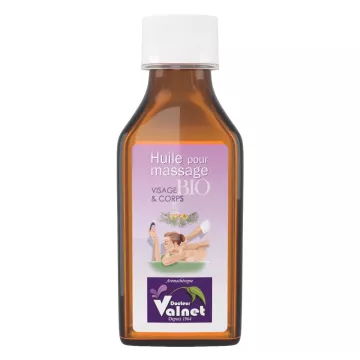
A fluid texture and the absence of a strong odor indicate a fresh oil.Traceable origin (North America, Argentina, Israel, Peru) is a mark of quality. Packaging in an opaque or amber glass bottle protects the oil from light-induced degradation.