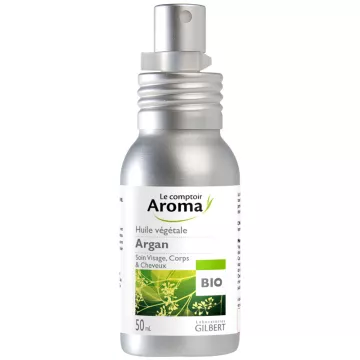
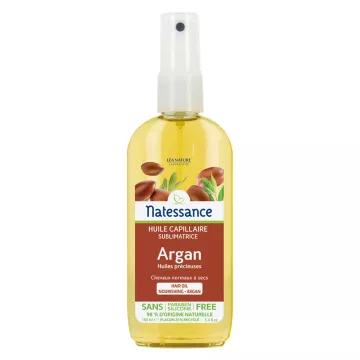
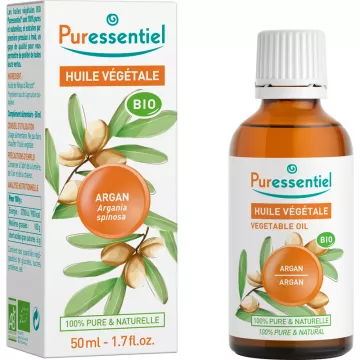
Argan oil, often called “liquid gold,” is a precious vegetable oil extracted from the kernels of the argan tree (Argania spinosa), which is native to southwestern Morocco. Rich in essential fatty acids (omega-6, omega-9), vitamin E, and antioxidants (polyphenols, tocopherols), it is one of the most sought-after cosmetic oils for skin, hair, and nail care. There are two types of argan oil: cosmetic (unroasted kernels, pale golden color) andedible (roasted kernels, darker color, and a pronounced nutty flavor). Its fast-absorbing texture makes it a versatile treatment suitable for many skin types.
For dry and mature skin, argan oil is a go-to nourishing and antioxidant skincare product:
Its high vitamin E content helps protect the skin against free radicals and supports the skin barrier’s health.
Contrary to popular belief, argan oil is suitable for oily and acne-prone skin. Its lightweight texture absorbs quickly without leaving a greasy film, and its composition helps balance sebum production in oily skin. Applied in small amounts (1 to 2 drops) in the evening to cleansed skin, it helps maintain skin comfort without weighing down the skin’s texture. Its low comedogenic rating makes it unlikely to clog pores. For these skin types, observe how your skin reacts over a few days and adjust the amount accordingly. Combine it with a skincare routine tailored to your skin’s specific needs. A 48-hour patch test on the inside of the elbow is still recommended before regular use.
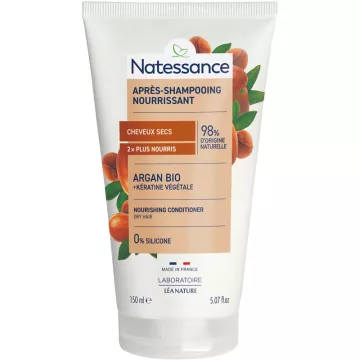
Argan oil is ideal for dry and damaged hair. As a pre-shampoo oil treatment, apply generously to the entire length of the hair, leave on for an hour or overnight under a shower cap, then wash with a gentle shampoo. As a leave-in serum, apply a few drops to the ends after styling to tame frizz and add shine to dull hair. Adding a few drops to your shampoo or hair mask boosts hydration. Argan oil protects the hair shaft from external aggressors (sun, wind, heat from styling tools) and helps prevent split ends. Its lightweight formula is suitable for most hair types; use sparingly on fine hair to avoid weighing it down.
Argan oil is beneficial for strengthening brittle and fragile nails. Regular application nourishes the cuticles and prevents them from drying out, while restoring suppleness and shine to dull nails. For a strengthening treatment, massage a few drops of argan oil into your nails and cuticles every night. A traditional remedy involves mixing a few drops of argan oil with a little lemon juice and soaking your nails in the mixture for 10 minutes for a strengthening and brightening treatment. For very dry hands, argan oil can also be used as a daily nourishing treatment, especially in winter. Its high vitamin E content helps keep the skin on your hands comfortable when exposed to harsh environmental conditions and frequent handwashing.
Edible argan oil, obtained by roasting the kernels, is a gourmet oil used in Moroccan cuisine with a pronounced nutty flavor. Rich in unsaturated fatty acids (omega-6, omega-9) and plant sterols, it is part of a balanced diet. According to validated EFSA claims, replacing saturated fats with unsaturated fats in the diet helps maintain normal blood cholesterol levels. It is used raw as a dressing (for salads, vegetables, and tagines), but never for high-temperature cooking, which would degrade its qualities. It is an ingredient in amlou, a traditional Moroccan paste made from almonds and honey. For food use, the oil must be specifically certified as food-grade, which is distinct from cosmetic oil. Store in a cool place after opening.
Argan oil is generally very well tolerated by all skin types. Allergic reactions are rare but possible; a patch test on the inner elbow for 48 hours is recommended before first use, particularly for people allergic to tree nuts (since argan comes from a stone fruit, the risk of cross-reaction remains theoretical but warrants caution). Pregnant or breastfeeding women can use it in cosmetics without any special precautions. To store it, keep argan oil away from light and heat in an amber glass bottle to prevent oxidation. It has a shelf life of 18 to 24 months after opening. Be sure to close the cap tightly after each use. A rancid odor indicates oxidation, and the oil should no longer be used. Store edible argan oil in the refrigerator after opening.
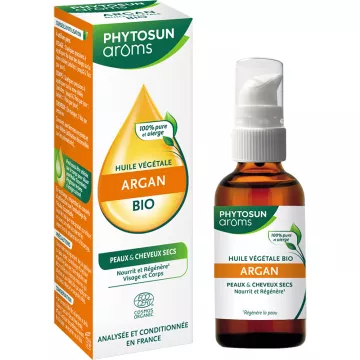
Several criteria help ensure you’re choosing an authentic, high-quality oil. The “cold-pressed” label guarantees that heat-sensitive nutrients and antioxidants are preserved. The ingredient list should contain only one ingredient: Argania spinosa kernel oil (with no additives or dilution with other, cheaper oils). The organic certification (Ecocert, Cosmos Organic) guarantees the absence of pesticide residues and environmentally responsible production. A pale golden color and a light, nutty scent characterize authentic cosmetic-grade oil (an odorless oil has been refined and stripped of its nutrients). CertifiedMoroccan origin —ideally from fair-trade women’s cooperatives—guarantees authenticity and supports local producers. Packaging in amber glass bottles protects the oil from light-induced degradation. Clearly distinguish between cosmetic oil and roasted edible oil based on your intended use.