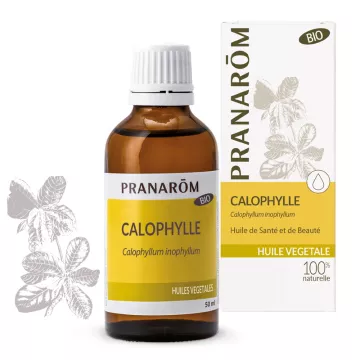
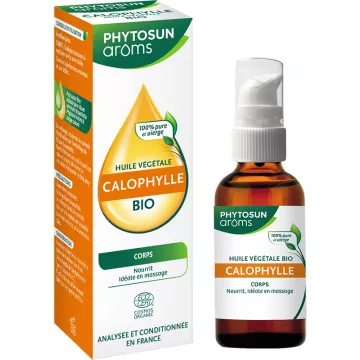
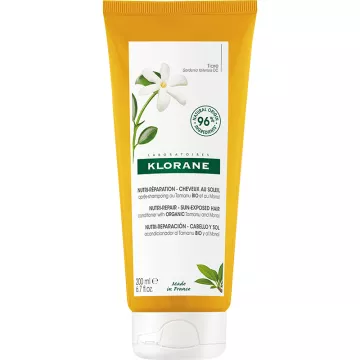
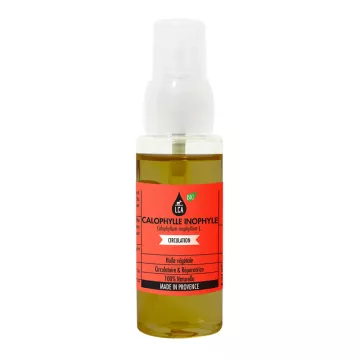
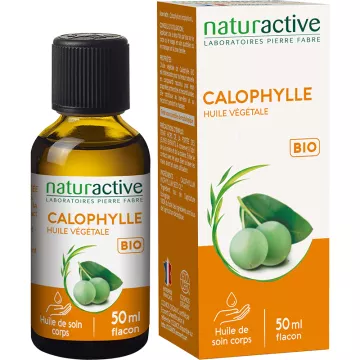
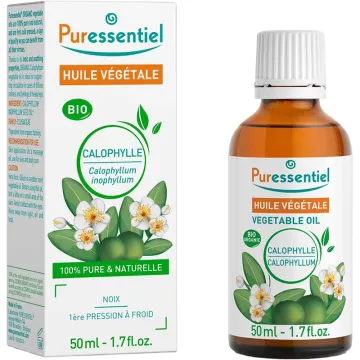
Calophyllum (Calophyllum inophyllum), also known as tamanu, is a tropical tree from which a vegetable oil with a distinctive deep green color is extracted through cold pressing. Its unique composition combines fatty acids (omega-6 and omega-9), vitamin E, and, most notably, calophyllolides—molecules specific to this oil that possess sought-after cosmetic properties. It is among the most prized calophyllum vegetable oils in restorative cosmetics. Its thick texture and green color are normal and indicate an authentic, unrefined oil. It blends well with lighter oils such as jojoba or argan to adjust its texture.
For combination skin and skin prone to mild to moderateacne, calophyllum offers an interesting cosmetic approach:
Since acne has multiple causes, combine cosmetic use with a suitable skincare routine and dermatological follow-up if necessary.
Calophyllum is traditionally known to help soothe scars and skin marks. When gently massaged into already healed skin (never onto an open wound), it helps improve the comfort and suppleness of the area over the course of several weeks. For recent stretch marks, regular massage application to the affected areas promotes skin suppleness. Its fatty acids help maintain hydration and comfort in the healing area. Cosmetic use is intended for the long term (at least 8 to 12 weeks) to observe an effect on the skin’s appearance and texture. Perform a patch test before applying to a larger area.
For mature skin, calophyllum acts as an antioxidant cosmetic oil thanks to its content of vitamin E, polyphenols, and calophyllolides, which help protect the skin against free radicals responsible for premature skin aging. When applied as a night serum to dry or devitalized skin, it helps promote the skin’s comfort and suppleness. Its fatty acids help maintain the hydrolipidic film and the skin barrier. For a revitalizing effect, it blends well with other precious oils (rosehip, argan) in homemade serums tailored to the needs of mature skin. Adding a few drops to your usual moisturizer enhances its nourishing effect.
Calophyllum oil is traditionally used in massage to soothe strained muscles and relieve tension in affected areas. For post-workout relief, gently massage the affected areas with slightly warmed calophyllum oil, either on its own or diluted in a neutral vegetable oil. Some people combine it with essential oils (wintergreen, lemon eucalyptus) to enhance the massage’s effects, using the appropriate dilutions. To relieve heavy legs, it can be blended with lymphatic drainage massage oils to support venous circulation in the lower limbs, using upward strokes from the ankles toward the knees. The massage itself promotes relaxation. If pain persists, consult a healthcare professional.
Calophyllum is also used to treat an irritated scalp and nourish the hair shaft. As a pre-shampoo oil treatment, gently massage the scalp, leave it on for about 30 minutes, then wash with a mild shampoo. Its lipids nourish the hair shaft and restore suppleness and shine to dry hair, while its soothing action provides comfort to sensitive scalps. For the body, it can be used as a targeted treatment on rough areas (elbows, knees, heels), ideally combined with shea butter for a richer texture. Its versatility makes it a multi-purpose oil that can be incorporated into homemade preparations (serums, balms, massage oils), provided you follow the proper proportions and storage conditions to preserve its stability.
Calophyllum oil is generally well tolerated, but several precautions are necessary. People allergic to plants in the Clusiaceae family should avoid this oil. A patch test on the inner elbow for 48 hours is essential before any widespread application, particularly on sensitive or reactive skin. Avoid direct contact with the eyes and mucous membranes. For oily skin, use it diluted and in small amounts to minimize any potential comedogenic effect. Never apply to an open, infected, or weeping wound: calophyllum oil should only be used on healthy or healed skin. Pregnant or breastfeeding women may use it topically on small areas, but should seek professional advice for more extensive use. In cases of significant skin conditions (severe eczema, marked inflammatory acne) or chronic joint pain, medical advice remains essential. Store away from heat and light.
Several criteria indicate a high-quality oil. The label “first cold-pressed” guarantees the preservation of calophyllolides and heat-sensitive fatty acids. The Bio AB or Ecocert certification ensures the absence of pesticide residues. The label “100% pure, virgin, and unrefined” is essential: authentic oil has a dark green-brown color and a characteristic, slightly spicy scent (clear, odorless oil is refined and stripped of its active ingredients).The origin (Madagascar, Polynesia, Southeast Asia) and the extraction method must be specified. Packaging in amber glass bottles protects the oil from light-induced and oxidative degradation. For cosmetic use on mature or sensitive skin, choose oils with laboratory analyses certifying the absence of contaminants.