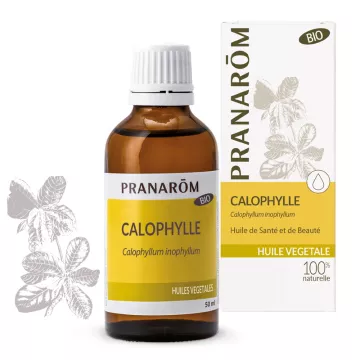
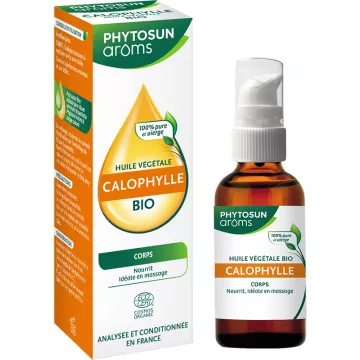
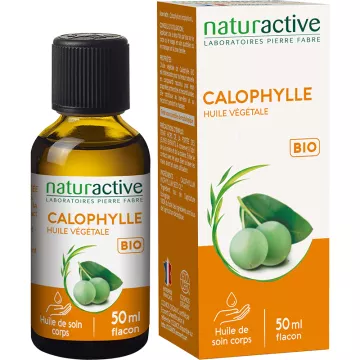
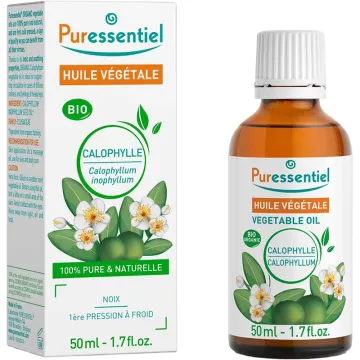
Calophyllum vegetable oil is extracted from the nuts of the Calophyllum inophyllum fruit, a tropical tree that grows primarily in Southeast Asia, Madagascar, and the Pacific Islands. Also known as tamanu oil, it has long been recognized in traditional Polynesian medicine for its soothing and restorative properties, making it a sought-after ingredient in natural cosmetics today.
Calophyllum oil offers numerous cosmetic benefits. It is valued for its soothing and antioxidant properties, which make it a favorite treatment for sensitive skin. It supports superficial skin renewal, which helps to visually reduce residual marks, blemishes, and the first signs of aging. It is often used to soothe dry, sensitive skin, as well as skin that has become irritated after sun exposure or repeated friction.
In cases of eczema, psoriasis, or burns, calophyllum oil is never a substitute for medical treatment: a dermatologist’s advice is essential.
To incorporatecalophyllum oil into your skincare routine, just a few drops are enough. Apply it directly to clean skin or mix it with a moisturizer to enrich its texture. It’s best to apply it in the evening: its naturally dark color (ranging from golden yellow to dark green) and thick texture require time to absorb, and its woody scent fades as the oil is absorbed. It also blends well with other lighter oils, such asargan or jojoba, to soften its scent.
Yes,calophyllum oil is suitable for most skin types, with a particular affinity for dry, sensitive, or irritated skin. As with any natural cosmetic, a patch test is recommended: applying a small amount to the inside of the elbow 24 to 48 hours before full use helps rule out any individual reactions. For acne-prone skin, non-comedogenic oils such as jojoba are preferred as a first-line treatment.
Calophyllum oil also provides real comfort for the hair. It nourishes the scalp, supports the vitality of the hair shaft, and helps soothe discomfort (such as tightness or mild itching). It can be used as a pre-shampoo hair mask or mixed with your regular hair care product to enhance its revitalizing effect. For comprehensive hair care, it pairs very well with coconut oil or argan oil.
Although generally well-tolerated,calophyllum oil is not recommended for people with a known allergy to tree nuts, as it is derived from an oil-bearing fruit and may cause cross-reactions. It is also not recommended during pregnancy and breastfeeding without medical advice. If you have a progressive skin condition (eczema, psoriasis, wounds), medical advice is essential before use. If redness, persistent itching, or swelling occurs after application, discontinue use immediately and consult a healthcare professional; in the event of angioedema (facial swelling, difficulty breathing), call 15 or 112.
Calophyllum oil is distinguished by its high content of essential fatty acids, particularly oleic acid (omega-9) and linoleic acid (omega-6), combined with palmitic and stearic acids. It also contains a unique compound, calophyllolide, known for its soothing properties, as well as coumarins and phytosterols that contribute to skin comfort. It is this combination of lipid actives and specific plant compounds that gives it its unique sensory and cosmetic profile.
Thanks to its soothing properties and high content of plant compounds,calophyllum oil is an ideal treatment to help visually reduce the appearance of superficial skin marks: post-breakout marks, irritated areas, and skin after sun exposure. Apply it with a light massage to clean, intact skin; never apply it to an open wound or an unhealed lesion. For more comprehensive support with skin mark concerns, see our section on healing.
Yes,calophyllum oil is ideal for massage thanks to its rich texture and enveloping feel. It is especially appreciated after exercise, offering muscle relief and a moment of relaxation. Whether used pure or blended with a lighter oil (such as jojoba or apricot) to thin it out, it also fits into a comprehensive skincare routine after a bath.
To preserve the quality of calophyllum oil, it’s best to store it in an airtight, opaque, or amber-colored bottle, away from light and heat. A cool, stable temperature extends its shelf life. If the oil changes color, becomes cloudy, or develops a rancid odor, this indicates oxidation: it should no longer be used. When stored properly, virgin oil generally lasts between 12 and 18 months after opening.
Absolutely.Calophyllum oil makes an excellent base for homemade cosmetic preparations: facial serums, body balms, and personalized massage oils. It blends well with other plant oils to adjust its consistency (jojoba, apricot, argan) and can be combined with a few drops of essential oils to address a specific need (relaxation, muscle comfort). For homemade skincare products, always choose an organic, virgin, first-cold-pressed oil stored in an opaque bottle to preserve its active ingredients.