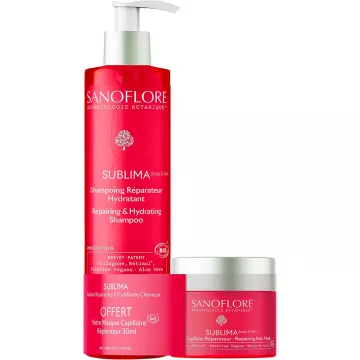
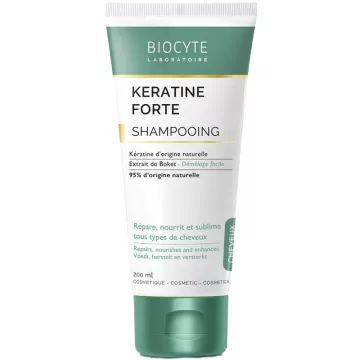
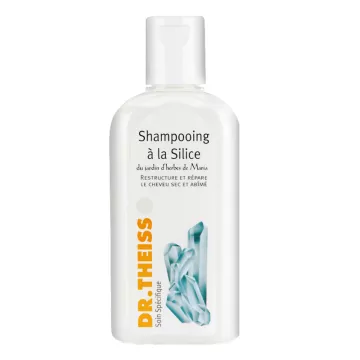
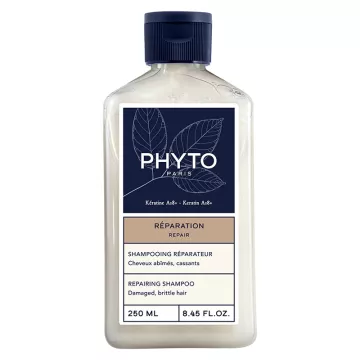
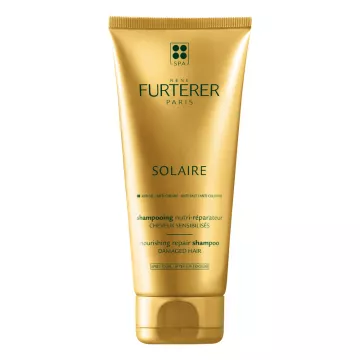
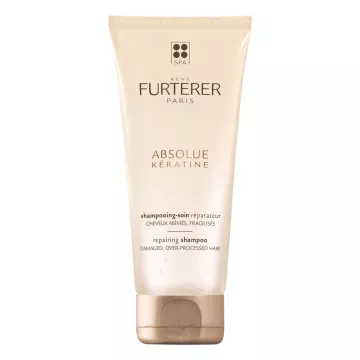
A reparative shampoo is a product formulated to strengthen and restore damaged and weakened hair. It contains targeted active ingredients such as proteins (keratin, silk), ceramides, and nourishing oils that work on the hair shaft to improve its structure and reduce breakage. It is particularly suited for hair weakened by chemical treatments, heat from styling tools, or environmental stressors (pollution, UV rays). Unlike a gentle daily-use shampoo, a repair shampoo is concentrated with strengthening active ingredients for targeted use. It is part of a hair care routine dedicated to repair.
An effective repair shampoo combines several families of active ingredients:
For very dry hair, adding jojoba oil or a hair mask enhances the nourishing effect.
Repairing shampoos are especially beneficial for hair damaged by chemical treatments (coloring, bleaching, straightening), frequent heat exposure (hair dryers, straightening irons, curling irons), and environmental stressors (pollution, UV rays). They are also suitable for dry and brittle hair, as well as naturally fragile hair. Conversely, oily or healthy hair generally doesn’t need such intensive care and can be weighed down by excessive use: for this type of hair, a shampoo suited to its specific needs is preferable. Identifying the degree of damage helps guide you toward the right product, from light to intensive care.
To maximize the effectiveness of a reparative shampoo, thoroughly wet the hair with lukewarm water, which prepares the hair shaft to absorb the active ingredients. Apply a sufficient amount and gently massage the scalp with your fingertips, avoiding the use of fingernails, which can cause irritation. Rinse thoroughly to remove all residue, which can weigh down the hair. For very damaged hair or hair heavy with styling products, a second wash may be helpful. Always follow up with a conditioner or a reparative mask to seal in the active ingredients and prolong the effect. For damaged curly hair, a leave-in treatment is the ideal way to complete the repair routine.
The frequency depends on the condition of your hair. For very damaged hair, use it two to three times a week. For slightly damaged hair or as part of a maintenance routine, once a week is sufficient. The key is not to overload your hair: excessive use can lead to protein buildup, which stiffens the hair shaft and produces the opposite effect. It’s best to alternate with a gentle shampoo or a moisturizing shampoo to maintain your hair’s balance. This alternation between repair (proteins) and hydration remains the key to a balanced routine, as damaged hair needs both. Observing how your hair reacts allows you to adjust the frequency based on your actual needs.
Many reparative shampoos are suitable for color-treated hair and can even help preserve the color. Coloring—and especially bleaching—weakens the hair shaft, which benefits from the restorative properties of these products. The key point: make sure the shampoo is sulfate-free, as these powerful surfactants can accelerate color fading. Opt for products specifically formulated for colored and damaged hair, which combine color protection with repair. Washing less frequently and using lukewarm water instead of hot water helps preserve the color even more. For bleached hair—which is particularly porous and fragile—a more intensive repair routine with weekly masks helps counteract significant structural damage.
Regular use of a reparative shampoo offers several long-term benefits. It strengthens the hair shaft with proteins and ceramides, making hair more resistant to breakage. It improves texture, leaving hair smoother, softer, and easier to style. It helps limit the formation of new split ends through hydration and nourishment. It creates a protective barrier against future chemical and environmental damage. Finally, it enhances natural shine for a healthy, radiant look. These benefits build up over time, especially when combined with heat protection and spacing out chemical treatments. Repair is primarily a surface-level process: severely damaged hair is maintained and protected rather than completely rebuilt.
Repairing shampoos are generally well-tolerated. Some people may experience scalp irritation or allergic reactions to ingredients such as fragrances, preservatives, or dyes: a patch test before first use is recommended. If you experience redness, itching, or a burning sensation, discontinue use and consult a dermatologist. To choose the right product, consider your hair type (fine, thick, curly, straight),the condition of your hair (degree of damage), and the ingredients (proteins, ceramides, natural oils; avoid sulfates and parabens if you have a sensitive scalp). For fine hair, opt for a lightweight, restorative formula that doesn’t weigh the hair down. A shampoo tailored to the actual degree of damage yields the best results.