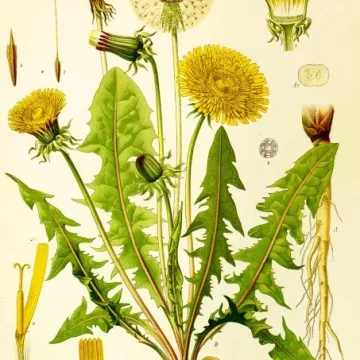
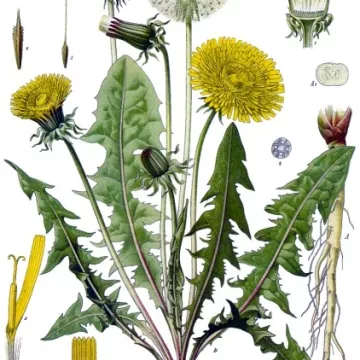
The common dandelion (Taraxacum officinale) is a perennial herbaceous plant in the Asteraceae family, long dismissed as a weed before being reclaimed by modern herbal medicine. Listed in the European Pharmacopoeia, it is one of the few plants with dual liver- and kidney-draining properties. Its leaves, roots, and flowers are rich in flavonoids, inulin (a natural prebiotic), potassium, and bitter sesquiterpene lactones.
Its detoxifying properties are recognized by the EMA and Commission E:
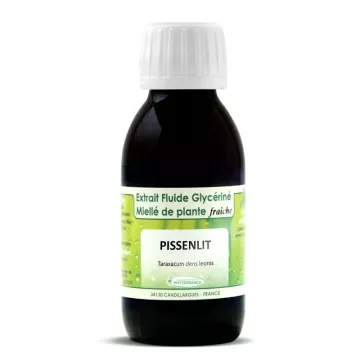
Several dosage forms are available depending on which part of the plant is used:
Dandelion combines two complementary actions that few plants possess: it stimulates bile secretion through its bitter compounds and increases urine output thanks to its flavonoids and high potassium content. This dual action explains its central role in detoxification regimens and seasonal drainage, as well as its traditional combination with fumitory or black radish.
Yes, this is one of its most well-documented uses. The combination of flavonoid-based diuretics and potassium promotes water elimination without causing mineral deficiency (unlike many synthetic diuretics). It is commonly included in weight-loss programs andanti-cellulite regimens, as a complement to appropriate physical activity.
The bitterness of the roots stimulates the secretion of saliva, gastric juices, and bile, making it helpful for slow digestion after heavy meals. Its inulin, a fermentable prebiotic fiber, slows the absorption of carbohydrates and helps maintain better blood sugar balance as part of a balanced diet. No antidiabetic treatment should be discontinued without medical advice.
Its overall detoxifying effect indirectly benefits dull or blemish-prone skin: by supporting the excretory organs (liver, kidneys), it facilitates the elimination of metabolic waste. It thus fits into natural approaches to spring weight-loss programs, when combined with a balanced diet and adequate hydration.
Herbal synergies depend on the intended goal: