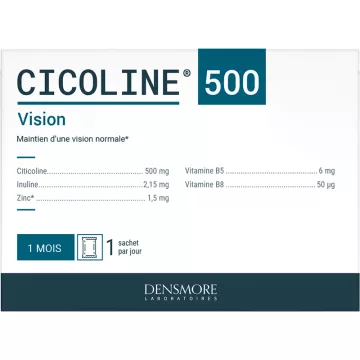
Inulin is a soluble prebiotic fiber extracted primarily from chicory root (Cichorium intybus). Since it cannot be digested by human enzymes, it reaches the colon intact, where it is selectively fermented by bifidobacteria and lactobacilli. It is the gold standard prebiotic in dietary supplements—the most scientifically well-documented for its bifidogenic effect. Explore our line of prebiotics.
What is inulin?
Inulin is a fructan—a chain of fructose molecules linked by β(2→1) bonds that human digestive enzymes cannot hydrolyze. Its chain length (degree of polymerization) determines its properties: native inulin (DP 10–60) and oligofructose or FOS (DP 2–8, extracted from inulin) behave slightly differently. Oligofructose is fermented more rapidly in the proximal colon, while high-molecular-weight inulin reaches further into the distal colon. Both are among the few fibers recognized as prebiotics according to the definition of the ISAPP (International Scientific Association for Probiotics and Prebiotics).
Inulin and the Microbiome: What Is the Prebiotic Effect?
Inulin is the most extensively studied prebiotic substrate—its effect on the microbiome is the best documented among dietary fibers.
- Bifidogenic effect: a significant increase in colonic bifidobacteria starting at 5 g/day—the most potent of all fibers for this specific effect
- Also stimulates Lactobacillus, Faecalibacterium prausnitzii (a butyrate producer), and Akkermansia muciniphila (mucosal integrity)
- Production of SCFAs (butyrate, propionate, acetate): nourish colonocytes and regulate the intestinal immune response
- Maximum synergy with probiotics in synbiotic formulations (inulin + bifidobacteria)—inulin directly feeds the added bacteria
- Complements lactic acid bacteria in restoring the microbiome after antibiotic therapy
Inulin and intestinal transit?
Inulin affects intestinal transit through two complementary mechanisms.
- Mechanical effect: increases the volume and viscosity of fecal matter—accelerates transit and increases stool frequency
- Microbiological effect: fermentation produces gases and short-chain fatty acids (SCFAs) that stimulate colonic peristalsis
- Chronic constipation: 10–15 g/day of inulin has been shown to be effective in improving stool frequency and consistency
- Introduce gradually (2–3 g/day, then increase over 2–3 weeks) to avoid initial bloating caused by fermentation
- See also our digestive comfort product line
Inulin and blood glucose levels: what’s the benefit?
Inulin has an indirect but well-documented effect on the regulation of postprandial blood glucose levels.
- The short-chain fatty acids (SCFAs) produced during fermentation (particularly propionate) slow gastric emptying and reduce carbohydrate absorption—lowering the glycemic index of meals
- Stimulates the secretion of GLP-1 and PYY (satiety hormones) by enteroendocrine cells—resulting in a mild, indirect appetite-suppressing effect
- As a supplement to a sugar-controlled diet—see our sugar control line
- These glycemic effects are indirect and modest—inulin is not a treatment for diabetes
Dietary sources of inulin?
Inulin occurs naturally in many plants available year-round.
- Chicory: primary industrial source (15–20 g/100 g of fresh root)—the basis for most commercial inulin products
- Jerusalem artichoke: 14–19 g/100 g — the most concentrated dietary source
- Garlic (9–16 g/100 g), onion (2–6 g/100 g), leek (3–10 g/100 g), asparagus (2–3 g/100 g)
- Artichoke: 3–10 g/100 g depending on size and freshness
- Cooking partially breaks down inulin—raw or lightly cooked foods contain more of it
How to choose and use inulin as a supplement?
Several criteria distinguish high-quality inulin in our prebiotic line.
- Source: extracted from chicory root (Orafti® and Beneo® are the industry-leading brands)—verify traceability
- Purity: ≥ 90% inulin, with no additives or added sugars—read the ingredient list
- Degree of polymerization: HP (high DP) inulin for a more distal effect; FOS/oligofructose for a faster effect in the proximal colon
- Gradual dosing: start at 2–3 g/day, increase over 2 weeks to 5–10 g/day depending on tolerance
- Irritable bowel syndrome (IBS) with excessive fermentation: inulin may worsen symptoms—other fibers (such as psyllium) are preferable in this context