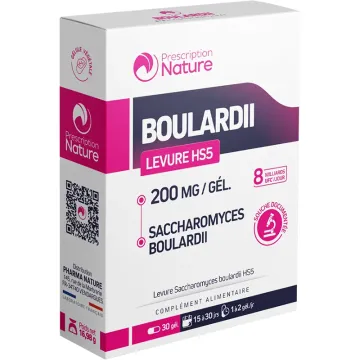
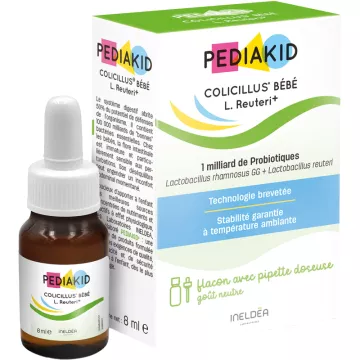
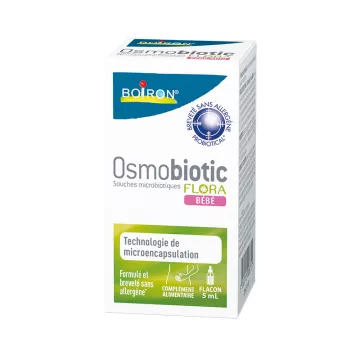
Probiotics are live microorganisms that, when taken in sufficient quantities, have a documented beneficial effect on the host's health. Whether they are bacteria (Lactobacillus, Bifidobacterium) or yeasts (Saccharomyces boulardii), they primarily support digestive, immune, and vaginal health. Find our complete line of probiotics at your local pharmacy.
What is a probiotic?
The official definition (WHO/FAO 2001, ISAPP 2014) is precise: a probiotic is a live microorganism that, when consumed in adequate amounts, confers a health benefit to the host. This definition involves three cumulative criteria: the microorganism must be alive at the time of ingestion, administered in sufficient quantities (expressed in CFU—Colony-Forming Units), and have beneficial effects demonstrated by clinical studies on an identified strain. A probiotic differs from a simple lactic acid bacterium in this requirement for strain-specific clinical evidence. In France, the term “probiotic” is not permitted on food labels—manufacturers use “ferments” or “live bacterial cultures.” “Lactic acid bacteria ” is the official French term.
Probiotics and Digestive Health: How Do They Work?
Probiotics exert their digestive effects through several complementary mechanisms.
- Exclusion competition: occupying adhesion sites on the intestinal mucosa, preventing colonization by pathogens
- Lactic acid production: lowering the local pH, creating an environment hostile to acid-sensitive pathogenic bacteria
- Bacteriocins and hydrogen peroxide: natural antibacterial substances that inhibit pathogens
- Strengthening of the intestinal barrier: stimulation of epithelial tight junctions and mucin production
- Support for digestive comfort and regulation of bowel movements
Dietary sources of probiotics?
Naturally fermented foods are the primary dietary source of beneficial microorganisms.
- Yogurts: Streptococcus thermophilus + Lactobacillus delbrueckii — required by regulation in all yogurts
- Milk kefir: a complex mix of lactic acid bacteria and yeasts — one of the most diverse natural sources
- Raw, unpasteurized sauerkraut: Lactobacillus plantarum — pasteurization destroys the live bacteria
- Kimchi, miso, tempeh, kombucha: sources of diverse strains — choose unpasteurized versions
- Aged cheeses: Lactobacillus casei and other lactobacilli, depending on the type of cheese
Probiotics based on lifestyle?
Recommendations vary by population and context—the strain must match the specific recommendation.
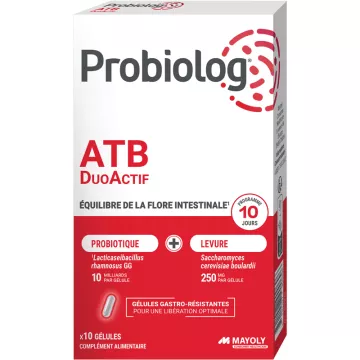
- Post-antibiotic therapy: L. rhamnosus GG + S. boulardii —starting on the first day, spaced 2–3 hours apart—continue for 2 weeks after completion
- Infants and children: L. reuteri DSM 17938 (colic, regurgitation), L. rhamnosus GG (acute diarrhea)—see pediatric lactic acid bacteria
- Vaginal health: L. rhamnosus GR-1 + L. reuteri RC-14 orally — see gut flora
- Gut-brain axis and stress: psychobiotic strains (B. longum 35624) — support for enteric serotonin
- Skin microbiota: oral probiotics (L. rhamnosus GG, B. longum) — see skin microbiota
How to Choose Probiotics?
Five technical criteria determine the actual quality of a probiotic.
- Identified strain: genus + species + strain code (e.g., L. rhamnosus GG) — without a strain code, clinical data are not transferable
- Guaranteed CFU at expiration: 1–50 billion depending on the indication — always “at expiration,” not “at manufacture”
- Gastric resistance: HPMC capsules (DRcaps) or microencapsulation — the bacteria must reach the intestine alive
- Prebiotic combination (inulin, FOS, acacia) in synbiotic formulations — enhances colonization
- Storage: refrigerator or room temperature depending on the formula—always check the label
Side effects and contraindications?
Probiotics are very well tolerated—a few specific points to watch for.
- Temporary bloating and digestive discomfort at the start of treatment (1–2 weeks)—resolves spontaneously as the microbiota adapts
- Immunocompromised individuals (chemotherapy, HIV, transplant recipients): medical consultation required—rare risk of opportunistic infections caused by probiotic bacteria
- Antibiotics: Take probiotics 2–3 hours apart—antibiotics destroy probiotic bacteria if taken simultaneously
- S. boulardii: azole antifungals may reduce its effectiveness—inform your pharmacist
- Pregnancy: well-established safety profile for L. rhamnosus GG and B. lactis —check based on the selected strain