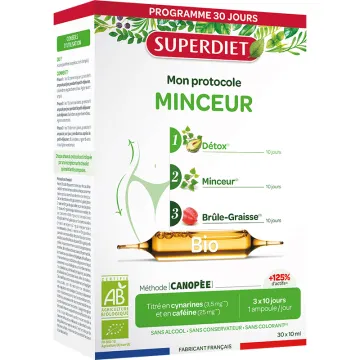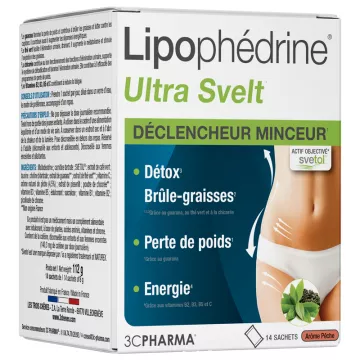
A weight-loss program is a structured support plan designed to reduce body fat while maintaining metabolic balance, without depriving the body of essential nutrients. It combines a healthy lifestyle, a moderate calorie deficit, and, often, targeted dietary supplements such as fat burners or herbal diuretics. The goal is not rapid weight loss, but a gradual and sustainable transformation of the body shape that respects the body and its physiological needs. In health food stores, this approach takes various forms—capsules, drainage ampoules, herbal teas, or powders—designed to support your efforts without ever replacing them.
The principle is based on a reasonable energy deficit: the body draws on its fat reserves when it expends more energy than it takes in. An effective regimen combines a moderate reduction in caloric intake, regular physical activity, and support for drainage to promote the elimination of fluids and toxins. Regular bowel movements and adequate hydration contribute to this process by limiting water retention and optimizing nutrient absorption. Sleep also plays a crucial role: lack of rest disrupts the hormones that regulate appetite and fat storage. Supporting basal metabolic rate—rather than imposing severe restrictions—remains the most physiologically sound strategy for achieving lasting results.
Several plant-based active ingredients can be used as part of a weight-loss regimen, in addition to a balanced diet:
The duration depends on your goals and overall health. A period of three to twelve weeks is generally recommended to achieve visible and lasting results without exhausting the body. A regimen that is too short often has no real effect, while prolonged restriction can lead to fatigue, nutritional deficiencies, and the yo-yo effect. A phased approach—weight loss, stabilization, and maintenance—helps preserve a firm figure and firmly establish new habits over the long term. It’s often wiser to repeat a short weight-loss program throughout the seasons—especially as spring approaches or after the holidays—rather than prolonging the same restrictions indefinitely, which eventually wears down both the body and your motivation.
Controlling the urge to snack is key to the success of a weight-loss program, since it’s often impulsive indulgences—rather than meals themselves—that derail the process. A few simple habits can help you manage them better:
If not properly supervised, a weight-loss program can lead to imbalances that should be anticipated:
Medical advice is essential for individuals with diabetes, heart or kidney conditions, those who are pregnant or breastfeeding, or those with a history of eating disorders. ANSES reminds consumers that weight-loss dietary supplements are not a substitute for a varied diet and must be part of a personalized plan, which is the only way to ensure an approach that is both effective and safe. If used in conjunction with ongoing medical treatment, potential interactions must be assessed before beginning any course of treatment.