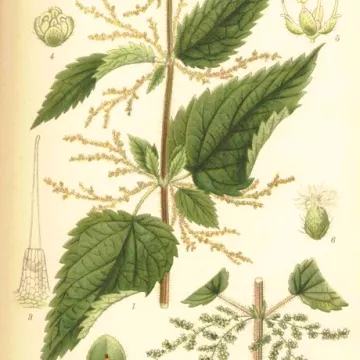
The stinging nettle (Urtica dioica), often viewed as a weed because of its stinging leaves, is actually a plant with a rich history of traditional use. Used since ancient times, it is valued as a remineralizing and tonic herb. Its reputation stems from its nutritional richness: it provides iron, calcium, magnesium, silica, vitamins, and antioxidants. Traditionally, it is associated with joint comfort, vitality, and skin and hair care. However, it is important to distinguish between traditional use and clinical evidence: stinging nettle is a beneficial dietary supplement and a plant used for well-being, not a medication. Available as an herbal tea, capsules, powder, or for external use, it can be incorporated as a supplement to a varied diet. For any health issue, consulting a healthcare professional should always be the first step.
Stinging nettle is a true concentrate of nutrients, which explains its benefits:
These benefits make it a useful dietary supplement, particularly during periods of fatigue or to support joint comfort.
Stinging nettle comes in several forms, which you can choose based on your needs:
Regardless of the form, follow the recommended dosages and opt for a course of treatment lasting a few weeks rather than prolonged, continuous use.
Stinging nettle is one of the plants traditionally associated with joint health. This use is based on two benefits: its high silica and calcium content, which contribute to tissue health, and its diuretic effect, which promotes elimination. It is thus traditionally used to support the comfort of people prone to joint discomfort, particularly in casesof osteoarthritis or rheumatism. It is used as a tea, in capsules, or as an external application (poultice). It is important to note that stinging nettle does not treat these conditions: it supports comfort as part of a wellness regimen. Persistent, severe, or inflammatory joint pain requires a medical diagnosis and follow-up, as self-medication with herbs cannot replace appropriate medical care. Stinging nettle is used as a supplement, never as a substitute for prescribed treatment.
In hair care, stinging nettle is a highly valued plant. Its high silica and sulfur content is traditionally known to strengthen the hair shaft and promote comfort for scalps that tend to be oily or prone to dandruff. It is used in shampoos, lotions, or decoctions as a rinse. It should be noted, however, that while nettle is traditionally associated with hair care, it does not literally “regrow” hair—significant hair loss requires a dermatologist’s evaluation. For the skin, stinging nettle is traditionally used to help purify blemish-prone skin, both internally (as a detoxifying treatment) and externally (in lotions). Again, it supports skin comfort without replacing medical treatment: eczema, psoriasis, or severe acne are skin conditions that require medical advice and cannot be treated with a single herb.
Stinging nettle is not a fat burner and does not cause weight loss on its own. However, it can support a weight management plan combined with a balanced diet and physical activity, thanks to its diuretic effect (elimination of water, not to be confused with fat loss) and its fiber content, which supports digestive comfort and a feeling of fullness. It is also traditionally used to support digestive comfort and regularity. These effects are modest and are part of a comprehensive detox regimen, not a weight-loss solution. Be wary of exaggerated claims: no plant can replace a balanced lifestyle. Stinging nettle provides nutritional and detoxifying support; it is one of many allies in a healthy lifestyle, but by no means a weight-loss product with dramatic effects, as some marketing claims might suggest.
Despite its benefits, stinging nettle requires some precautions:
For quality, choose organic stinging nettle free of pesticides: available at herbal shops and organic stores (dried plant, powder, capsules, mother tincture) or at pharmacies (standardized and tested supplements). When foraging in the wild, be sure to correctly identify the plant and harvest it away from polluted areas. If in doubt or if you are currently undergoing treatment, consult a healthcare professional before beginning any course of treatment.