Shiitake (Lentinula edodes) is a medicinal mushroom native to Asia that has been used for over 2,000 years in traditional Chinese and Japanese medicine. It is rich in vitamins B2, B3, and D2, minerals, beta-glucans, and lentinan, a polysaccharide studied for its effects on the body’s natural defenses. In health food stores, it is available in the form of dietary supplements, standardized extracts, and powder.
Shiitake is a medicinal mushroom rich in beta-glucans, polyphenols, vitamins, and minerals. Its value in herbal medicine lies primarily in supporting vitality and the body’s natural defenses—qualities traditionally sought during seasonal changes.
Shiitake has a rich nutritional profile, which forms the basis for its use as a dietary supplement.
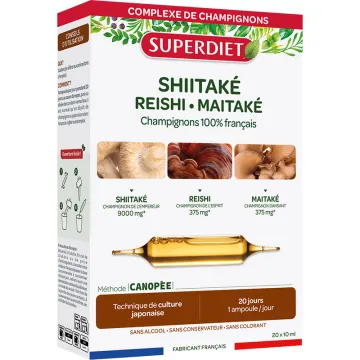
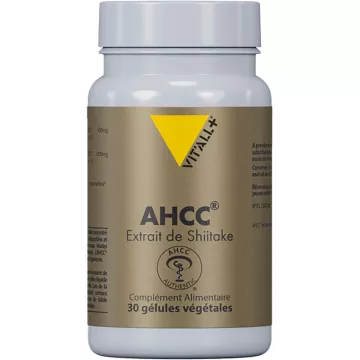
In health food stores, shiitake is available in several forms suited for targeted treatment regimens.
Quality is key: Choose shiitake from controlled, organic, contaminant-free cultures with a certified beta-glucan content.
Shiitake is traditionally associated with supporting the body’s natural defenses, particularly during seasonal changes or periods of fatigue. Its lentinan and beta-glucans are the subject of studies on their immunomodulatory effects. These effects are based on traditional herbal medicine; medical advice is still recommended if you are on immunosuppressive treatment.
These two medicinal mushrooms have complementary profiles.
Shiitake is generally well tolerated, but some precautions are necessary.
A severe allergic reaction (swelling of the face or throat, difficulty breathing) may indicate angioedema: this is a medical emergency; call 15 or 112. Content reviewed by Arnaud, Ph.D. in Pharmacy.