What is hoarseness, and what causes it?
Hoarseness is a change in the voice that makes it sound raspy, low, muffled, or breathy—a sign that the vocal cords are no longer vibrating normally. It can be acute (lasting a few days, often caused by a virus) or chronic (lasting more than 3 weeks, requiring a medical evaluation). Any persistent hoarseness in a smoker should be evaluated immediately. Throat and voice care products are available in the store’s sore throat and throat soother section.
- Acute causes: viral laryngitis (rhinovirus, influenza—the most common)—vocal overexertion (shouting, singing for long periods, intense speaking)—exposure to irritants (smoke, dry air, pollution) — allergies with postnasal drip into the larynx
- Chronic causes to be identified: gastroesophageal reflux (silent posterior laryngitis—morning hoarseness + chronic clearing of the throat)—vocal cord nodules or polyps (occupational overuse) — thyroiditis (hypothyroidism or hyperthyroidism — the thyroid gland compresses or irritates the recurrent laryngeal nerve) — unilateral vocal cord paralysis (recurrent laryngeal nerve involvement — multiple causes to be investigated)
- Warning sign — laryngeal cancer: any hoarseness lasting > 3 weeks in a smoker or former smoker requires an ENT laryngoscopy — squamous cell carcinoma of the larynx often presents only as progressive dysphonia — early detection determines the prognosis (5-year survival rate > 90% in Stage I vs. < 50% in Stage IV)
- Climate and hoarseness: Cold, dry air from heating systems or winter weather reduces the moisture in the laryngeal mucosa and lowers the irritation threshold — humidify the bedroom (40–60%) significantly reduces the frequency of winter hoarseness episodes—large temperature fluctuations (warm indoors/cold outdoors) also weaken the laryngeal mucosa
How can hoarseness be treated and relieved naturally?
For acute hoarseness caused by a virus or vocal overexertion, home remedies are usually sufficient. Vocal rest is the priority—no whispering (which paradoxically puts more strain on the larynx than normal speech), no throat-clearing (which directly traumatizes the vocal cords), and no shouting or singing. Hydration (1.5 to 2 L/day of lukewarm liquids) lubricates the vocal cords and accelerates the healing of the laryngeal mucosa.
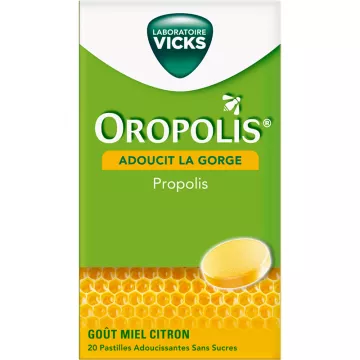
- Soothing and antibacterial natural remedies: honey (1 to 2 teaspoons straight, let it melt slowly in the mouth for maximum contact with the larynx—has mild emollient and antibacterial properties—not recommended for children under 1 year of age) — propolis lozenges or mouth spray (antibacterial and local anti-inflammatory) — thyme tea (respiratory antiseptic + antispasmodic) — ginger and lemon in a hot infusion (natural anti-inflammatories)
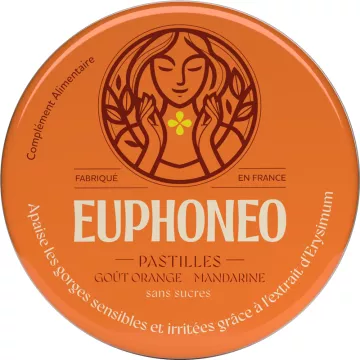
- Throat lozenges and candies: Herbal lozenges (licorice, mallow, marshmallow) lubricate and protect the laryngeal mucosa — licorice (glycyrrhizin) soothes local inflammation — marshmallow (Althaea officinalis — film-forming mucilages) forms a protective film over irritated mucous membranes
- Steam inhalation: 10 minutes, 2 to 3 times a day — directly moisturizes the vocal cords — a few drops ofeucalyptus or thyme essential oil for an additional antiseptic effect — use a humidifier in the bedroom at night (40–60%)
- Avoid: alcohol (dries out the mucous membranes) — excessive caffeine (diuretic) — tobacco (chronic laryngeal inflammation) — first-generation antihistamines (dry out the mucous membranes) — speaking without drinking (a dry throat increases vibratory trauma)
Vocal Exercises, Surgery, and Prevention of Chronic Hoarseness
Preventing hoarseness in voice professionals (teachers, singers, actors, public speakers) requires strict vocal hygiene. A vocal warm-up before any intensive use is as essential for a singer as a muscle warm-up is for an athlete—it improves the flexibility of the vocal cords and reduces the risk of injury.
- Vocal warm-up exercises: gentle vocalizations on vowels (mmm, nnn—nasal resonance without laryngeal strain)—glissandos from low to high pitches at low intensity—lip trills (lip vibrations on a single note) — relaxation of the neck and shoulders before speaking (muscle tension around the larynx worsens dysphonia) — breathing techniques (abdominal support, nasal inhalation, controlled exhalation)
- When surgery is necessary: nodules resistant to speech therapy (endolaryngeal laser microsurgery) — unilateral polyps (surgical excision under general anesthesia) — vocal cord paralysis (medialization via autologous fat injection or thyroplastic implant) — post-traumatic laryngeal scarring — laryngeal carcinoma (surgery ± radiation therapy depending on the stage)
- Speech therapy: essential after any surgical treatment of the vocal cords—but also as a first-line treatment for functional dysphonia (poor vocal habits)—correction of posture, breathing, and vocal onset—often dramatic results in 6 to 12 sessions
- Hoarseness and aphonia: mild to moderate hoarseness corresponds to dysphonia—aphonia (complete loss of voice) is the severe stage—see also “voice loss” for the management of aphonia