What is mouse-ear hawkweed?
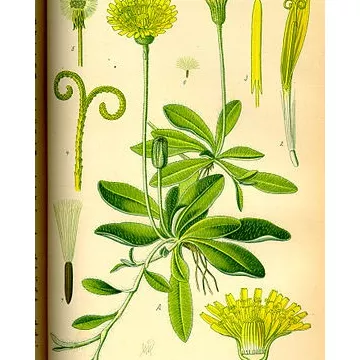
Piloselle (Hieracium pilosella), also known as mouse-ear hawkweed, is a small perennial plant in the Asteraceae family, recognizable by its hairy leaves arranged in a basal rosette and its bright yellow flower heads. It grows in dry grasslands, pastures, and nutrient-poor soils throughout Europe. The entire flowering plant is used in herbal medicine: it contains flavonoids (luteolin, apigenin), coumarins (umbelliferone), tannins, andumbelliferone. This unique composition explains its distinctive place among plant-based diuretics.
What are the benefits of hawkweed?
Its traditional uses focus on drainage:
- Support for renal drainage and increased urine output (aquaresis);
- Documented effect on blood urea levels: promotes the elimination of urea and uric acid;
- Relief from water retention and feelings of bloating;
- Support for conditions involving water-based cellulite, as a complement to a healthy lifestyle;
- Urinary comfort for sensitive conditions;
- Support for seasonal detoxification regimens.
Why is it considered the “queen of nitrogenous conditions”?
Pilosella is one of the few medicinal plants to exert a dual action on the kidneys: it increases urine volume (aquaretic diuretic effect) while promotingthe elimination of urea and uric acid (azotemic effect). This unique pharmacological profile makes it the plant of choice in natural approaches to mild hyperuremia, fluid retention, and non-pathological edema. No other plant in the urinary cluster combines these two effects so distinctly.
Does it really help with water-based cellulite?
Yes, and this is one of its most valued uses. Aqueous cellulite results from fluid retention in the subcutaneous tissues; hawkweed helps mobilize this excess fluid through its renal draining effect. It is a natural fit for weight-loss programs aimed at slimming the figure, when used in conjunction with regular physical activity and a reduction in sodium intake. Its effects on fibrous or adipose cellulite are more limited.
How does it support urinary health?
Its diuretic action promotes a physiological “flushing” effect in the urinary tract, which is helpful in supporting individuals with recurrent urinary discomfort. Unlike antibacterial urinary herbs (bearberry, heather, cranberry), hawkweed does not fight germs: it supports the body through gentle, sustained diuresis. It pairs well with these herbs in combined approaches to urinary comfort.
How should it be used as a drainage treatment?
The dosage forms depend on the goal:
- Infusion: 1 teaspoon of dried herb per 250 ml of simmering water, steep for 10 minutes, 2 to 3 cups per day;
- Decoction for a more concentrated effect on severe edema;
- Mother tincture: 30 to 50 drops in a glass of water, 2 to 3 times a day;
- Capsules containing a dry extract standardized for flavonoids for a measured course of treatment;
- Oral ampoules for a convenient and concentrated dose;
- Typical treatment course: 3 weeks at the change of seasons, to be repeated; always ensure adequate hydration (1.5 to 2 L of water per day).
What precautions should be taken with hawkweed?
- Contraindicated in cases ofkidney failure or edema associated with decompensated heart or kidney disease;
- Allergy to Asteraceae (chrysanthemum, daisy, chamomile, ragweed): avoid;
- Caution is advised when taking diuretics, antihypertensives, digitalis, or lithium: consult a pharmacist;
- Not recommended for pregnant or breastfeeding women or for children under 12 years of age;
- Severe hypotension: use with caution;
- Possible side effects: mild digestive upset, increased thirst at the start of treatment;
- Burning sensation during urination, fever, lower back pain, or blood in the urine: consult a doctor; hawkweed does not treat infections.
Which herbs can be combined with piloselle?
There are numerous complementary purifying and diuretic synergies:
- Birch and cherry stems to enhance the diuretic and aquaretic effects;
- Goldenseal for combined anti-inflammatory kidney support;
- Dandelion for a complete liver-kidney detoxifying regimen;
- Orthosiphon (Java tea) to enhance drainage during a short treatment;
- Sweet clover or horse chestnut to combine drainage with circulatory support;
- Meadowsweet (unless contraindicated due to sensitivity to salicylates) for edema with a joint component.