0
Menu

Goldenrod: An Anti-Inflammatory Diuretic for the Kidneys

Filter
Number of products : 6
Sort
Sort
Close
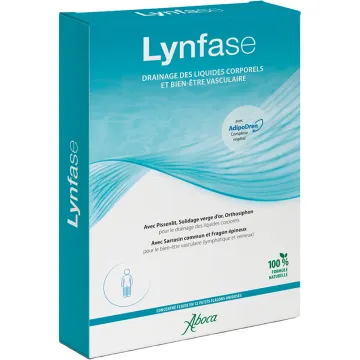
Aboca Lynfase Drainage, 12 Bottles Aboca Lynfase Drainage, 12 Bottles
€27.90
Shipped within 24h
Aboca Lynfase Fitomagra Tisane Drainante Aboca Lynfase Fitomagra Tisane Drainante
€10.49
Shipped within 24h
Aboca Lynfase Fitomagra Fluid Concentrate 180 g Aboca Lynfase Fitomagra Fluid Concentrate 180 g
€27.90
Shipped within 24h
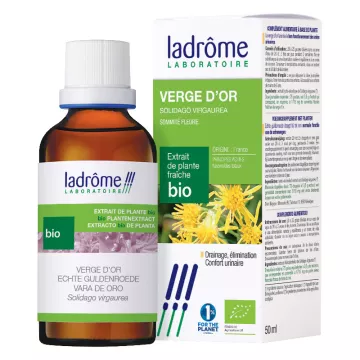
Ladrôme Extraits de Plante Fraîche Bio Goldenrod 50 ml Ladrôme Extraits de Plante Fraîche Bio Goldenrod 50 ml
€8.19
Shipped within 24h
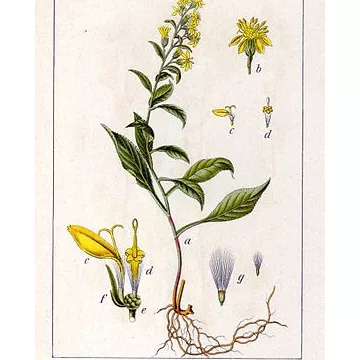
Goldenrod Cut plant Iphym Herbalism Solidago virga aurea Goldenrod Cut plant Iphym Herbalism Solidago virga aurea
100 g 250 g +
€8.99
Add to cart
Sent in 5 in 7 working days
Equisport senior well-being vitality for older horses 1.5kg Equisport senior well-being vitality for older horses 1.5kg
€47.86
Currently being restocked

What is goldenrod?

Goldenrod (Solidago virgaurea) is a perennial plant in the Asteraceae family, recognizable by its long, golden-yellow flower stalks that appear in late summer. It grows wild in meadows, clearings, and forest edges throughout Europe, Western Asia, and North America. The flowering tops contain the active ingredients: triterpene saponins (virgaureosaponins), flavonoids (rutoside, quercetol, kaempferol), phenolic acids, tannins, and essential oil. The European Pharmacopoeia andthe EMA recognize its use for urinary health.

What are the benefits of goldenrod?

Its traditional uses point to a clear urinary profile:

Why is it more than just a diuretic?

Its pharmacological profile is based on the rare combination of an aquaretic diuretic effect (increased urine volume without significant mineral loss) and a documented anti-inflammatory action on the urinary tract. This dual action explains its unique position among plants in the urinary subcluster: while hawkweed excels at promoting urine production, bearberry as an antibacterial, and cranberry as an anti-adhesion agent, goldenrod soothes irritated urinary mucous membranes.

How does it truly support urinary health?

Saponins and flavonoids work synergistically: the former promote diuresis through renal tubular action, while the latter provide anti-inflammatory and antioxidant effects on the urothelium. This mechanism makes it a plant of choice for urinary comfort as part of a therapeutic “flush ”: increasing urine volume to help “flush” the urinary tract, while soothing sensitive mucous membranes. Use as a complementary treatment; never as a substitute for medical care in cases of confirmed infection.

Does it help with chronic inflammatory conditions?

Beyond the urinary system, its anti-inflammatory properties are valued in traditional herbal medicine for supporting certain mild inflammatory conditions. It is traditionally used as an external compress on small mouth sores and superficial skin inflammations, as a gargle for throat discomfort, and as a complementary internal treatment for conditions involving persistent joint pain.

How is it used in practice?

The dosage forms depend on the intended use:

  • Infusion: 1 to 2 teaspoons of flowering tops per 250 ml of simmering water, steep for 10 minutes, 2 to 4 cups per day;
  • Decoction for a more concentrated effect;
  • Mother tincture: 30 to 50 drops in a glass of water, 2 to 3 times a day;
  • Capsules containing a dry extract standardized for saponins and flavonoids for a measured course of treatment;
  • Compresses or mouthwashes with a strained and warmed decoction;
  • Typical treatment course: 2 to 4 weeks, with plenty of fluids (1.5 to 2 L of water per day) to enhance the renal flush.

What precautions should be taken with goldenrod?

  • Contraindicated in cases ofkidney failure or edema related to decompensated heart or kidney disease;
  • Allergy to Asteraceae (chrysanthemum, daisy, chamomile, ragweed): avoid;
  • Caution is advised when taking diuretics, antihypertensives, or lithium: consult a pharmacist;
  • Not recommended for pregnant or breastfeeding women or children under 12 years of age;
  • Possible side effects: mild digestive disturbances, rare allergic skin reactions;
  • Adequate hydration is essential throughout the entire course of treatment;
  • Persistent burning sensation during urination, fever, hematuria, or lower back pain: seek immediate medical attention. Goldenrod does not treat pyelonephritis or complicated cystitis.

Which herbs can be combined with goldenrod?

Urinary synergies depend on the stage of the condition and the individual’s constitution:

  • Bearberry as a short-term initial treatment for acute episodes (antibacterial + anti-inflammatory synergy);
  • Heather as a follow-up treatment for constitutions responsive to arbutin;
  • Hawkweed and cherry stem to enhance diuresis;
  • Cranberry for long-term prevention of recurrent cystitis;
  • Stinging nettle in synergy for joint-related conditions and remineralization;
  • Meadowsweet (unless contraindicated due to salicylate sensitivity) for joint inflammation.