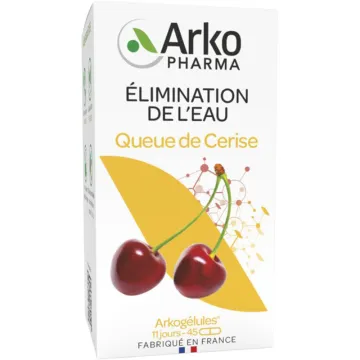
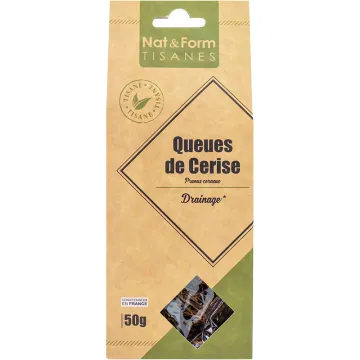
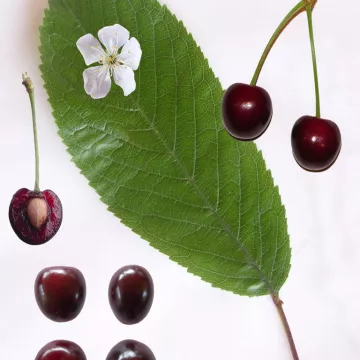
The cherry stem refers to the peduncle of the fruit of Prunus avium (sweet cherry) or Prunus cerasus (morello cherry), both of which belong to the Rosaceae family. Far from being mere harvest waste, this small green petiole contains a significant portion of the fruit’s water-soluble active compounds. The dried peduncles contain potassium salts, flavonoids (rutoside, quercetol), catechin tannins, mucilages, and sugars. This composition explains its traditional use in herbal medicine as a mild plant-based diuretic, documented as far back as the Middle Ages.
Its traditional uses primarily involve promoting fluid drainage:
The stem is distinguished by its very high concentration of potassium and flavonoids compared to the fruit’s flesh, which contains more sugars and water. This concentration promotes an aquaretic diuresis: an increase in urine volume without significant loss of sodium or essential minerals—unlike many synthetic diuretics. This is one of the reasons why cherry stems are among the best-tolerated plant-based diuretics, accessible to a wide audience.
Yes, for cellulite with a water-based component (swelling, tight “orange peel” skin, and heavy legs). By promoting the elimination of fluid retained in the tissues, cherry stems help create a feeling of lightness and a slimmer silhouette. It supports weight-loss programs when used in conjunction with regular physical activity, reduced sodium intake, and adequate hydration. Its effectiveness against fibrous or adipose cellulite is limited.
The dosage forms depend on the goal:
Yes, as a supplement. Cherry stems do not have a direct antibacterial effect on the urinary tract (unlike bearberry or cranberry), but their diuretic effect promotes a natural flushing of the urinary tract. It is a gentle herbal remedy for urinary comfort, particularly useful as a follow-up treatment or for prevention in sensitive cases, though it should not replace medical treatment in the event of a confirmed infection.
There are numerous complementary detoxifying synergies: