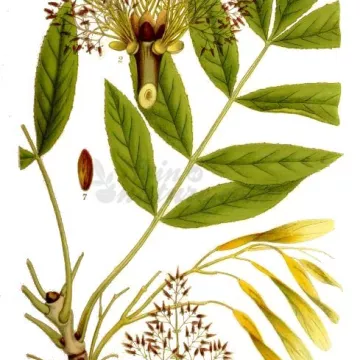
The common ash (Fraxinus excelsior) is a tall tree in the Oleaceae family, found throughout Europe and widely used in traditional herbal medicine. It is primarily the leaves that are used: they contain flavonoids (rutoside, quercetin), iridoids (ligstroside, frenoside), coumarins, and mannitol. This composition explains its dual action as an analgesic for joint pain and a diuretic that promotes uric acid excretion, recognized by the EMA for the symptomatic treatment of mild joint pain.
Its traditional benefits span three mutually reinforcing areas:
Its unique profile stems from the combination of a local analgesic action and a general draining effect. Whereas other plant-based pain relievers target only pain (harpagophytum) or only drainage (birch), ash acts on both fronts. This dual action makes it a staple in natural approaches to joint comfort and herbal medicine for joints, particularly useful for osteoarthritis conditions involving fluid retention.
Ash is one of the few medicinal plants with a documented uricosuric effect: it promotes the renal excretion of uric acid without affecting its synthesis. This property traditionally makes it a valuable adjunct for managing hyperuricemia and gout attacks, in addition to medical treatment and a suitable diet. No uric acid-lowering treatment should be discontinued without medical advice.
Its diuretic effect makes it a useful companion for seasonal drainage regimens, particularly helpful for relievingheavy legs and mild edema in the lower extremities. It naturally complements its counterparts in the circulatory cluster— horse chestnut and red vine—to enhance their vein-toning and drainage effects.
The dosage forms depend on the intended use:
Herbal synergies depend on the treatment goal: