What is a birch tree?
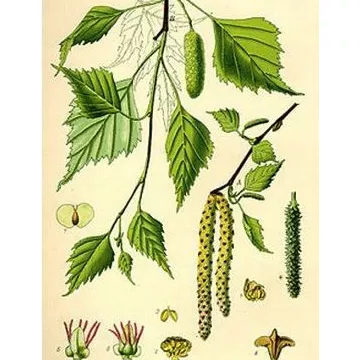
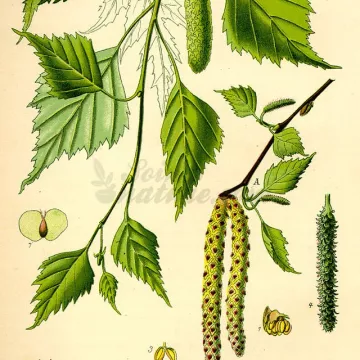
The silver birch (Betula pendula) and its cousin, the downy birch (Betula pubescens), are pioneer trees of the Betulaceae family, emblematic of the temperate and boreal forests of Europe. Their characteristic white bark makes them instantly recognizable. In herbal medicine, several parts are used: the leaves, rich in flavonoids (hyperoside, quercetol-3-galactoside) and chlorogenic acid;the bark, a source of betulin and betulinic acid; and the buds, used in gemmotherapy. The European Pharmacopoeia and the EMA recognize their use.
What benefits does the birch tree offer?
Its versatility makes it one of the most comprehensive medicinal trees:
- A recognized diuretic effect for promoting kidney drainage and reducing water retention;
- Supports elimination functions during detoxification treatments;
- Relief from joint discomfort and support forosteoarthritis;
- Improves the appearance of dull skin and helps with blemishes;
- Provides antioxidants thanks to the flavonoids in its leaves.
How do its leaves promote drainage so effectively?
The flavonoids andchlorogenic acid in the leaves have a documented diuretic and aquaretic effect: they increase urine volume without significant loss of electrolytes (unlike many synthetic diuretics). This characteristic makes it a staple herb for urinary comfort and for supporting conditions involving fluid retention. The EMA recognizes this use for “flushing” the urinary tract (in the absence of acute inflammation or a confirmed infection requiring medical treatment).
Do birch bark and betulin help the joints?
The inner bark of the birch tree is rich in betulin andbetulinic acid, two triterpenes studied for their soothing effects on joint discomfort. It is this part that traditional herbal medicine uses to support the management of mild chronic joint pain and rheumatism. It is often combined with the leaves, which have diuretic properties, for a comprehensive approach to joint health in herbal medicine.
What role does sap play in the spring?
Harvested by making an incision in the trunk in March–April, birch sap is traditionally consumed as a spring detoxifying treatment. It provides minerals (potassium, magnesium, calcium), trace elements, and organic acids in a hydrating and detoxifying form. It is a specific variation of birch, complementary to the other forms offered in the detox line.
How can you incorporate birch into your daily routine?
The dosage forms depend on the intended use:
- Leaf infusion: 2 to 3 g of dried leaves per 250 ml of simmering water, steep for 10 minutes, 2 to 3 cups per day. Recommended to be taken with plenty of water;
- Bark decoction for targeted joint support;
- Capsules or standardized dry extract for a measured and reproducible treatment regimen;
- Glycerine macerate of buds (gemmotherapy) for a deep-acting approach to the body’s constitution;
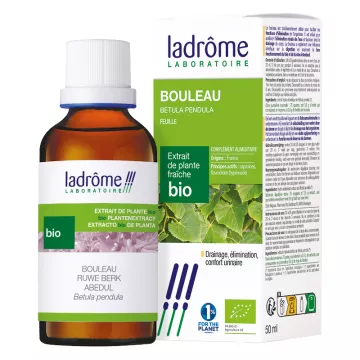
- Mother tincture: 30 to 50 drops in a glass of water, 2 to 3 times a day;
- Typical treatment course: 3 weeks at the change of seasons, repeatable.
What precautions should be taken with birch?
- Contraindicated in casesof edema associated with renal failure or decompensated heart failure (forced diuresis is harmful in such cases);
- Allergy to birch pollen (hay fever): use with caution, as a cross-reaction is possible;
- Use with caution when taking diuretics, antihypertensives, and anticoagulants;
- Not recommended for pregnant or breastfeeding women or for children under 12 years of age;
- Adequate hydration is essential during the treatment;
- Burning sensation during urination, lower back pain, or fever: consult a doctor; birch does not treat urinary tract infections.
Which herbs can be combined with birch?
There are numerous synergistic effects for detoxification and joint health:
- Dandelion for comprehensive liver-kidney drainage;
- Hawkweed and cherry stems to enhance the diuretic effect;
- Stinging nettle to support joint health and remineralization;
- Ash, in synergy for osteoarthritis associated with high uric acid levels;
- Devil’s claw for severe joint discomfort;
- Meadowsweet (unless contraindicated due to salicylate sensitivity) to enhance joint comfort.